
Ingredients
Main
- 1whole Pacific flying fox (fruit bat), cleaned – traditionally served with fur, wings and head intact
- 500 mlthick coconut milk
- 500 mlwater or light stock
- 40 gfresh ginger, sliced in coins
- 1onion, quartered
- 3garlic cloves, crushed
- 2spring onions, cut in lengths
- 1 tspsalt
- ½ tspblack pepper
To serve
- steamed white rice or boiled taro
- 1lime, in wedges
- soy sauce and sliced chilli, at the table
Directions
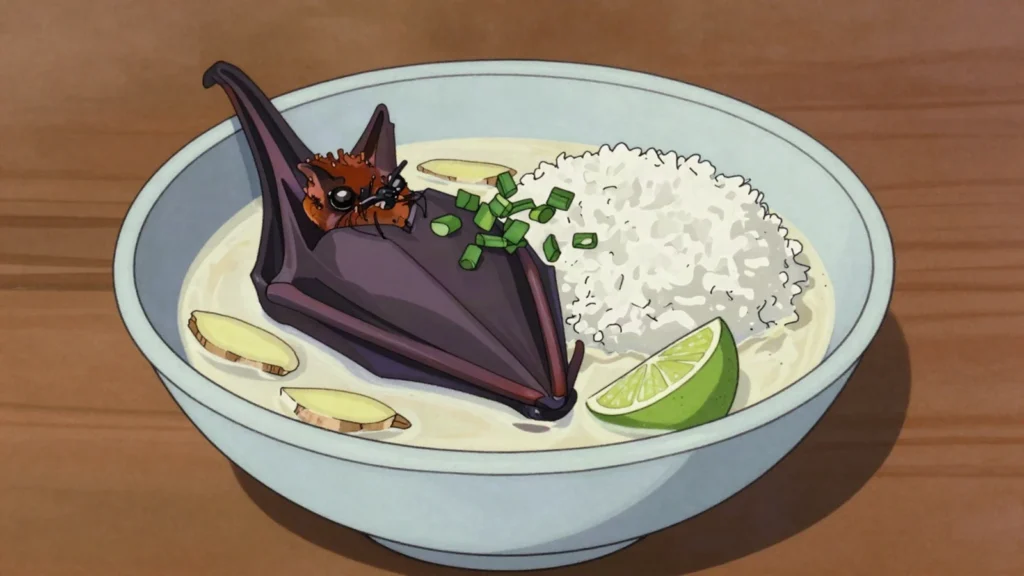
- The bat is prepared by singeing the fur over an open flame – or, in the fully traditional preparation for guests, left on entirely – then gutted, with the head and wings kept on. This presentation, the whole animal floating in a bowl of coconut broth, is the point of the dish.
- Rinse thoroughly in fresh water and rub with a little salt to clean the skin.
- Bring the water or stock to the boil in a pot wide enough to hold the bat with its wings spread, add the ginger, onion and garlic and simmer 10 minutes to build an aromatic base.
- Lower the bat into the pot, breast up, and simmer very gently, uncovered, for 45 minutes. Skim the surface as scum rises.
- Pour in the coconut milk and continue at the barest simmer – never a boil, which curdles coconut milk – for a further 30–40 minutes.
- The soup is ready when the meat pulls easily from the small bones and the broth has taken on the dark, gamey, faintly sweet flavour that Palauans prize. Season with salt and pepper.
- Add the spring onion in the last 2 minutes so it stays green.
- Serve the whole bat in a wide bowl with the broth ladled over, rice or taro on the side, and lime and soy at the table. Diners tear the meat off the bones by hand; the wing membranes and the fat around the shoulders are considered the best parts.
Technique
- Pacific flying foxes are protected or threatened across much of Micronesia, and most bats served in Palau today are imported from Samoa or farmed sources. Wild-caught bat is a conservation issue and in many jurisdictions illegal.
- Bats are reservoirs for several serious zoonotic diseases. Handling and preparing them raises genuine food-safety concerns, and the meat must be cooked through completely; this is a dish to eat where it is prepared by people who know how, not one to improvise at home.
- The flavour is unusual because fruit bats eat only fruit and nectar – the meat is dark and lean with a sweet, almost fruity gaminess, closer to squab than to any land game.
Substitutions
- The honest home substitute is a whole pigeon, quail or a small free-range chicken cooked exactly the same way in ginger and coconut milk – the broth is what most people remember anyway.
- Use tinned full-fat coconut milk if you cannot press your own, but do not shake the tin: add the thick cream from the top at the end.
Variations
- A clear version made with no coconut milk at all, just ginger, onion and water, common in the outer islands.
- A version stewed with soy sauce and sugar, showing the Japanese and Filipino influence on modern Palauan cooking.
History
A soup made from fruit bat, a large bat species found across Palau and other parts of the Pacific, cooked whole in a broth often flavoured with coconut milk and ginger, documented as a traditional Palauan dish considered a genuine local delicacy rather than an everyday food. Fruit bats have long been hunted and eaten across parts of the Pacific Islands and Southeast Asia, and the dish reflects Palau’s particular local wildlife and traditional hunting practices adapted to the specific fauna available on its islands. Fruit bat soup carries cultural significance within Palauan tradition specifically, though conservation concerns regarding fruit bat populations have raised more recent questions about the sustainability of hunting the animal at a level that would meet significant commercial or tourist demand.
Frequently asked questions
What is Fruit Bat Soup?
Fruit Bat Soup is a soup & stew from Palau: whole fruit bat simmered in coconut milk with ginger, famed island delicacy. A soup made from fruit bat, a large bat species found across Palau and other parts of the Pacific, cooked whole in a broth often flavoured with coconut milk and ginger, documented as a traditional Palauan dish considered a genuine local delicacy rather than an everyday food. Fruit bats have long been hunted and eaten across parts of the Pacific Islands and Southeast Asia, and the dish reflects Palau’s particular local wildlife and traditional hunting practices adapted to the specific fauna available on its islands. Fruit bat soup carries cultural significance within Palauan tradition specifically, though conservation concerns regarding fruit bat populations have raised more recent questions about the sustainability of hunting the animal at a level that would meet significant commercial or tourist demand.
How long does Fruit Bat Soup take to make?
Fruit Bat Soup takes 30 min of preparation and 1 hr 30 min of cooking. The recipe makes 4 servings. It is rated medium to make.
What can I substitute in Fruit Bat Soup?
Yes, within limits. The honest home substitute is a whole pigeon, quail or a small free-range chicken cooked exactly the same way in ginger and coconut milk – the broth is what most people remember anyway. Use tinned full-fat coconut milk if you cannot press your own, but do not shake the tin: add the thick cream from the top at the end.
What is the most important thing to get right in Fruit Bat Soup?
The bat is prepared by singeing the fur over an open flame – or, in the fully traditional preparation for guests, left on entirely – then gutted, with the head and wings kept on. This presentation, the whole animal floating in a bowl of coconut broth, is the point of the dish.