
Ingredients
The powder
- 100 gkuka
- dried baobab leaf powder
- sieved
Meat and fish
- 600 gbeef on the bone
- in pieces
- 150 gdried or smoked fish
- soaked and flaked
- 50 gdried shrimp, optional
The pot
- 2onions, chopped
- 5garlic cloves, crushed
- 3tomatoes, chopped
- 2 tablespoonstomato purée
- 2 tablespoonsnététou
- fermented locust bean, or dawadawa
- 2scotch bonnets, chopped
- or to taste
- 3 tablespoonsoil
- 2stock cubes
- about 1.5 litres water
- salt
To serve
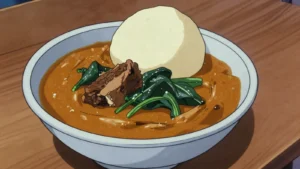
- tuwo
- stiff millet or maize porridge
- eaten with the right hand
Directions
- Sieve the powder before you use it. Sprinkle it in gradually rather than tipping it. Stir constantly as it goes in. It takes a moment and is worth doing. Rinse the dried fish under cold water. Put it in a bowl of fresh cold water.
- Leave it for at least two hours. It also softens it enough to flake. Drain the soaked fish thoroughly. Flake it and check it for bones. They do not soften in cooking at all. Put the beef in a large heavy pot. Add a chopped onion and some salt.
- Cover it well with cold water. Bring it up to a gentle simmer. Skim off any grey scum that rises. Do it in the first few minutes. Cover the pot and lower the heat. Let it simmer for about an hour. Judging the meat takes a check. Simmer it on if it still resists. Lift the meat out onto a plate.
- Keep all of the cooking broth. Do not throw any of it away at all. Heat the oil in a large heavy pot. Add the remaining chopped onion. Cook it for a good eight minutes. Add the crushed garlic in to it. Cook it for two more full minutes. Crumble the netetou into the pot. Fry it for about two full minutes. It should dissolve into the base. Add the chopped tomatoes to the pot.
- Add the tomato purée along with them. Add the chopped scotch bonnets. Cook them down for about ten minutes. The tomato must cook right down. Oil should separate at the edges. Raw tomato taste should be entirely gone. Wash hands and boards thoroughly. Pour in the reserved meat broth. Add the stock cubes to the pot.
- Add the flaked fish and dried shrimp. Bring it up to a gentle simmer. Simmering it takes fifteen minutes. Let it simmer for about fifteen minutes. Sieve the baobab powder into a bowl. Sprinkle it into the pot gradually.
- Stir constantly as you sprinkle it in. Add it in only a little at a time. Stir hard between each addition. Never tip the whole lot in at once. Let it simmer for about fifteen minutes. Stir it regularly all the way through. The powder needs cooking to lose its raw taste.
- Add hot broth if it goes too thick. Simmer it longer if it is too thin. Add the cooked meat back to the pot. Let it warm through for ten minutes. Taste it and adjust the salt as needed. Add more chilli if you want more heat. Taste before adding any at all. Serving it is always done hot. Make a mound of tuwo on each plate. Ladle the soup over or beside it. Both are done in Hausa households.
Technique
- Sieve the baobab powder and sprinkle it into the pot gradually, stirring hard between each addition — never tip the lot in at once, which gives lumps that never break down. Some cooks mix it to a paste with cold water first, which is equally reliable. Sieving also removes stalk and fibre from the ground leaf.
- The powder makes the soup slightly slippery, which is expected and wanted rather than a fault: slippery soups are valued across the region because they make stiff tuwo easier to swallow, and the tuwo is pinched off and swallowed rather than chewed much.
- The Hausa soups are named by their thickener — this one baobab leaf, miyan gyada groundnut — while the meat and fish vary freely between pots. Baobab leaves are picked green before the tree drops them, dried in shade to keep the colour, and pounded to powder that keeps all year.
Substitutions
- Dawadawa is the same fermented locust bean as nététou under its Hausa name.
- Goat or lamb stands in for beef; the thickener is what defines the soup rather than the meat.
Variations
- Baobab leaf is genuinely nutritious, high in calcium as well as iron and vitamins.
- Tuwo, the stiff millet or maize porridge, is pinched off by hand and dipped in.
- Some ladle the soup over the tuwo and others serve it in a separate bowl; both are done.
History
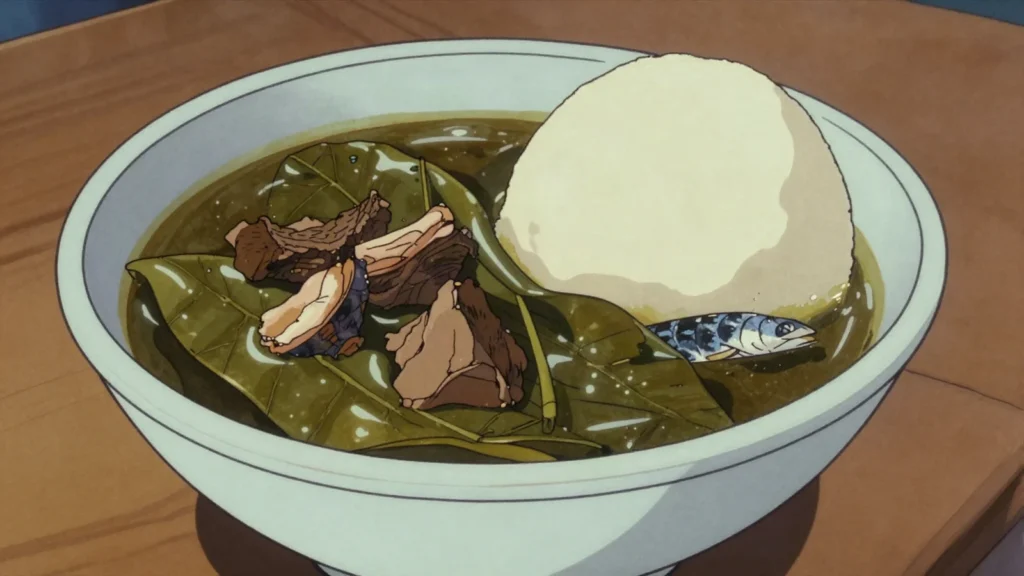
A soup made from ground baobab leaf powder, cooked with meat, fish and spices into a thick, slightly mucilaginous base, developed among the Hausa people across the Sahel region spanning Niger and northern Nigeria, using the baobab tree, a distinctive, long-lived tree native to the African savanna whose leaves, fruit and bark have all been used in traditional regional cooking and medicine for many centuries. Baobab leaves must be dried and ground into a fine powder before use, a preparation step that allows the leaf to be stored and used well beyond its fresh seasonal availability. Miyan kuka remains a common everyday soup across the Hausa-speaking Sahel region, traditionally served alongside tuwo or another stiff regional starch.
Frequently asked questions
What is Miyan kuka?
Miyan kuka is a soup & stew from Niger: baobab-leaf powder soup with dried fish and meat, poured over tuwo. A soup made from ground baobab leaf powder, cooked with meat, fish and spices into a thick, slightly mucilaginous base, developed among the Hausa people across the Sahel region spanning Niger and northern Nigeria, using the baobab tree, a distinctive, long-lived tree native to the African savanna whose leaves, fruit and bark have all been used in traditional regional cooking and medicine for many centuries. Baobab leaves must be dried and ground into a fine powder before use, a preparation step that allows the leaf to be stored and used well beyond its fresh seasonal availability. Miyan kuka remains a common everyday soup across the Hausa-speaking Sahel region, traditionally served alongside tuwo or another stiff regional starch.
How long does Miyan kuka take to make?
Miyan kuka takes 30 minutes of preparation and 1 hour 30 minutes of cooking. The recipe makes serves 6. It is rated medium to make.
What can I substitute in Miyan kuka?
Yes, within limits. Dawadawa is the same fermented locust bean as nététou under its Hausa name. Goat or lamb stands in for beef; the thickener is what defines the soup rather than the meat.
What is the most important thing to get right in Miyan kuka?
Sieve the powder before you use it. Sprinkle it in gradually rather than tipping it. Stir constantly as it goes in. It takes a moment and is worth doing. Rinse the dried fish under cold water. Put it in a bowl of fresh cold water.