
Ingredients
Meat
- 1 kgbeef chuck or lamb shoulder on the bone, cut into 5 cm pieces
- 3 tbspgroundnut oil
- 2onions (300 g), finely chopped
- 6garlic cloves, crushed
- 2 tspsalt
- 1 tspblack pepper
Sauce
- 300 gpure unsweetened peanut paste (tigadege), or natural peanut butter with no added sugar
- 3 tbsptomato paste
- 3tomatoes (300 g), grated
- 1.2 litreswater or light stock
- 1 tbspnététou (fermented locust bean), or 1 stock cube
- 1whole Scotch bonnet or habanero, left unbroken
- 2bay leaves
- 1 tbspdried thyme
Vegetables
- 300 gcassava, peeled and cut into batons
- 2carrots, cut into thick lengths
- ¼white cabbage, in wedges
- 300 gsweet potato, in chunks
- 2small aubergines or 4 jaxatu (bitter African aubergines), halved
- 1 handfulokra (optional)
To serve
- 500 gwhite rice, steamed
Directions
- Season the meat with salt and pepper. Heat the groundnut oil in a heavy pot and brown it in two batches over high heat, 8 minutes a batch, until there is a real crust and dark sticky fond on the base of the pot.
- Lower the heat, add the onion and garlic and cook 10 minutes until soft and golden, scraping up the fond.
- Add the tomato paste and fry it 3 minutes until it turns brick red and smells sweet rather than tinny, then add the grated tomato and cook 5 minutes more.
- Loosen the peanut paste with 300 ml of hot water in a bowl, whisking until it is a smooth cream with no lumps. Adding it dry to the pot guarantees lumps that never disperse.
- Stir the loosened peanut cream into the pot with the rest of the water, the nététou, bay, thyme and the whole chilli. Bring to a bare simmer.
- Simmer uncovered, stirring every 10 minutes, for 45 minutes. The sauce will look thin and split-looking at first, then gradually thicken and darken as the peanut oil rises.
- Add the cassava and carrot and simmer 20 minutes, then the sweet potato, cabbage and aubergine and simmer 20–25 minutes more, until everything is tender and the meat pulls apart.
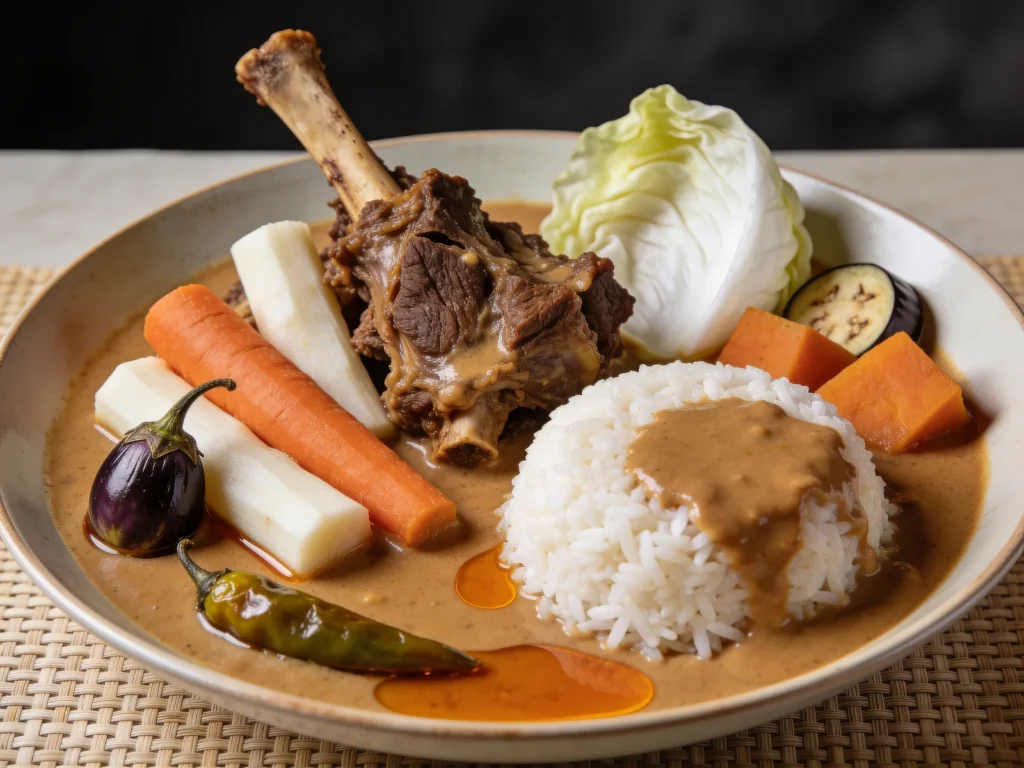
- The sauce is ready when a clear orange-brown peanut oil floats on the surface and the sauce coats the back of a spoon thickly. This oil separation is the sign of a properly cooked mafé, not a fault.
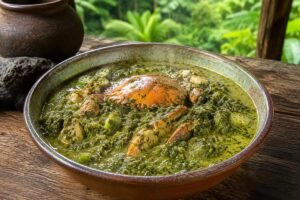
- Remove the chilli whole, check the salt, and rest 10 minutes. Serve over steamed rice, with the vegetables arranged around the meat and the sauce ladled over.
Technique
- The peanut paste must be pure ground peanuts. Commercial peanut butter with added sugar and palm oil makes the sauce cloying and prevents the oil from separating properly.
- Cook it uncovered and long. Under-simmered mafé tastes raw and chalky; the transformation from gritty to velvety happens in the last 20 minutes.
- Nététou, the fermented locust bean, is the deep savoury backbone. Many Dakar cooks use it alongside a bouillon cube; without either the sauce tastes flat, however good the meat is.
- Mafé is called tigadegue na in Bambara and is claimed across Mali, Senegal, Gambia and Guinea. The Senegalese version is more tomato-forward and served over rice; Malian versions run darker and less red.
Substitutions
- Chicken thighs replace the beef in the everyday version; brown them and cut the total simmer to 50 minutes.
- No cassava? Potato works, added in the last 25 minutes.
- Jaxatu, the bitter Senegalese aubergine, is worth hunting for at an African grocer, but ordinary aubergine or even a courgette will fill the space.
Variations
- Mafé ganaar, made with chicken, the everyday weekday pot.
- A fish mafé made on the coast with firm white fish added at the end.
- A vegetarian mafé built on sweet potato, cabbage and peanut, common during Ramadan and Lent.
History
Peanuts came from the Americas with Portuguese traders and became Senegal’s colonial export crop, which made peanut sauce an everyday national dish.
Frequently asked questions
What is Mafé?
Mafé is a soup & stew from Senegal: peanut-butter stew of meat and vegetables served over rice. Peanuts came from the Americas with Portuguese traders and became Senegal’s colonial export crop, which made peanut sauce an everyday national dish.
How long does Mafé take to make?
Mafé takes 30 min of preparation and 1 hr 45 min of cooking. The recipe makes 6 servings. It is rated medium to make.
What can I substitute in Mafé?
Yes, within limits. Chicken thighs replace the beef in the everyday version; brown them and cut the total simmer to 50 minutes. No cassava? Potato works, added in the last 25 minutes. Jaxatu, the bitter Senegalese aubergine, is worth hunting for at an African grocer, but ordinary aubergine or even a courgette will fill the space.
What is the most important thing to get right in Mafé?
Add the tomato paste and fry it 3 minutes until it turns brick red and smells sweet rather than tinny, then add the grated tomato and cook 5 minutes more.