
Ingredients
Dough
- 500 gplain flour
- 1 tspsalt
- 2 tbspoil
- about 280 ml warm water
- 1 tspbaking powder, optional
Filling
- 500 gwhite fish, or minced beef
- 2onions, finely chopped
- 4 clovesgarlic
- 1 tbspgrated ginger
- 2 tbspchopped parsley
- 1scotch bonnet or piment, finely chopped
- 1stock cube
- juice of 1 lime
- 2 tbspoil
- salt and pepper
To fry
- oil, for deep frying
To serve
- with kaani, the Senegalese chilli and onion sauce
- or with a squeeze of lime
Directions
- Poach or steam the fish until just cooked, then flake it, checking carefully for bones. Now the filling, which must be well seasoned and completely dry. Fry the onions gently for ten minutes until soft and sweet, then add the garlic, ginger and chilli. Cook the onions properly rather than briefly, since they are the bulk of the filling and raw onion ruins it.
- Stir in the flaked fish, parsley, crumbled stock cube and lime juice. Season it firmly, since the plain dough around it carries no flavour of its own. Cook it until there is no liquid left in the pan at all. A wet filling steams inside the pastry, softens the seal and bursts the pocket open in the oil, which is the commonest failure.
- Let it cool completely before filling, and chill it if you have time. Mix the flour and salt with the oil, then add warm water gradually to form a soft dough. Knead it for five to eight minutes until smooth and elastic. Knead it properly, since the dough must stretch thin without tearing when rolled.
- Cover it and rest it for an hour. Resting relaxes the gluten so it rolls out thin without springing back. Roll each into a thin circle, about twelve centimetres across. Roll them genuinely thin, since a thick fataya is doughy and the pastry should be the wrapper rather than the substance.
- Put a spoonful of the cold filling on one half, leaving a clear border all the way round. Do not overfill them, however tempting, since an overfilled pocket cannot be sealed and will open in the fryer.
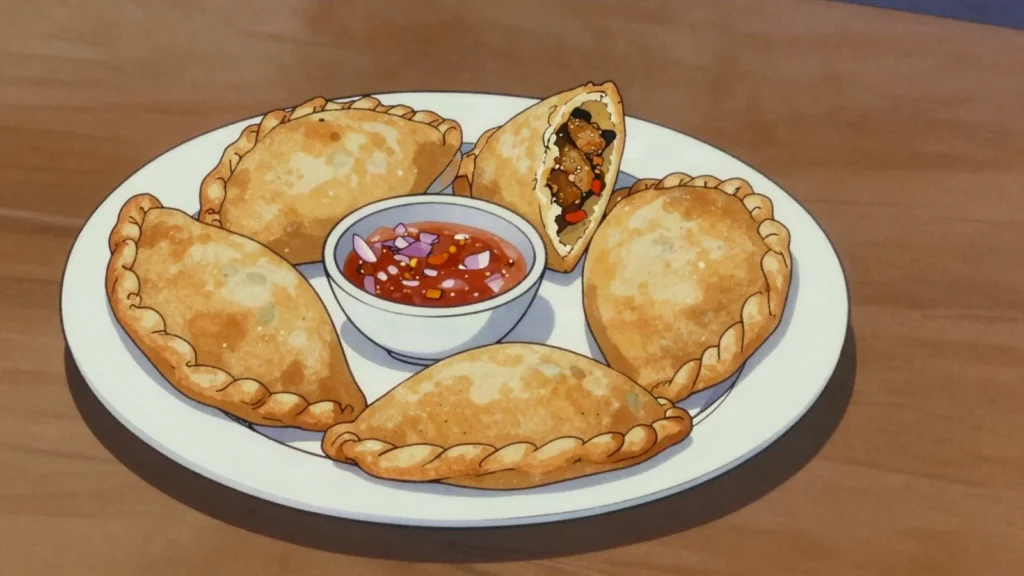
- Press the edges together firmly, working out any trapped air as you go. Trapped air expands in hot oil and forces the seam apart. Set them on a floured tray and cover them while you work. Now heat the oil to about 175°C. Fry them a few at a time for three to four minutes, turning once, until deep golden and blistered. Do not crowd the pan, which drops the temperature and gives pale greasy pastry.
- Drain them on a rack rather than on paper, so the underside stays crisp. Serve them hot with kaani, the fiery onion and chilli sauce that accompanies them everywhere. They are eaten with the hands, standing up, and they are not at their best cold.
Technique
- Senegalese fataya are fried, unlike the baked Levantine fatayer.
- The filling must be completely dry or the pockets burst.
- Kaani, a chilli and onion sauce, is the standard accompaniment.
Substitutions
- Minced beef in place of fish, which is also common.
- Any firm white fish.
Variations
- Made with minced beef and onion.
- Made small, as party snacks.
- With a hard-boiled egg in the filling.
Frequently asked questions
What is Fataya?
Fataya is a street food from Senegal: fried pastry pockets of spiced fish or meat.
How long does Fataya take to make?
Fataya takes 1 hr plus 1 hr resting of preparation and 30 min of cooking. The recipe makes about 16. It is rated medium to make.
What can I substitute in Fataya?
Yes, within limits. Minced beef in place of fish, which is also common. Any firm white fish.
What is the most important thing to get right in Fataya?
Poach or steam the fish until just cooked, then flake it, checking carefully for bones. Now the filling, which must be well seasoned and completely dry. Fry the onions gently for ten minutes until soft and sweet, then add the garlic, ginger and chilli. Cook the onions properly rather than briefly, since they are the bulk of the filling and raw onion ruins it.