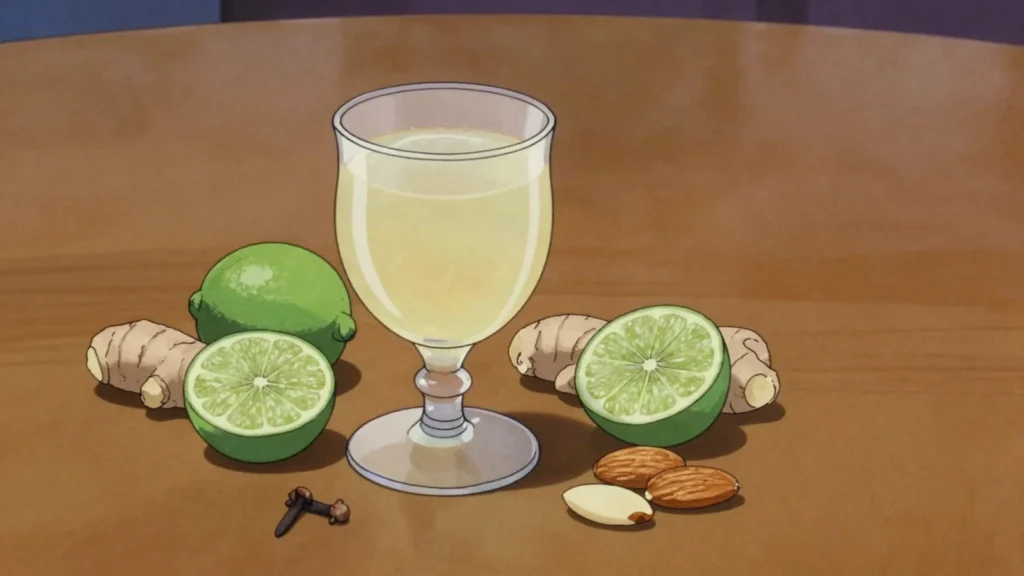

Ingredients
The infusion
- zest of 8 limes
- no white pith at all
- see the note
- 40whole cloves
- no more, see the note
- 60 gblanched almonds
- toasted, see the allergen note
- or 2 teaspoons almond extract
- 40 gfresh ginger, sliced thin
- 350 mlwhite overproof rum
- or ordinary white rum
- see the note
The syrup
- 400 gcaster sugar
- or demerara for a darker syrup
- 250 mlwater
- juice of 4 limes
- strained
Optional
- 6allspice berries
- a pinch of grated nutmeg
- a strip of vanilla pod
Equipment
- a large jar with a lid
- muslin or a fine sieve
- a bottle, sterilised
- a peeler, not a grater
- see the note
Directions
- Start lower if you are unsure. You cannot take clove back out. Use zest, never pith. Use a vegetable peeler in long strips. A peeler takes the coloured layer and leaves the pith.
- Zest them before you juice them. Roll them firmly on the counter before juicing. Toast the almonds until they smell. Give them eight minutes in a moderate oven.
- Chop or lightly crush them first. Do not treat an extract as automatically nut-free. Slice the ginger thin. No need to peel it. Put the zest, cloves, almonds and ginger in the jar.
- Pour the rum over. Seal it and shake it. Leave it twenty-four hours at room temperature. Shake it two or three times. Clove and zest keep extracting. Taste it at eighteen hours. Strain it early if the clove is already forward.
- Strain it through muslin. Press the solids gently. Press gently rather than hard. Heat the sugar and water until the sugar dissolves. Do not boil it hard.
- Let the syrup cool completely. Hot syrup drives off the aromatics you just extracted. Mix the cool syrup with the strained infusion. Add the strained lime juice last. Heat dulls it immediately. Use fresh here.
- Taste and adjust. A little water if it is too intense. Pour it into a sterilised bottle. Sugar and a little alcohol help, and cold does the rest. Shake the bottle before using it. Discard it if any of those appear. Anyone pregnant should not drink alcohol. Shake before use. Discard it if it moulds, fizzes or smells fermented.
Technique
- Count the cloves. Clove is enormously strong and will take over the whole batch — a few too many and the syrup tastes of dentistry. Forty is already assertive for this quantity, and you cannot take clove back out.
- Use zest, never pith. The coloured layer holds the aromatic oil and the white beneath it is purely bitter. A vegetable peeler in long strips takes one and leaves the other where a grater takes both; scrape any white off the back of a strip.
- Zest the limes before you juice them. A juiced lime is impossible to zest, and this is the classic order mistake. Roll them firmly on the counter first for far more juice.
- Twenty-four hours is the sweet spot for the infusion. Longer is not better — clove and zest keep extracting, and after two days the clove dominates and the zest turns bitter. Taste at eighteen hours and strain early if the clove is already forward.
- Press the solids gently when straining. Hard pressing pushes bitterness through.
- Let the syrup cool completely before combining. Hot syrup drives off the aromatics you just extracted and boils off alcohol, undoing the whole infusion. Add the fresh lime juice last, since heat dulls it immediately — and bottled lime juice tastes flat and slightly cooked.
- Toast the almonds until they smell, about eight minutes in a moderate oven, and chop or crush them first. Toasting deepens the flavour considerably and more surface means more extraction.
- This contains almonds and tree nut allergy can be severe. Say plainly when a drink contains falernum — a cocktail is not an obvious place to expect a nut, and orgeat carries the same point.
- Almond extract is sometimes made from bitter almond or apricot kernel and sometimes is synthetic benzaldehyde containing no nut. Read the label rather than assuming it is either nut-free or unsafe.
- This is an infusion, not a distillation. Infusing a bought spirit is legal and safe; distilling one at home is neither.
- Overproof rum extracts more strongly and is very high in alcohol. It is flammable — never pour it near a lit burner or a flamed drink.
- The origin of the word falernum is not established. Several explanations circulate — a link to the Roman wine Falernian, a folk story about learning the recipe — and the atlas records them as proposals rather than picking one. What is documented is that it has been made in Barbados since at least the nineteenth century. The name of Corn ‘n’ Oil is likewise unexplained.
- Refrigerate it. This is not shelf stable the way a strong spirit is — sugar and a little alcohol help, and cold does the rest.
- It clouds and may separate; cloudiness from almond oil is normal and shaking fixes it. Mould, fizzing or a fermented smell is not, and means discard it.
- It is meant to be sweet. It is a sweetener in a drink rather than a drink in itself.
- Concentrated clove oil is toxic if swallowed; whole cloves in a syrup are nothing like that, and the atlas does not conflate the two.
- Do not drink alcohol if you are pregnant or driving; give children the syrup version.
Substitutions
- Omit the rum entirely and use water for a non-alcoholic syrup, which keeps three weeks refrigerated.
- Almond extract replaces whole almonds — check the label for whether it contains nut.
- Vodka replaces rum for a cleaner, less characterful infusion.
- Allspice, nutmeg and vanilla are all traditional additions.
- Demerara sugar gives a darker, more molasses-scented syrup.
- Bottled falernum is widely sold if you would rather not make it.
Variations
- Velvet falernum is the bottled low-strength liqueur version.
- The syrup version omits the rum and is used the same way.
- Corn ‘n’ Oil is the Barbadian drink built on it.
- The Zombie and the Royal Bermuda Yacht Club both use it.
- Orgeat is the almond syrup that shares its place in tiki drinks.
- A ginger-forward version doubles the ginger and halves the clove.
History
A Barbadian speciality documented from the 19th century, sold both as a syrup and as a low-strength liqueur used across Caribbean bars.
Frequently asked questions
What is Falernum?
Falernum is a wine & spirit from Barbados: sweet lime, clove, almond and ginger liqueur, splashed into rum drinks. A Barbadian speciality documented from the 19th century, sold both as a syrup and as a low-strength liqueur used across Caribbean bars.
How long does Falernum take to make?
Falernum takes 25 minutes plus 24 hours infusing of preparation and 10 minutes of cooking. The recipe makes makes about 700 ml. It is rated medium to make.
What can I substitute in Falernum?
Yes, within limits. Omit the rum entirely and use water for a non-alcoholic syrup, which keeps three weeks refrigerated. Almond extract replaces whole almonds — check the label for whether it contains nut. Vodka replaces rum for a cleaner, less characterful infusion. Allspice, nutmeg and vanilla are all traditional additions. Demerara sugar gives a darker, more molasses-scented syrup. Bottled falernum is widely sold if you would rather not make it.
What is the most important thing to get right in Falernum?
Start lower if you are unsure. You cannot take clove back out. Use zest, never pith. Use a vegetable peeler in long strips. A peeler takes the coloured layer and leaves the pith.