
Ingredients
Greens
- 800 gyoung taro leaves (dulai), thick stems and central ribs stripped out
- 2 litreswater, for the first boil
Stew
- 500 mlthick coconut cream, from 2 fresh coconuts if possible
- 250 mlthin coconut milk (second pressing)
- 300 gpicked mangrove crab meat, with any coral or fat
- 1onion, finely chopped
- 30 gfresh ginger, finely grated
- 2garlic cloves, minced
- 2 tbspcoconut oil
- 1 tspsalt
- ½ tspblack pepper
- 1lime, juiced
Directions
- Strip the leaves from the stems and tear out the thickest ribs. Wear gloves if your hands are sensitive; raw taro leaf sap irritates the skin.
- Boil the leaves hard in the 2 litres of water for 20 minutes, uncovered, then drain and discard the water. This first boil drives off most of the calcium oxalate that makes raw taro leaf burn the mouth.
- Squeeze the boiled leaves gently and chop them coarsely.
- Warm the coconut oil in a heavy pot and cook the onion, ginger and garlic over medium-low heat 6–8 minutes until soft and fragrant but not coloured.
- Add the chopped leaves and the thin coconut milk, bring to a gentle simmer and cook uncovered 25–30 minutes, stirring every few minutes and mashing the leaves against the side of the pot with a wooden spoon.
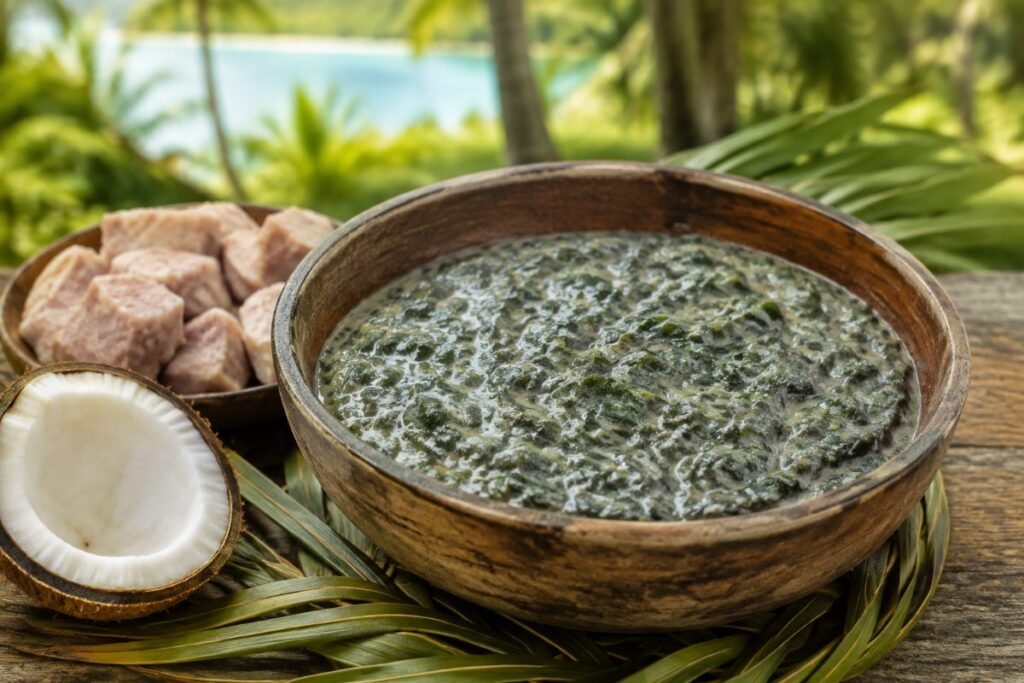
- The leaves will collapse and darken from grey-green to a deep olive, and the mixture will thicken to a coarse mash. Do not cover the pot – taro leaf must be cooked with the lid off so the volatile compounds escape.
- Stir in the thick coconut cream and simmer gently 10 minutes more, never letting it boil hard or the cream will split into oil and curds.
- Fold in the crab meat and any coral, season with salt, pepper and lime juice, and cook just 3–4 minutes so the crab warms through without toughening.
- Test the texture: demok should be thick enough to hold its shape on a spoon and glossy with coconut oil. Serve hot with boiled taro root, breadfruit or rice.
Technique
- Taro leaves contain needle-like calcium oxalate crystals and must be thoroughly cooked – at minimum 40–45 minutes of total cooking, with the first water discarded. Undercooked leaves cause a sharp burning in the throat that lasts hours.
- Never cover the pot while the leaves cook. Palauan and wider Pacific cooks are firm on this and it genuinely helps drive off the irritants.
- Fresh coconut cream, pressed from grated mature coconut, is what gives demok its sweetness. Tinned cream works but tastes flatter, so add a little more lime to compensate.
Substitutions
- No taro leaves? Young callaloo, spinach or the leaves of sweet potato make a similar mash, and none need the long detoxifying boil – reduce the cooking to 15 minutes.
- Crab can be replaced with flaked smoked or fresh reef fish, or in some households with tinned tuna, which is very common in Palau today.
Variations
- Demok with chicken, made when crab is out of season.
- Demok baked in an earth oven wrapped in more taro leaves, the older ceremonial preparation.
- A plain coconut-and-onion demok with no protein, served alongside a fish course.
History
A traditional Palauan dish made from taro, pounded and combined with coconut milk, closely related to similar taro-and-coconut preparations found across the wider Pacific Islands region, reflecting taro’s long establishment as a significant staple crop across Palau and neighboring Pacific island nations well before extensive European contact. Its preparation, pounding cooked taro to a smooth consistency before combining it with coconut milk, reflects a broader regional technique for transforming taro into a rich, filling dish rather than eating it plain, similar in underlying approach to other Pacific Islander taro preparations found under different specific names across the region. Demok remains a traditional Palauan food, closely tied to the significant role taro cultivation has historically played in Palauan agriculture and diet.
Frequently asked questions
What is Demok?
Demok is a soup & stew from Palau: taro leaves stewed to a thick green mash with coconut milk and crab meat. A traditional Palauan dish made from taro, pounded and combined with coconut milk, closely related to similar taro-and-coconut preparations found across the wider Pacific Islands region, reflecting taro’s long establishment as a significant staple crop across Palau and neighboring Pacific island nations well before extensive European contact. Its preparation, pounding cooked taro to a smooth consistency before combining it with coconut milk, reflects a broader regional technique for transforming taro into a rich, filling dish rather than eating it plain, similar in underlying approach to other Pacific Islander taro preparations found under different specific names across the region. Demok remains a traditional Palauan food, closely tied to the significant role taro cultivation has historically played in Palauan agriculture and diet.
How long does Demok take to make?
Demok takes 30 min of preparation and 1 hr of cooking. The recipe makes 4 servings. It is rated medium to make.
What can I substitute in Demok?
Yes, within limits. No taro leaves? Young callaloo, spinach or the leaves of sweet potato make a similar mash, and none need the long detoxifying boil – reduce the cooking to 15 minutes. Crab can be replaced with flaked smoked or fresh reef fish, or in some households with tinned tuna, which is very common in Palau today.
What is the most important thing to get right in Demok?
The leaves will collapse and darken from grey-green to a deep olive, and the mixture will thicken to a coarse mash. Do not cover the pot – taro leaf must be cooked with the lid off so the volatile compounds escape.