
Ingredients
The prawns
- 800 graw prawns
- shell on if possible
- peeled and deveined
- shells kept for stock
- juice of 1 lime
- 1 teaspoonsalt
The sofrito
- 4 tablespoonsolive oil
- 1large onion, finely chopped
- 1green pepper, diced
- 6 clovesgarlic, crushed
- 1 teaspoonground cumin
- 1 teaspoondried oregano
- 2bay leaves
The sauce
- 400 gtomato passata
- or 1 tin chopped tomatoes
- 2 tablespoonstomato purée
- 100 mldry white wine
- or dry sherry
- 100 mlprawn stock
- or water
- 1 teaspoonsugar
- half a teaspoon hot chilli
- or to taste
- salt and black pepper
To finish
- a handful of parsley or coriander
- chopped
- juice of half a lime
- a dash of hot sauce, optional
To serve
- white rice
- or arroz congrí
- fried plantain, tostones
- or maduros, the sweet kind
- lime wedges
Directions
- Pull the head off and peel the shell away. Leave the tail on if you like the look. Cut a shallow slit along the back. Pull out the dark thread with a knife tip. Put the shells and heads in a small pan. Add water to cover and a bay leaf.
- Simmer them for ten minutes. Press them and strain the liquid. Squeeze them hard when straining. Toss the peeled prawns with lime juice and salt. Leave them fifteen minutes only. It turns them opaque and firm. Marinate in the refrigerator, not on the counter.
- Heat the olive oil in a wide pan. Add the chopped onion and green pepper. Cook them slowly, not quickly. Give them a full twelve minutes. Add the crushed garlic and cook two minutes. Do not let it brown, which turns it bitter.
- Add the cumin, oregano and bay leaves. Fry them for a minute in the oil. Rub the dried oregano between your palms. Add the tomato purée and cook it two minutes. Add the passata or chopped tomatoes. Add the wine and the prawn stock. Add the sugar and the chilli. It should not make the sauce sweet. Taste before and after to see the difference. Bring it to a simmer and lower the heat.
- Simmer it uncovered for about twenty minutes. It should reduce and thicken noticeably. Add salt and pepper and taste it. It should taste complete before the prawns go in.
- Add the prawns and their lime juice. Stir them into the sauce. Prawns need three or four minutes only. Take the pan off the heat. Stir in the chopped parsley or coriander. Squeeze over the lime juice. Taste and correct the salt one last time.
- Add hot sauce if you want more heat. Serve it over plain white rice. Serve fried plantain alongside. Maduros are the ripe plantain, sweet and soft. Put lime wedges on the table. It keeps two days refrigerated. Make the sauce ahead and keep it. The sauce keeps four days refrigerated.
Technique
- A Cuban enchilado is not a Mexican enchilada. It means a dish in a tomato-based creole sauce, not a rolled tortilla; the shared root is only chile. The confusion is common and worth correcting.
- Cuban food is generally not chilli-hot. It leans on garlic, cumin, oregano and citrus, with hot sauce added at the table by whoever wants it — which surprises people expecting Caribbean heat.
- Cook the sofrito slowly for a full twelve minutes until the onion and pepper are completely soft and sweet, barely coloured. A rushed sofrito tastes raw and sharp, and it is the commonest weakness in this dish.
- Reduce the sauce further than you think, before the prawns go in. They release water as they cook and a sauce that was right becomes watery.
- Season and correct the sauce before adding the prawns. They cook in three or four minutes, which is no time to adjust anything.
- A prawn curled into a loose C is done; curled into a tight O it is overcooked. Take the pan off early since they keep cooking in the hot sauce, and rubbery prawns cannot be undone.
- Marinate the prawns in lime for fifteen minutes and no longer. Lime juice cures them chemically — left long enough they are effectively cooked, which is ceviche and a different dish.
- Simmer the shells and heads for ten minutes to make a quick stock, pressing the heads hard when you strain. The heads carry most of the flavour and the stock is far better than water in the sauce.
- A teaspoon of sugar removes the sharp edge from tinned tomatoes or passata without making the sauce sweet. Taste before and after.
- Make the sauce ahead if you can. It keeps four days refrigerated and freezes for three months; adding fresh prawns to reheated sauce gives a far better result than reheating the finished dish, which toughens them.
- Rub dried oregano between your palms as it goes in, which releases its oils.
- This contains shellfish, a common and potentially severe allergen. Say so plainly.
Substitutions
- Cooked prawns can be used but must go in off the heat at the very end; raw prawns are much better.
- Dry sherry replaces white wine and is arguably more traditional.
- Tinned chopped tomatoes replace passata; cook them a little longer to break down.
- Water replaces prawn stock if you buy the prawns already peeled.
- Lobster, crab or firm white fish can be cooked the same way — enchilado de langosta is a classic.
- Coriander replaces parsley; both are used.
Variations
- Enchilado de langosta, made with lobster, is the celebratory version of the same sauce.
- Enchilado de cangrejo uses crab and is common on the coast.
- Camarones al ajillo, prawns in garlic and oil, is the simpler Cuban treatment.
- Arroz congrí, rice cooked with black beans, is the standard partner instead of plain rice.
- Ropa vieja, shredded beef in a similar creole sauce, uses the same sofrito base.
- A version finished with a splash of cream is made in some restaurants, though it is not traditional.
History
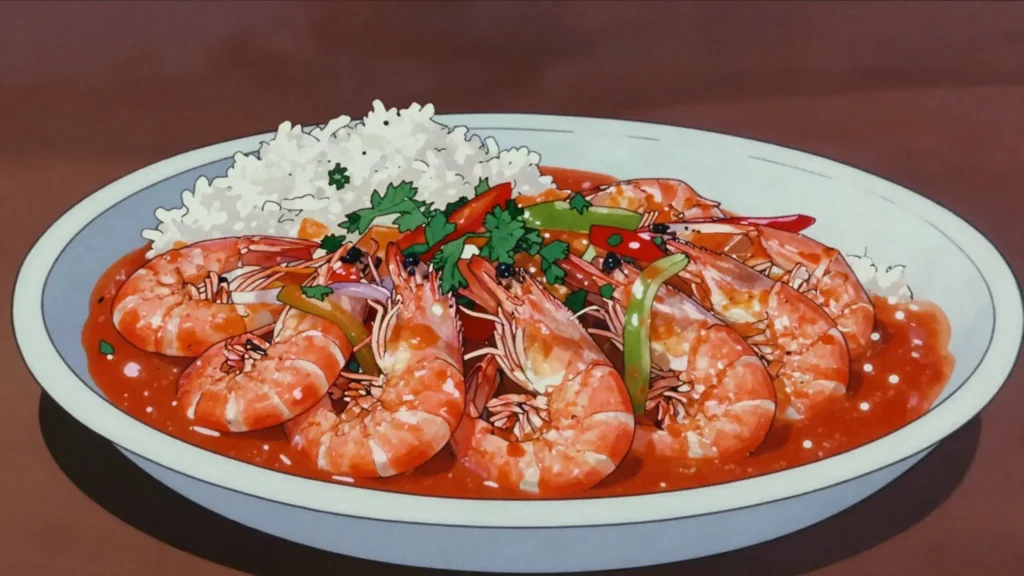
Shrimp, cooked in a spiced tomato-based sauce built from garlic, onion, bell pepper and a splash of wine, documented across Cuba as one of the country’s most popular seafood dishes, reflecting the island’s coastal geography and its correspondingly significant tradition of Caribbean shellfish cookery. Its name, meaning literally chili-sauced shrimp despite the dish generally carrying only mild heat rather than significant spiciness by broader Latin American standards, reflects a regional Cuban use of the word enchilado to describe a tomato-based sauce rather than referring specifically to hot chili peppers. Camarones enchilados remains a widely eaten dish across Cuba, typically served over white rice as a comforting, everyday seafood meal.
Frequently asked questions
What is Camarones enchilados?
Camarones enchilados is a main from Cuba: shrimp simmered in tomato-sofrito creole sauce. Shrimp, cooked in a spiced tomato-based sauce built from garlic, onion, bell pepper and a splash of wine, documented across Cuba as one of the country’s most popular seafood dishes, reflecting the island’s coastal geography and its correspondingly significant tradition of Caribbean shellfish cookery. Its name, meaning literally chili-sauced shrimp despite the dish generally carrying only mild heat rather than significant spiciness by broader Latin American standards, reflects a regional Cuban use of the word enchilado to describe a tomato-based sauce rather than referring specifically to hot chili peppers. Camarones enchilados remains a widely eaten dish across Cuba, typically served over white rice as a comforting, everyday seafood meal.
How long does Camarones enchilados take to make?
Camarones enchilados takes 20 minutes of preparation and 30 minutes of cooking. The recipe makes serves 4. It is rated easy to make.
What can I substitute in Camarones enchilados?
Yes, within limits. Cooked prawns can be used but must go in off the heat at the very end; raw prawns are much better. Dry sherry replaces white wine and is arguably more traditional. Tinned chopped tomatoes replace passata; cook them a little longer to break down. Water replaces prawn stock if you buy the prawns already peeled. Lobster, crab or firm white fish can be cooked the same way — enchilado de langosta is a classic. Coriander replaces parsley; both are used.
What is the most important thing to get right in Camarones enchilados?
Heat the olive oil in a wide pan. Add the chopped onion and green pepper. Cook them slowly, not quickly. Give them a full twelve minutes. Add the crushed garlic and cook two minutes. Do not let it brown, which turns it bitter.