
Ingredients
The pasta
- 400 gspaghetti
- or bucatini
- plenty of water
- coarse salt for the water
The sauce
- 200 gguanciale
- cured pork jowl
- in thick strips
- 400 gpeeled tomatoes
- San Marzano if possible
- 1dried peperoncino
- or a pinch of chilli flakes
- a splash of dry white wine
- optional
To finish
- 80 gpecorino romano
- finely grated
- plus more at the table
- black pepper
Not in it
- no garlic
- no onion
- no olive oil
- the guanciale gives the fat
Directions
- Use guanciale if you possibly can. Roman cooks are genuinely firm about those omissions. Cut the guanciale into thick short strips. Remove the peppered rind from the outside. Cut it into strips about half a centimetre thick. Thick strips stay meaty rather than turning to crisps. Put the guanciale in a cold dry pan. Start it in a cold pan with no oil at all.
- Bring the heat up slowly from cold. A hot pan burns the outside before it renders. Lift the guanciale out and set it aside. Leave all of the rendered fat in the pan. That keeps it crisp rather than stewing it. Pour a little off if it seems excessive. Keep most of it, since it carries the flavour.
- Add the dried peperoncino to the hot fat. Let it sizzle for about thirty seconds. Remove it later or leave it in. Splash in a little dry white wine. Let it bubble away almost entirely. Some Roman cooks use wine and some do not. Add the peeled tomatoes, crushed by hand.
- Crush them with your hands rather than blending. Add them straight into the hot fat. Simmer the sauce for about fifteen minutes. It should thicken and darken during that time. Stir it occasionally so it does not catch. Do not add salt until you have tasted it. Add plenty of black pepper regardless. Boil the pasta in plenty of well salted water. Use a large pot with plenty of water.
- Salt it generously, since it seasons the pasta. The water should taste clearly salty. Cook it a minute less than the packet says. That last minute in the pan matters. Keep a mugful of the pasta water before draining. That water is thick with released starch.
- Drain the pasta and add it to the sauce. Add it directly into the pan of sauce. Toss it over a moderate heat for a minute. Add a splash of the pasta water as you toss. Toss it vigorously rather than stirring gently. Keep it moving for a full minute. Add more pasta water if it looks dry. Add the crisp guanciale back to the pan. That keeps it crisp rather than softening it.
- Toss it through quickly and take it off. It should stay in distinct pieces. Take the pan off the heat and add the pecorino. Add it off the heat rather than over it. Toss it through until it melts smoothly. Add more pasta water if it goes stiff. Pecorino seizes badly if it gets too hot. Grate the pecorino finely rather than coarsely. Use the fine side of the grater.
- Serve the pasta immediately in warm bowls. The sauce separates within a few minutes. Serve it the moment it comes together. Have the bowls warm and ready first. Grate more pecorino over each bowl. Add plenty of freshly ground black pepper. Put the cheese out for people to add more. It does not keep or reheat well at all. Make only as much as will be eaten.
Technique
- There is no garlic, no onion and no added olive oil in a proper amatriciana — the guanciale renders all the fat needed, and Roman cooks are genuinely firm about those omissions. Variations exist but they are variations; the atlas records the traditional version.
- Add the pecorino off the heat with a splash of pasta water. Pecorino seizes badly if it gets too hot, clumping into rubbery strings instead of melting, and that is the commonest failure in this dish. Grate it finely, since coarse gratings clump.
- Always keep a mugful of the starchy pasta water before draining: it emulsifies the fat and cheese into a sauce, and without it the fat simply separates. Serve immediately, since the emulsion breaks as it cools.
Substitutions
- This entry sits under Vatican City in the atlas, but the dish is Roman rather than Vatican in origin — the Vatican is entirely enclaved within Rome and Roman food is simply what is eaten there. The atlas records the origin honestly as Amatrice and then Rome rather than claiming otherwise.
- Pancetta is often suggested for guanciale but genuinely gives a different result, since cured pork jowl is fattier, more strongly flavoured and renders differently; use guanciale if you possibly can. Bucatini or rigatoni replace spaghetti and all three are genuinely served in Rome. Pecorino romano is a hard salty sheep’s milk cheese and parmesan is not the same thing.
Variations
- Cut the guanciale into thick half-centimetre strips and start it in a cold dry pan, bringing the heat up slowly so the fat renders gradually — a hot pan burns the outside before it renders, and thin strips just shrivel away. Aim for crisp edges with a soft centre, then lift it out and return it only at the very last moment so it stays crisp.
- Gricia is the same dish without tomato — guanciale, pecorino and black pepper only — and is the older of the two, since tomatoes reached Italy from the Americas and entered the cooking only slowly, with amatriciana taking tomato after the eighteenth century.
- An earthquake destroyed much of Amatrice in August 2016, killing hundreds. Restaurants worldwide then sold amatriciana for donations in a campaign known as amatriciana solidale, which the atlas records plainly and respectfully.
History
From Amatrice in the Apennines; the older white gricia gained tomato after the eighteenth century and the dish became a Roman standard.
Frequently asked questions
What is Spaghetti all’amatriciana?
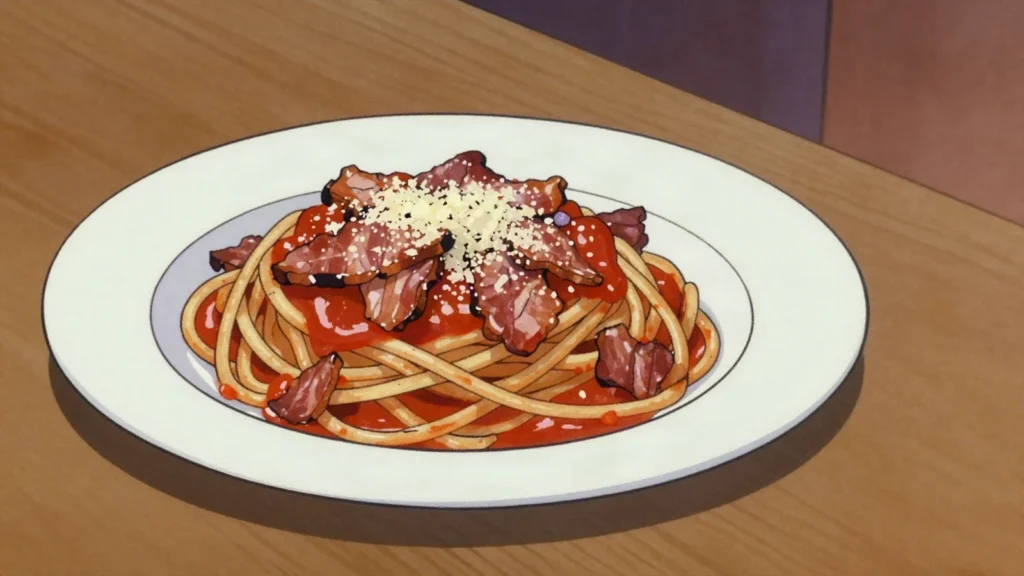
Spaghetti all’amatriciana is a main from Vatican City: guanciale, tomato and pecorino pasta, Roman staple. From Amatrice in the Apennines; the older white gricia gained tomato after the eighteenth century and the dish became a Roman standard.
How long does Spaghetti all’amatriciana take to make?
Spaghetti all’amatriciana takes 10 minutes of preparation and 25 minutes of cooking. The recipe makes serves 4. It is rated easy to make.
What can I substitute in Spaghetti all’amatriciana?
Yes, within limits. This entry sits under Vatican City in the atlas, but the dish is Roman rather than Vatican in origin — the Vatican is entirely enclaved within Rome and Roman food is simply what is eaten there. The atlas records the origin honestly as Amatrice and then Rome rather than claiming otherwise. Pancetta is often suggested for guanciale but genuinely gives a different result, since cured pork jowl is fattier, more strongly flavoured and renders differently; use guanciale if you possibly can. Bucatini or rigatoni replace spaghetti and all three are genuinely served in Rome. Pecorino romano is a hard salty sheep’s milk cheese and parmesan is not the same thing.
What is the most important thing to get right in Spaghetti all’amatriciana?
Use guanciale if you possibly can. Roman cooks are genuinely firm about those omissions. Cut the guanciale into thick short strips. Remove the peppered rind from the outside. Cut it into strips about half a centimetre thick. Thick strips stay meaty rather than turning to crisps. Put the guanciale in a cold dry pan. Start it in a cold pan with no oil at all.