
Ingredients
Pit and fuel
- a pit about 1.2 m across and 60 cm deep
- dry hardwood, enough for a 2 hr fire
- 30–40smooth river stones the size of a fist – never porous or river-wet stones, which explode
- a metal sheet or old iron roofing, and a spade
Meat and vegetables
- 4 kgpork belly and shoulder, cut in large pieces
- 3 kgkaukau (sweet potato), scrubbed and halved
- 2 kgtaro, peeled and quartered
- 1 kgyam, peeled and cut in chunks
- 2 kggreen bananas or cooking bananas, peeled
- 1 kgaibika, pumpkin tips or other leafy greens
- 4corn cobs (optional)
Seasoning and lining
- 1 litrethick coconut cream, from 4 grated coconuts
- 3 tbspsalt
- 6spring onions, chopped
- 2chillies, chopped (optional, Highlands cooks often use none)
- banana leaves, wilted over a flame until pliable – a large armful
- fresh green banana stems or wet grass, for the top layer
Directions
- Dig the pit, lay the stones in the bottom and build a hardwood fire over them. Burn it hard for 2 hours until the stones are white-hot and the wood has burned down to embers.
- While the fire burns, wilt the banana leaves by passing them over a flame until they turn glossy and soft enough to fold without cracking, and prepare all the food.
- Rub the pork with salt and set aside. Toss the vegetables with salt and half the coconut cream.
- Rake the embers and ash out of the pit, leaving the hot stones, and level them. Set a few of the hottest stones aside on a spade.
- Line the pit with a thick double layer of banana leaves, overlapping generously, letting the ends hang well over the rim – you will fold them back over the top.
- Pack the food in layers: the pork and the hardest root vegetables lowest, against the stones, then taro and yam, then bananas and corn, with the greens on top so they steam rather than scorch. Tuck the reserved hot stones into the middle of the pork so it cooks from within.
- Pour the remaining coconut cream over everything, scatter the spring onion and chilli, and add a cup or two of water at the edge for extra steam.
- Fold the overhanging banana leaves over the food, add several more layers of leaves, then wet grass or banana stems, then the metal sheet, and finally shovel earth over the whole pit to seal it completely. No steam should escape – if you see a wisp, throw more earth on it.
- Leave it undisturbed for 3–4 hours. Do not open it to check; every opening loses the heat that is doing the cooking.
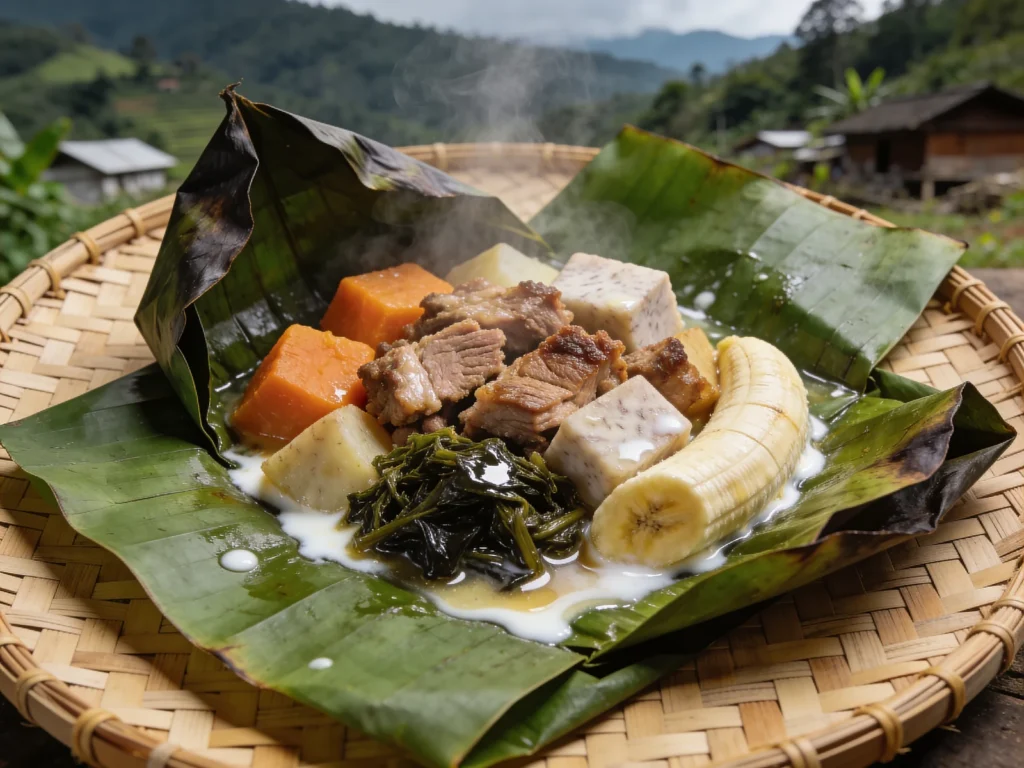
- Dig it out and unwrap it at the feast. The pork should be falling apart, the kaukau sweet and smoky-edged, the greens dark and soft. Serve straight from the leaves onto more banana leaves laid on the ground, and eat with the hands.
Technique
- Stone choice is a genuine safety matter. Porous, layered or water-logged stones trap moisture, and at white heat they can burst violently. Use dense, dry, smooth river stones that have been used before if you can.
- The seal is the whole technique. A mumu is not roasting but steaming under pressure in a sealed earth chamber, and a leaking pit gives you burnt outsides and raw insides.
- A mumu is a social institution rather than just a cooking method, made for bride price ceremonies, compensation payments, funerals and Christmas. The pit is built by the men, the food prepared by the women, and the distribution of the portions is a matter of protocol.
Substitutions
- No pit? Line a large heavy casserole with banana leaves, layer the food the same way with coconut cream, seal with leaves and a tight lid, and cook at 150°C (300°F) for 4 hours. Add 1 tsp smoked salt for the earth-oven note.
- Chicken or fish can replace the pork in coastal versions, wrapped in individual leaf parcels so they do not overcook.
Variations
- Coastal mumu, heavier on fish, coconut cream and taro.
- Highlands mumu, built around pork and kaukau, with fewer greens.
- Hangi and umu, the closely related Maori and Polynesian earth ovens built on the same principle.
History
A method of cooking food, most often pork along with vegetables including sweet potato and greens, in an earth oven using heated stones covered with leaves and soil, documented across Papua New Guinea for many centuries as a significant traditional cooking technique closely tied to community feasting and major celebrations. Pork carries particular cultural and ceremonial significance across much of Papua New Guinea’s traditional societies, historically functioning as a marker of wealth and status, and a mumu feast featuring pig specifically is often reserved for major occasions including weddings, initiations and significant community gatherings rather than routine everyday cooking. Preparing a mumu typically requires substantial communal labor, and the technique remains an important living tradition across many of Papua New Guinea’s hundreds of distinct cultural and linguistic communities.
Frequently asked questions
What is Mumu?
Mumu is a main from Papua New Guinea: earth-oven feast of pork, sweet potato, taro and greens steamed underground. A method of cooking food, most often pork along with vegetables including sweet potato and greens, in an earth oven using heated stones covered with leaves and soil, documented across Papua New Guinea for many centuries as a significant traditional cooking technique closely tied to community feasting and major celebrations. Pork carries particular cultural and ceremonial significance across much of Papua New Guinea’s traditional societies, historically functioning as a marker of wealth and status, and a mumu feast featuring pig specifically is often reserved for major occasions including weddings, initiations and significant community gatherings rather than routine everyday cooking. Preparing a mumu typically requires substantial communal labor, and the technique remains an important living tradition across many of Papua New Guinea’s hundreds of distinct cultural and linguistic communities.
How long does Mumu take to make?
Mumu takes 2 hr of preparation and 3–4 hr of cooking. The recipe makes 10–12 servings. It is rated hard to make.
What can I substitute in Mumu?
Yes, within limits. No pit? Line a large heavy casserole with banana leaves, layer the food the same way with coconut cream, seal with leaves and a tight lid, and cook at 150°C (300°F) for 4 hours. Add 1 tsp smoked salt for the earth-oven note. Chicken or fish can replace the pork in coastal versions, wrapped in individual leaf parcels so they do not overcook.
What is the most important thing to get right in Mumu?
Pack the food in layers: the pork and the hardest root vegetables lowest, against the stones, then taro and yam, then bananas and corn, with the greens on top so they steam rather than scorch. Tuck the reserved hot stones into the middle of the pork so it cooks from within.