
Ingredients
Plantain
- 6green plantains
- water, for boiling
- 2 teaspoonssalt
Pork
- 250 gpork belly or fatback, cubed
- or 200 g bought chicharrones
Sofrito
- 1onion, finely chopped
- 1green pepper, finely chopped
- 8garlic cloves, crushed
- 1 teaspoonground cumin
- 1 teaspoondried oregano
- juice of 1 lime
- black pepper
To finish
- about 300 ml hot pork stock
- or hot chicken stock
- salt to taste
To serve
- the crackling, on top
- roast pork
- a lime wedge
Directions
- Cut the ends off with a knife. Score the skin lengthways in three or four places. Cut through the skin but not the flesh. Rub your hands with oil first if you can. Cut the pork belly into small cubes.
- Put them into a cold heavy pan. Set the pan over a very low heat. Let the fat render out slowly. Starting cold is what renders it properly. Lift them out and drain them well. Keep every drop of the rendered fat. Cut the peeled plantains into chunks. Put them in a pot of salted water. Bring the whole pot up to a boil.
- Let them cook for about twenty-five minutes. They should be completely tender. Drain them and keep some cooking water. Heat some of the pork fat in a pan. Add the chopped onion and pepper. Cook them for about eight minutes. Add the crushed garlic to the pan. This dish takes a great deal of garlic.
- Cook it gently for two minutes only. Do not let it brown or it turns bitter. Add the cumin and the oregano. Squeeze in all the lime juice. Put the hot drained plantain in a bowl.
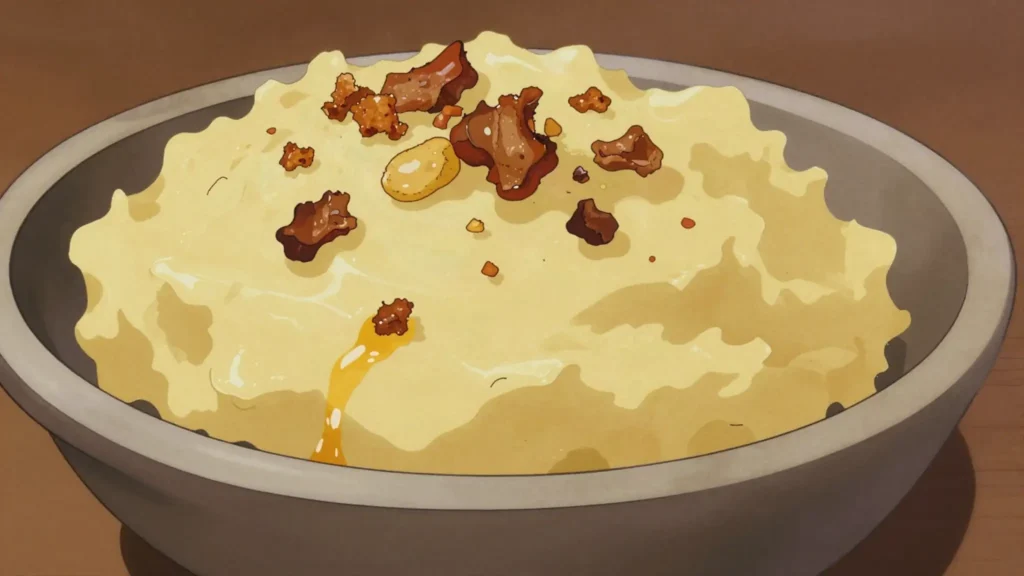
- Work while it is still very hot. Cold plantain goes hard and will not mash. Mash it with a heavy pestle or masher. Add the sofrito with all its fat. Keep mashing it all through together. Add hot stock a little at a time. Mash it in between each addition. It should be soft and hold its shape.
- Add more stock if it is stiff. Add more plantain if it is loose. Taste it and add salt generously. Plantain needs a good deal of salt. Add black pepper to it as well. Squeeze in more lime if it tastes flat. Stir most of the crackling through it. Keep some of it back for the top. Serving it is done piping hot.
- Pile it into a bowl or onto plates. Scatter the reserved crackling over it. Serve roast pork alongside it. Mash it again as you reheat it.
Technique
- The name comes directly from West African fufu, brought to Cuba by enslaved Africans, but the dishes differ: West African fufu is pounded until elastic and eaten unseasoned with sauce, while Cuban fufú is mashed, softer and seasoned heavily with garlic and pork.
- Green plantains are essential, since they are starchy and behave like potato, while ripe yellow plantain makes a sweet mush that is a different dish entirely.
- The pork must start in a cold pan so the fat renders slowly, and every drop of that rendered fat goes into the dish as its main flavour.
Substitutions
- Bought chicharrones stand in for home-rendered crackling.
- Olive oil replaces pork fat for a version without meat, though it tastes quite different.
Variations
- Some cooks add a little of the plantain cooking water instead of stock.
- A version with more sofrito and less pork is also made.
- Mofongo in Puerto Rico is the closely related dish, made with fried plantain.
History
Mashed green plantain, seasoned with garlic, pork cracklings and olive oil until it reaches a smooth, moist consistency, documented across Cuba with roots tracing to West and Central African culinary tradition, brought to the island through the transatlantic slave trade and closely related to similarly named mashed plantain and root vegetable dishes found across the wider Caribbean and West Africa. Its name and technique, mashing a starchy staple with fat and seasoning into a cohesive dish, directly echoes the broader African fufu tradition found under related names across a very wide geographic range from West Africa to the Caribbean. Fufú de plátano remains a traditional Afro-Cuban dish, closely tied to Cuba’s significant African culinary heritage.
Frequently asked questions
What is Fufú de plátano?
Fufú de plátano is a salad & side from Cuba: mashed plantains with garlic and pork cracklings. Mashed green plantain, seasoned with garlic, pork cracklings and olive oil until it reaches a smooth, moist consistency, documented across Cuba with roots tracing to West and Central African culinary tradition, brought to the island through the transatlantic slave trade and closely related to similarly named mashed plantain and root vegetable dishes found across the wider Caribbean and West Africa. Its name and technique, mashing a starchy staple with fat and seasoning into a cohesive dish, directly echoes the broader African fufu tradition found under related names across a very wide geographic range from West Africa to the Caribbean. Fufú de plátano remains a traditional Afro-Cuban dish, closely tied to Cuba’s significant African culinary heritage.
How long does Fufú de plátano take to make?
Fufú de plátano takes 25 minutes of preparation and 35 minutes of cooking. The recipe makes serves 6. It is rated easy to make.
What can I substitute in Fufú de plátano?
Yes, within limits. Bought chicharrones stand in for home-rendered crackling. Olive oil replaces pork fat for a version without meat, though it tastes quite different.
What is the most important thing to get right in Fufú de plátano?
Put them into a cold heavy pan. Set the pan over a very low heat. Let the fat render out slowly. Starting cold is what renders it properly. Lift them out and drain them well. Keep every drop of the rendered fat. Cut the peeled plantains into chunks. Put them in a pot of salted water. Bring the whole pot up to a boil.