
Ingredients
Crab
- 4live blue crabs, very fresh
- or 4 whole raw blue crabs, frozen and thawed
- coarse salt, for scrubbing
Soy brine
- 800 mlsoy sauce
- 1 litrewater
- 150 gsugar
- 1onion, halved
- 1apple, halved
- 1pear, halved
- 6dried shiitake
- a piece of kombu, 10 cm
- 8garlic cloves
- 5cm ginger, sliced
- 3dried chillies
- 10black peppercorns
- 2spring onions
- 50 mlsoju or mirin
To serve
- hot short grain rice
- sliced chilli
- sliced garlic
- toasted sesame seeds
- sesame oil
- gim, toasted seaweed
Directions
- Salt and soy do not reliably kill pathogens. Keep everything refrigerated throughout. Never let the crab sit at room temperature.
- Chill the live crabs thoroughly first. Cold makes them still and easier to handle. Use a stiff brush on every crevice. Rinse them in several changes of cold water. Lift the triangular flap on the underside. Pull the flap off and discard it. Remove the gills from inside the shell.
- Leave the roe and the shell in place. Trim the sharp points off the legs. Put the water into a large pot. Add the onion, apple and pear. Add the shiitake, kombu and garlic. Add the ginger, chillies and peppercorns.
- Add the whole spring onions in too. Bring the whole pot up to a boil. Let it simmer for about fifteen minutes. Take out the kombu after five minutes. Kombu turns slimy if boiled too long. Simmer it another five minutes. Strain the brine through a fine sieve. Discard all of the solids now. Stir in the soju or the mirin.
- Let it cool down completely first. It must be genuinely cold before use. Warm brine partially cooks the crab. Chill it in the refrigerator to be sure. Pack the cleaned crabs into a container. Lay them all with the belly upwards. That keeps the roe from running out.
- Pour the cold brine over to cover them. Everything must be fully submerged. Cover it and refrigerate it immediately. Leave it one day in the refrigerator. Boil it for five minutes and cool it again. Pour it all back over the crabs. Leave it two or three days in the refrigerator. The flesh turns translucent and firm.
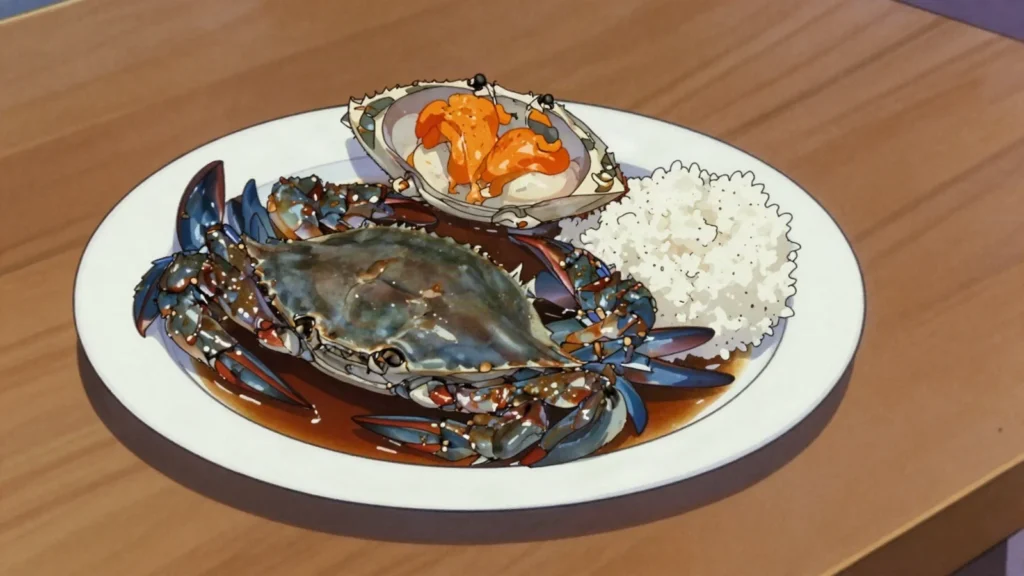
- Take the crabs out of the brine. Cut each one into halves or quarters. Use kitchen scissors for the legs. Set the top shell alongside, roe upwards. Spoon over a little of the brine. Scatter sliced chilli and garlic over it.
- Add sesame seeds and a drop of sesame oil. Then take the top shell with its roe. Put a spoonful of hot rice into it. Mix the rice with the roe and brine. It keeps three days refrigerated at most.
Technique
- This is raw crab and stays raw: the soy brine cures and flavours it but does not cook it or make it safe, and salt and soy do not reliably kill pathogens; raw shellfish can carry Vibrio, which is most dangerous to people with liver disease or weakened immunity, and pregnant people, young children and older adults are advised to avoid raw shellfish entirely.
- Female crabs are preferred because they carry the orange roe, which is the prized part, and spring crabs before spawning are considered best.
- Many cooks brine in two stages, pouring the brine off after a day, boiling it and cooling it before returning it, which reduces the bacterial load in the brine and concentrates flavour but does not sterilise the crab itself.
Substitutions
- Commercially frozen raw blue crab is used where live crab is unavailable, and freezing kills some parasites though not bacteria.
- Yangnyeom gejang, the chilli-marinated version, uses the same raw crab with a gochugaru paste instead of soy.
Variations
- Some cooks reboil and return the brine two or three times over several days.
- Yangnyeom gejang is the spicy red version of the same dish.
- The brine left over is used to season rice and vegetables.
History
Soy-pickled crab appears in Joseon cookbooks; Koreans nickname it bap-doduk, the rice thief, for the bowls of rice it empties.
Frequently asked questions
What is Ganjang Gejang?
Ganjang Gejang is a main from South Korea: raw blue crab marinated in soy sauce, sucked straight from the shell. Soy-pickled crab appears in Joseon cookbooks; Koreans nickname it bap-doduk, the rice thief, for the bowls of rice it empties.
How long does Ganjang Gejang take to make?
Ganjang Gejang takes 40 minutes plus 3 days marinating of preparation and 20 minutes of cooking. The recipe makes serves 4 to 6. It is rated hard to make.
What can I substitute in Ganjang Gejang?
Yes, within limits. Commercially frozen raw blue crab is used where live crab is unavailable, and freezing kills some parasites though not bacteria. Yangnyeom gejang, the chilli-marinated version, uses the same raw crab with a gochugaru paste instead of soy.
What is the most important thing to get right in Ganjang Gejang?
Salt and soy do not reliably kill pathogens. Keep everything refrigerated throughout. Never let the crab sit at room temperature.