
Ingredients
Leaves
- 1.2 kgsweet potato leaves, thick stems removed
- A wooden mortar and pestle, or a food processor
Sauce
- 300 gsmoked fish, softened in hot water, skinned and boned
- 200 gdried fish or smoked shrimp, rinsed
- 150 mlred palm oil
- 150 gunsweetened roasted peanut paste
- 2onions (about 250 g), finely chopped
- 6garlic cloves, crushed
- 2scotch bonnet peppers, 1 chopped and 1 whole
- 2tomatoes, chopped
- 1 tbsptomato purée
- 800 mlwater
- 2stock cubes
- 1 tspsalt
- 1 tspblack pepper
To serve
- Steamed white rice, about 500 g raw weight
Directions
- Strip the leaves from their stems, wash them in several changes of water and shake dry.
- Pound the leaves in a wooden mortar, a handful at a time, until they break down into a dark green, fibrous mass. In Guinean kitchens this is done by hand and takes a good 20 minutes; the pounding, not chopping, is what releases the flavour.
- Blanch the pounded leaves in boiling water for 5 minutes, then drain them well, pressing out the water. This takes the raw bitterness off.
- Heat the palm oil in a heavy pot over medium heat until it thins and turns bright orange, but do not let it smoke.
- Fry the onion for 8 minutes until soft, then add the garlic, chopped pepper, tomato purée and tomatoes and cook 10 minutes until the mixture darkens and the oil separates.
- Add the flaked smoked fish and the dried fish and stir for 5 minutes so they take on the oil.
- Pour in the water and the stock cubes, bring to a simmer and add the pounded leaves. Stir them through until the pot turns a deep, dark green.
- Loosen the peanut paste with a ladle of hot liquid and stir it in, then drop in the whole scotch bonnet.
- Simmer uncovered, stirring often, for 45–60 minutes. The sauce is ready when it is thick enough to hold the mark of a spoon and a clear layer of red oil floats on top.
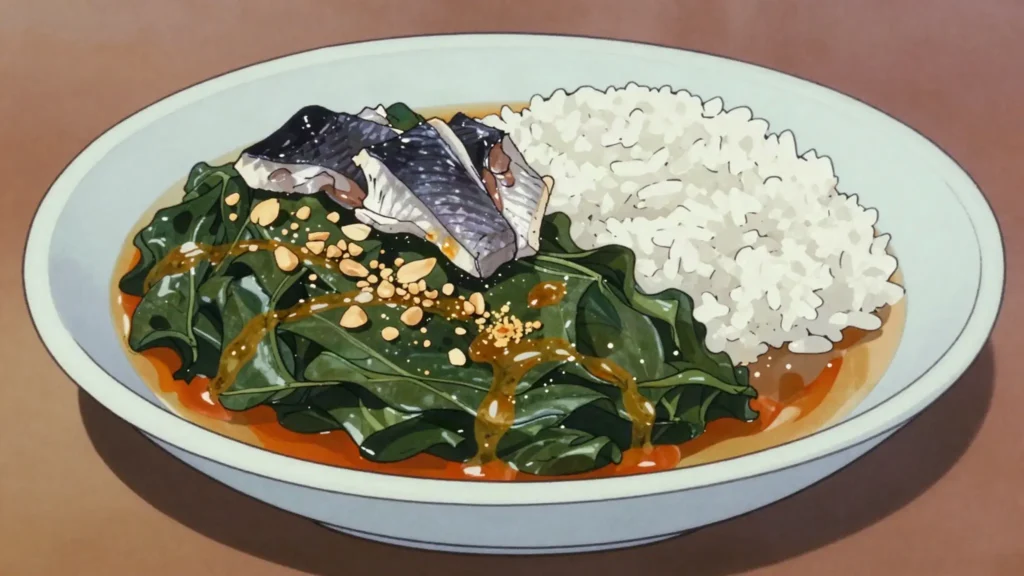
- Season with salt and pepper, lift out the whole pepper, and serve in a bowl with a mound of plain white rice, eaten with the right hand or a spoon.
Technique
- The leaf matters. Guinean sauce feuille is usually made with sweet potato leaves, which are mild and slightly sweet; cassava leaves, used elsewhere in the region, are more bitter and need longer cooking.
- Cassava leaves must be pounded and boiled thoroughly if you use them: raw cassava leaf contains cyanogenic compounds and is toxic until properly cooked.
- Palm oil is not interchangeable here. Its colour, its faint violet aroma and the way it separates on the surface are all part of what the dish is supposed to look and taste like.
- The long, slow simmer is what marries the leaves, the oil and the groundnut. Rushed sauce feuille tastes of three separate ingredients.
Substitutions
- No sweet potato leaves: use frozen pounded cassava leaves from an African grocer, or spinach with a handful of watercress for bite, though spinach cooks down far faster.
- No smoked fish: use smoked mackerel and a spoon of fish sauce; you lose the dried, chewy texture that makes the sauce satisfying.
Variations
- Sauce feuille with fonio instead of rice, the Fouta Djallon way.
- Sauce patate, made only with sweet potato leaves and no groundnut.
- Sauce feuille de manioc, the darker, more bitter cassava-leaf version.
History
A leafy green sauce, made from cassava leaf or other greens pounded and cooked down with palm oil, meat or fish and often peanut paste, developed in Guinean cooking as part of the wider West and Central African tradition of leafy green sauces built around palm oil and ground peanut, found under various related names and specific ingredient combinations across a broad swath of the region. Its preparation, requiring the leaves to be finely pounded and cooked for an extended period to achieve the correct smooth, thick consistency, reflects a labor-intensive traditional cooking method passed down across generations of Guinean households. Sauce feuille remains a common and widely eaten dish across Guinea, typically served over rice as a complete, filling meal.
Frequently asked questions
What is Sauce feuille?
Sauce feuille is a soup & stew from Guinea: pounded potato-leaf sauce with palm oil, peanut and smoked fish, over rice. A leafy green sauce, made from cassava leaf or other greens pounded and cooked down with palm oil, meat or fish and often peanut paste, developed in Guinean cooking as part of the wider West and Central African tradition of leafy green sauces built around palm oil and ground peanut, found under various related names and specific ingredient combinations across a broad swath of the region. Its preparation, requiring the leaves to be finely pounded and cooked for an extended period to achieve the correct smooth, thick consistency, reflects a labor-intensive traditional cooking method passed down across generations of Guinean households. Sauce feuille remains a common and widely eaten dish across Guinea, typically served over rice as a complete, filling meal.
How long does Sauce feuille take to make?
Sauce feuille takes 40 min of preparation and 1 hr 15 min of cooking. The recipe makes 6 servings. It is rated medium to make.
What can I substitute in Sauce feuille?
Yes, within limits. No sweet potato leaves: use frozen pounded cassava leaves from an African grocer, or spinach with a handful of watercress for bite, though spinach cooks down far faster. No smoked fish: use smoked mackerel and a spoon of fish sauce; you lose the dried, chewy texture that makes the sauce satisfying.
What is the most important thing to get right in Sauce feuille?
Heat the palm oil in a heavy pot over medium heat until it thins and turns bright orange, but do not let it smoke.