
Ingredients
Leaves
- 1 kgfresh young cassava leaves, thick stems stripped out, or 800 g frozen pounded cassava leaves
- 200 mlwater, for pounding
Meat and fish
- 500 gbeef chuck or goat, cut into 4 cm pieces
- 300 gsmoked or dried fish (bonga, barracuda or catfish), soaked 20 min and flaked, bones removed
- 100 gdried shrimp or crayfish, rinsed
- 200 gcow foot or tripe (optional, traditional)
The pot
- 250 mlred palm oil
- 2onions (300 g), finely chopped
- 6garlic cloves, crushed
- 150 gpure unsweetened peanut paste, loosened with 200 ml hot water
- 2stock cubes
- 2Scotch bonnet peppers, minced or left whole to taste
- 1 litrewater
- 2 tspsalt
To serve
- 600 gwhite rice, steamed
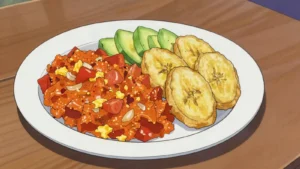
- Fried ripe plantain
Directions
- Strip the leaves off the stems and discard anything thick or fibrous. Wash them well; cassava leaves grow low and carry grit.
- Pound the leaves to a fine, dark green pulp in a large mortar with a splash of water, working in batches for 15–20 minutes. This is the traditional method and it takes real effort. Frozen pre-pounded leaves from an African grocer are a legitimate and widely used shortcut.
- Boil the pounded leaves in 1 litre of water for 30 minutes before anything else goes in. This first boil matters for more than texture: cassava leaves contain cyanogenic glycosides, and thorough pounding plus prolonged boiling in an uncovered pot is what makes them safe to eat.
- Meanwhile brown the beef in a little of the palm oil over high heat for 8 minutes, then set aside.
- Add the browned beef, the cow foot if using, the onion, garlic and stock cubes to the simmering leaves and cook covered for 45 minutes.
- Stir in the red palm oil. Let it work into the leaves over 20 minutes of gentle simmering; the pot will turn from dull green to a deep glossy green-black shot through with orange oil.
- Add the loosened peanut paste, the smoked fish and the dried shrimp, and simmer a further 30 minutes, stirring every 10 minutes so the peanut does not catch on the base.
- Add the Scotch bonnet and the salt. The pot should be thick, almost stiff, with the oil pooling on top; if it is soupy, simmer uncovered until it tightens.
- Total cooking time from the moment the leaves went into the water should be at least 2 hours. Undercooked cassava leaf tastes harsh and grassy and is not safe.
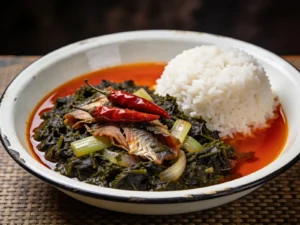
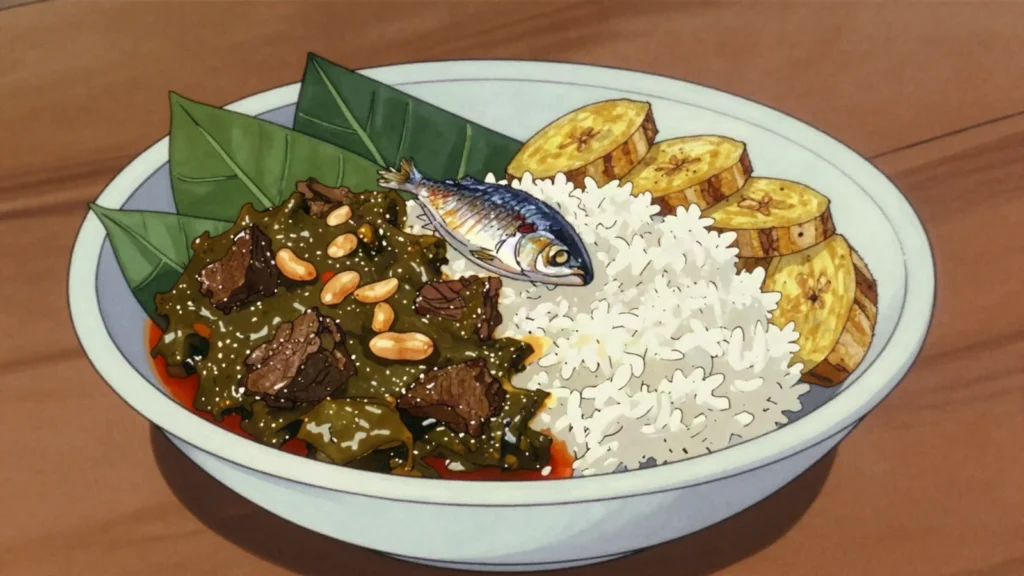
- Rest 15 minutes and serve in a mound over hot white rice with fried plantain on the side.
Technique
- Food safety comes first here. Raw and undercooked cassava leaves contain linamarin, which releases hydrogen cyanide. Pounding ruptures the cells so the enzyme can act, and an uncovered boil of at least an hour drives the volatile cyanide off. Never eat them raw, never cook them briefly, and keep the lid off for the first boil.
- Red palm oil is not a garnish here, it is a structural ingredient. The quantity looks alarming to outside eyes; it is what turns pounded leaves into cassava leaves the dish.
- Sierra Leonean cassava leaves is distinguished from the Congolese pondu or the Liberian version by the combination of peanut paste with palm oil and the layering of fresh meat, smoked fish and dried shrimp all in one pot.
- Cook it long and let it sit. Like most West African leaf stews it is markedly better reheated the next day.
Substitutions
- No fresh cassava leaves? Frozen pounded cassava leaves are sold in African shops and are what most diaspora cooks use; they are already blanched, so cut the first boil to 25 minutes but still cook uncovered.
- Sweet potato leaves or a mixture of spinach and kale can stand in for a similar-looking stew, though the flavour is much milder and the dish is then not really cassava leaves.
- Smoked fish can be replaced by any hot-smoked oily fish, and the dried shrimp by 1 tbsp of shrimp paste, though the texture contribution is lost.
Variations
- A version with chicken instead of beef, common for weekday cooking.
- Potato leaves (plasas), cooked by exactly the same method, which many Sierra Leoneans prefer.
- A version thickened with more peanut and no palm oil at all, made in the north.
History
Cassava came from Brazil with the Portuguese; Sierra Leoneans eat the leaves as well as the root, pounding them for hours before slow-cooking in palm oil.
Frequently asked questions
What is Cassava leaves?
Cassava leaves is a soup & stew from Sierra Leone: pounded cassava leaves cooked down with palm oil, peanut, fish and meat. Cassava came from Brazil with the Portuguese; Sierra Leoneans eat the leaves as well as the root, pounding them for hours before slow-cooking in palm oil.
How long does Cassava leaves take to make?
Cassava leaves takes 45 min of preparation and 2 hr of cooking. The recipe makes 6 servings. It is rated medium to make.
What can I substitute in Cassava leaves?
Yes, within limits. No fresh cassava leaves? Frozen pounded cassava leaves are sold in African shops and are what most diaspora cooks use; they are already blanched, so cut the first boil to 25 minutes but still cook uncovered. Sweet potato leaves or a mixture of spinach and kale can stand in for a similar-looking stew, though the flavour is much milder and the dish is then not really cassava leaves. Smoked fish can be replaced by any hot-smoked oily fish, and the dried shrimp by 1 tbsp of shrimp paste, though the texture contribution is lost.
What is the most important thing to get right in Cassava leaves?
Food safety comes first here. Raw and undercooked cassava leaves contain linamarin, which releases hydrogen cyanide. Pounding ruptures the cells so the enzyme can act, and an uncovered boil of at least an hour drives the volatile cyanide off. Never eat them raw, never cook them briefly, and keep the lid off for the first boil.