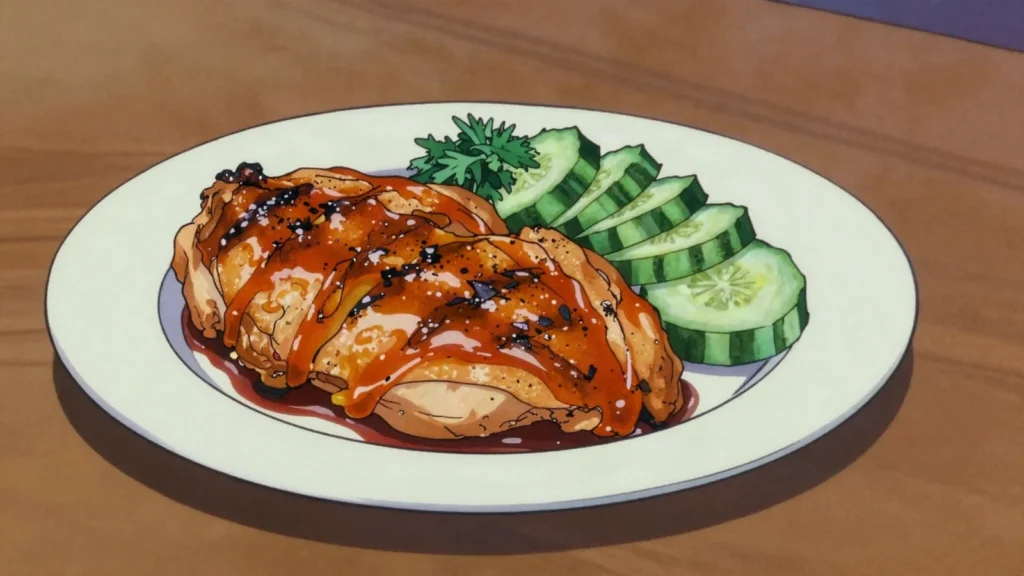

Ingredients
The chicken
- 1whole chicken
- spatchcocked, or jointed
- or 6 chicken legs
- skin left on
- 1 teaspoonsalt
- half a teaspoon turmeric
The spice paste
- 12dried red chillies
- soaked in hot water
- 8shallots, or 2 onions
- 6 clovesgarlic
- 4 stalkslemongrass
- tender inner part only
- a thumb of galangal
- a thumb of fresh turmeric
- or 1 teaspoon ground
- 2candlenuts, optional
- or 2 macadamia nuts
The gravy
- 400 mlcoconut milk
- plus 200 ml thick coconut cream
- for the finish
- 3 tablespoonsoil
- 1 tablespoontamarind water
- or juice of 1 lime
- 1 tablespoonpalm sugar
- or brown sugar
- salt, to taste
- 2kaffir lime leaves
- or makrut lime leaves
To serve
- nasi kerabu, the blue herb rice
- or plain steamed rice
- cucumber and raw herbs
- sambal, on the side
Directions
- Cover them with hot water for twenty minutes. Remove the seeds for a milder paste. Leave them in for a hotter one. Capsaicin oil clings to skin for hours. Trim off the dry top two thirds entirely. Peel away the tough outer layers.
- Slice the pale section very thinly across the grain. Thick slices will not blend smooth. Put the soaked chillies, shallots and garlic in a blender. Add the sliced lemongrass, galangal and turmeric.
- Add the candlenuts if you are using them. Add a splash of water to help the blades move. Blend it to a genuinely smooth paste. That takes several minutes and some scraping down. Heat the oil in a wide heavy pan. Add the paste and lower the heat. You fry until the oil separates out of the paste.
- Stir it frequently, since it catches easily. Lower the heat if it begins to stick. Add the coconut milk and stir it through. Add the lime leaves, torn slightly. Add the tamarind water and the palm sugar. Never let it boil hard at any point. Keep it at a bare simmer throughout.
- Simmer it for about fifteen minutes. It should thicken to a coating consistency. Season it with salt and taste it. It should be rich, sour, sweet and clearly spiced. Keep them separate from the start. Cut down either side of the backbone and remove it. Press the bird flat with the heel of your hand. Keep the backbone for stock. Score the thickest parts of the flesh.
- Cut two or three slashes into each piece. That helps it cook evenly and lets the gravy penetrate. Rub it with salt and a little turmeric. Let it sit for at least thirty minutes. Do not wash it under the tap.
- Use a separate board and wash everything afterwards. Never use a charcoal grill indoors. Grill outdoors in open air only. An oven and a hot grill work indoors instead. Cook the chicken over the cooler part. Give it forty to fifty minutes in total. Turn it every ten minutes or so. Brush gravy on generously at every turn.
- Let each layer set slightly before the next. Move it further from the heat if it darkens too fast. Roast the chicken at one hundred and eighty degrees. Baste it every fifteen minutes with the gravy. Give it about fifty minutes for legs.
- Pierce the thickest part near the bone. The juices must run clear rather than pink. Stir the thick coconut cream into the reserved gravy. Warm it gently without boiling. Taste it and adjust the salt and lime.
- Serve the chicken whole or cut into pieces. Spoon the reserved gravy over or alongside. Serve it with nasi kerabu if you can. Serve cucumber and raw herbs alongside. Serve a sambal for those who want more heat. Leftovers keep three days refrigerated.
Technique
- Divide the gravy into two portions before you start grilling: one for basting and one for serving. The basting gravy touches raw chicken and must not then be served as a sauce.
- Fry the spice paste until the oil separates and rises — pecah minyak, breaking the oil. It takes fifteen to twenty patient minutes with frequent stirring and it cannot be rushed. Undercooked rempah tastes sharp and raw whatever else you do.
- Grill slowly over moderate heat with the coals banked to one side. The coconut and sugar in the gravy catch and burn long before the chicken is cooked over fierce heat.
- Baste at every turn and let each layer set slightly before the next. That gradual build-up is what gives the lacquered crust, and it is the whole technique of the dish.
- Never let coconut milk boil hard. It splits into grainy oil; keep the gravy at a bare simmer and add the thick cream at the end.
- Do not wash the raw chicken. Washing splashes campylobacter and salmonella around the kitchen and does not remove them from the meat — only cooking does. Pat it dry and bin the paper.
- Check the chicken is cooked through at the thickest part near the bone. The juices must run clear and the flesh must not be pink at the bone.
- Charcoal produces carbon monoxide, which has no colour, smell or taste and kills in enclosed spaces. Grill outdoors only, never in a garage, tent or shed, and never bring a used grill inside. An oven with a hot grill finish works well indoors.
- Galangal is not ginger — it is sharper, more resinous and more piney, and ginger is a substitute rather than an equivalent. Frozen galangal from an Asian grocer works perfectly well.
- Use only the tender pale inner section of the lemongrass, sliced very thinly across the grain. The stalk is extremely fibrous and thick slices neither blend smooth nor eat well.
- Raw candlenuts are mildly toxic and always cooked in Southeast Asian use; frying them in the paste handles that. Macadamias are the usual substitute.
- Kelantan borders Thailand and its cooking is noticeably sweeter and more coconut-heavy than western Malaysia’s, sharing a great deal with southern Thai food. Nasi kerabu, the blue herb rice, is its best known dish and is the usual partner to ayam percik.
Substitutions
- Chicken legs replace a whole spatchcocked bird and are considerably easier to handle on a grill.
- Ginger replaces galangal, though galangal is the correct root and noticeably different.
- Macadamia nuts replace candlenuts closely; both can be left out at the cost of some body.
- Lime juice replaces tamarind water for the sourness, giving a brighter and less deep result.
- Fewer dried chillies, or seeding them all, makes a considerably milder gravy.
- An oven at 180 degrees with regular basting, finished under a hot grill, replaces charcoal entirely.
Variations
- Nasi kerabu, the blue rice with herbs and dried fish, is the classic Kelantan partner to this dish.
- Ayam golek is the closely related grilled chicken, often with a sweeter and darker gravy.
- A version with far more chilli is made for those who want it hot.
- Some cooks add a little belacan, fermented shrimp paste, to the rempah for depth, which makes it non-vegetarian in a way the base gravy is not.
- Ayam masak merah, chicken in a red tomato and chilli gravy, is the other great Malay chicken dish.
- Southern Thai grilled chicken dishes are close relatives across the border.
Frequently asked questions
What is Ayam Percik?
Ayam Percik is a main from Malaysia: kelantan grilled chicken basted in coconut-chili gravy.
How long does Ayam Percik take to make?
Ayam Percik takes 40 minutes plus marinating of preparation and 50 minutes of cooking. The recipe makes serves 6. It is rated medium to make.
What can I substitute in Ayam Percik?
Yes, within limits. Chicken legs replace a whole spatchcocked bird and are considerably easier to handle on a grill. Ginger replaces galangal, though galangal is the correct root and noticeably different. Macadamia nuts replace candlenuts closely; both can be left out at the cost of some body. Lime juice replaces tamarind water for the sourness, giving a brighter and less deep result. Fewer dried chillies, or seeding them all, makes a considerably milder gravy. An oven at 180 degrees with regular basting, finished under a hot grill, replaces charcoal entirely.
What is the most important thing to get right in Ayam Percik?
Stir it frequently, since it catches easily. Lower the heat if it begins to stick. Add the coconut milk and stir it through. Add the lime leaves, torn slightly. Add the tamarind water and the palm sugar. Never let it boil hard at any point. Keep it at a bare simmer throughout.