
Ingredients
Dough
- 500 gplain flour
- 200 mlice-cold water
- 1egg
- 1 tspsalt
Filling
- 300 gbeef chuck, minced
- 300 gpork shoulder, minced
- 1large onion, grated or minced with the meat
- 100 mlice-cold water or cold broth
- 1.5 tspsalt
- 1 tspcoarsely ground black pepper
To serve
- smetana
- melted butter
- white vinegar and plenty of black pepper
- hot broth and dill, if serving them in soup
Directions
- Mix the flour and salt, beat the egg into the ice-cold water, combine the two and knead for 10 minutes to a smooth, firm dough, much firmer than pasta dough. Wrap and rest 40 minutes; it will soften and become workable.
- Mix the two minced meats with the grated onion, salt and pepper, then beat in the ice-cold water a spoonful at a time until the filling is soft, sticky and pale. The water is what makes pelmeni juicy, so the filling should look almost too wet.
- Roll the dough 1.5–2 mm thin, keeping the rest wrapped, and cut 6 cm rounds with a glass. Siberian cooks roll each round separately from a small ball of dough.
- Put a 7 g ball of filling in the centre of each round, fold into a half-moon and pinch the edge shut, pressing out every trace of air. Then bring the two corners together and pinch them into a ring.
- That little ear shape is what makes it a pelmen rather than a vareniki, and it also stops them unfolding in the pot.
- Set them on a floured board, not touching, and freeze solid for at least 2 hours. In Siberia they were made in autumn and stored in sacks outdoors all winter, so freezing is part of the recipe rather than mere storage.
- Boil them from frozen, in batches, in a wide pot of heavily salted water, stirring once as they go in so they do not stick to the base.
- They rise to the surface after 3–4 minutes; from that moment cook 3–4 minutes more, until the dough at the pinched seam is tender and the filling is cooked through.
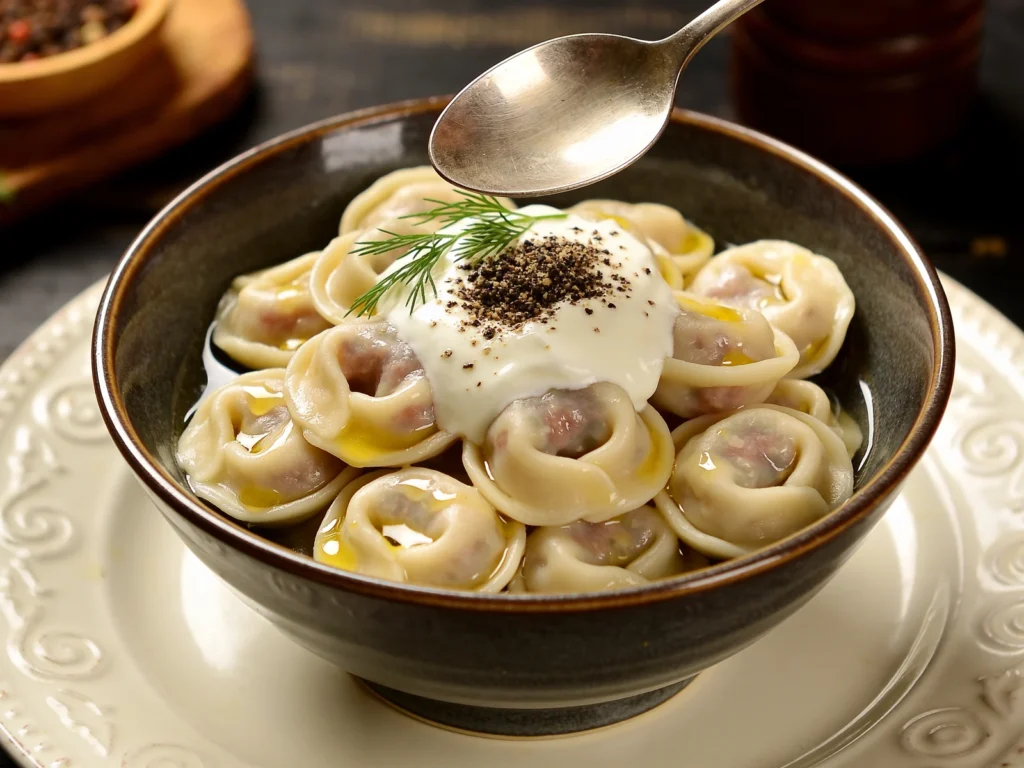
- Lift out with a slotted spoon, toss in butter and serve hot with smetana, a shake of vinegar and a heavy grind of black pepper, or in a bowl of the broth with dill.
Technique
- Pelmeni are Siberian, and the name comes from the Uralic pelnyan, meaning ear bread. They are meat-filled, thin-skinned and boiled. Vareniki are Ukrainian, larger, and filled with potato, cheese or cherries; do not mix the names in company.
- The classic filling is beef and pork together, sometimes with lamb added in the Urals. A single meat gives a noticeably drier result.
- Freeze them before boiling even if you plan to eat them tonight. Fresh ones burst; frozen ones hold their shape and cook evenly.
- The dough must be rolled genuinely thin. A thick skin makes them stodgy and the seam never cooks through.
Substitutions
- No minced pork: use all beef with 100 g grated beef fat or softened butter worked into the filling, or it will be dry.
- An egg-free dough of flour, water and salt is equally traditional and rolls even thinner.
- No smetana: crème fraîche, or thick yoghurt with a pinch of salt.
Variations
- Pelmeni fried in butter from frozen until blistered and brown, the standard treatment for leftovers.
- Pelmeni v gorshochke, baked in a clay pot with broth and cheese on top.
- Ural pelmeni with a three-meat filling of beef, pork and lamb.
History
Small dumplings of minced meat wrapped in thin dough, generally believed to have entered Russian cooking from Siberia and the Ural region, where contact with Turkic and Finno-Ugric peoples, and further trade contact reaching back toward Chinese dumpling traditions along Silk Road routes, likely introduced the technique sometime before the word pelmeni is first documented in the 1600s. Their name is thought to come from a Komi or Udmurt Finno-Ugric phrase roughly meaning bread ear, describing their small, folded shape. Siberia’s extreme cold made pelmeni especially practical for long-distance travel and storage: they were traditionally made in large batches, frozen outdoors in bulk through the winter, and boiled in small quantities as needed, a preservation method that predates mechanical refrigeration by centuries.
Frequently asked questions
What is Pelmeni?
Pelmeni is a main from Russia: little meat dumplings with smetana, vinegar or butter. Small dumplings of minced meat wrapped in thin dough, generally believed to have entered Russian cooking from Siberia and the Ural region, where contact with Turkic and Finno-Ugric peoples, and further trade contact reaching back toward Chinese dumpling traditions along Silk Road routes, likely introduced the technique sometime before the word pelmeni is first documented in the 1600s. Their name is thought to come from a Komi or Udmurt Finno-Ugric phrase roughly meaning bread ear, describing their small, folded shape. Siberia’s extreme cold made pelmeni especially practical for long-distance travel and storage: they were traditionally made in large batches, frozen outdoors in bulk through the winter, and boiled in small quantities as needed, a preservation method that predates mechanical refrigeration by centuries.
How long does Pelmeni take to make?
Pelmeni takes 1 hr 30 min of preparation and 10 min, plus 2 hr freezing of cooking. The recipe makes about 80 pelmeni, serves 6. It is rated medium to make.
What can I substitute in Pelmeni?
Yes, within limits. No minced pork: use all beef with 100 g grated beef fat or softened butter worked into the filling, or it will be dry. An egg-free dough of flour, water and salt is equally traditional and rolls even thinner. No smetana: crème fraîche, or thick yoghurt with a pinch of salt.
What is the most important thing to get right in Pelmeni?
That little ear shape is what makes it a pelmen rather than a vareniki, and it also stops them unfolding in the pot.