
Ingredients
The filling
- 4whole river fish
- tilapia or similar, cleaned
- or 400 g chontacuro
- palm weevil larvae
- 2 teaspoonssalt
Aromatics
- a handful of wild coriander
- or ordinary coriander
- 2spring onions, chopped
- 1chilli, chopped, optional
- juice of 1 lime
To wrap
- large bijao leaves
- or banana leaves
- fibre or string, to tie
To serve
- boiled yuca
- green plantain
- ají, chilli sauce
- opened at the table
Directions
- Heat makes it pliable and glossy. That is the sign that it is ready. Cut out the thick central rib. Cut the leaves into large rectangles. The central rib is stiff and will not fold. Keep the rib to use it as a tie. Scale and gut the fish if not already done.
- Rinse out the cavity thoroughly. Pat the whole fish completely dry. Cut two or three slashes in each side. That helps it all cook evenly.
- Rub the fish with salt inside and out. Squeeze lime juice all over it. Add spring onion and chilli with them. Rinse the chontacuro in cold water. Both are done across the region.
- Season them with salt and lime. Toss them with the chopped herbs. Lay two leaves in a cross shape. Set the fish or grubs in the centre. Use more if the leaves are small. Fold the sides in over the filling. Press it into a flat neat parcel. Tie it firmly with fibre or string.
- Tie it in both directions across the parcel. The parcel must not open on the fire. Steam pressure pushes the folds apart. Tie it more firmly than feels necessary. Wait until you have a bed of embers. There should be no flame at all. Lay the parcels directly on the embers. Give them about twelve minutes.
- Turn them over with a pair of tongs. Give them another twelve minutes. Turn them once or twice in all. Judging when they are done takes a check. Steam should escape when pierced. Do not judge the food by the leaf. Let them stand a moment first. Serving them is done at the table.
- Set each parcel onto a warm plate. That is exactly how it is done. Serve boiled yuca alongside them. Put chilli sauce on the table. It does not keep at all well after. Cook and eat it on the same day.
Technique
- The leaf is a cooking vessel rather than a wrapper: it holds the moisture in so the contents steam in their own juices while the outside chars. A blackened leaf is expected and normal since it is not eaten, and the parcels cook over embers rather than flame, which would burn through the leaf immediately.
- Chontacuro are palm weevil larvae gathered from fallen palm trunks, a genuine and long-standing food rich in fat and protein and sold in Amazonian markets. Insects contain tropomyosin, as shellfish and dust mites do, and that cross-reactivity is documented — anyone with a shellfish allergy should avoid them.
- The parcels fill with very hot steam that scalds badly when released, so let them stand a moment and open them away from your face.
Substitutions
- Banana leaves work the same way as bijao and are far more widely available.
- Ordinary coriander stands in for the wild Amazonian herbs, though it is milder.
Variations
- The same technique is used for many fillings besides fish and grubs.
- Some cooks remove the grubs’ heads and others cook them whole.
- It is opened at the table, which is part of the serving.
History
An Amazonian Kichwa technique; the leaf parcel steams the tilapia or chontacuro and is opened at the table.
Frequently asked questions
What is Maito?
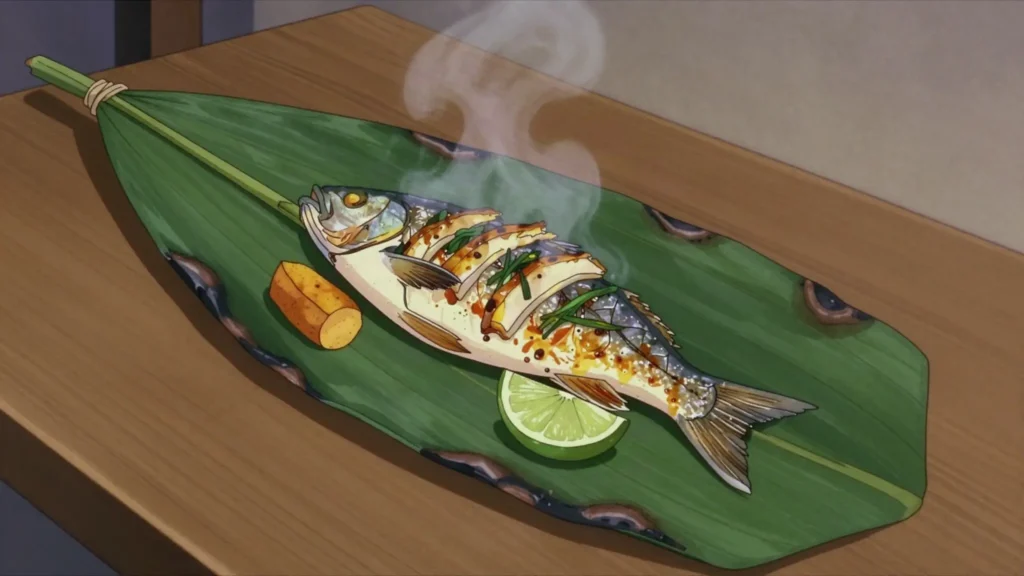
Maito is a main from Ecuador: river fish or grubs wrapped in bijao leaves and grilled over embers. An Amazonian Kichwa technique; the leaf parcel steams the tilapia or chontacuro and is opened at the table.
How long does Maito take to make?
Maito takes 30 minutes of preparation and 30 minutes of cooking. The recipe makes serves 4. It is rated medium to make.
What can I substitute in Maito?
Yes, within limits. Banana leaves work the same way as bijao and are far more widely available. Ordinary coriander stands in for the wild Amazonian herbs, though it is milder.
What is the most important thing to get right in Maito?
Rinse out the cavity thoroughly. Pat the whole fish completely dry. Cut two or three slashes in each side. That helps it all cook evenly.