
Ingredients
Jelly noodles
- 100 ggreen pea flour or mung bean starch
- 30 grice flour
- 600 mlwater
- 100 mlpandan extract from about 10 leaves
- a pinch of salt
- a large bowl of iced water
Coconut milk
- 400 mlthick coconut milk
- ¼ tspsalt
- 1pandan leaf
Syrup
- 200 ggula melaka, chopped
- 100 mlwater
- 1pandan leaf
To serve
- shaved or crushed ice
Directions
- Blend the pandan leaves with a little water and strain the pulp hard through muslin to get a deep green extract. Bottled pandan essence is a different and much harsher flavour and it shows immediately.
- Whisk the pea flour, rice flour, salt, water and pandan extract together until completely smooth.
- Cook over a medium heat, stirring constantly, until it thickens into a stiff, glossy, translucent paste, then keep going for a further 2 minutes past that point or the noodles will disintegrate in the water.
- Set a cendol press, or a colander with round holes, over a large bowl of iced water.
- Push the paste through while it is still hot, so it drops in short strands into the ice water and sets the instant it lands.
- The cold water is what gives the noodles their shape and their bite. Lukewarm water produces limp strands that fall apart in the glass.
- Leave the noodles in the ice water for 10 minutes to firm up, then drain them.
- Melt the gula melaka with the water and a pandan leaf over a low heat into a thick dark syrup, then strain it and let it cool.
- Warm the coconut milk gently with the salt and a pandan leaf without letting it boil, then cool it. Boiled coconut milk splits and looks curdled sitting in a clear glass.
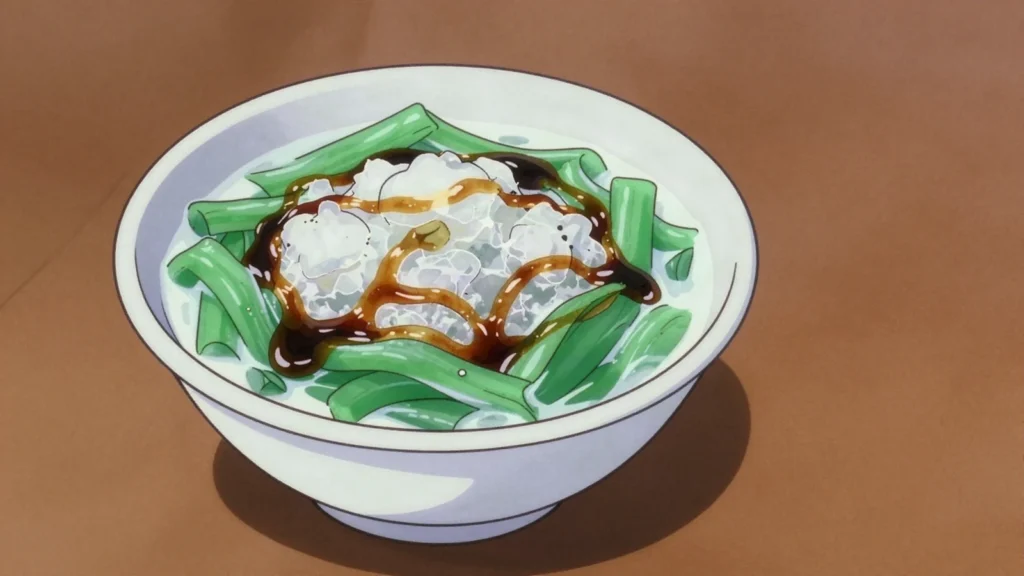
- Assemble in this order: a heap of crushed ice, then the green noodles, then the coconut milk poured over, then the gula melaka syrup last of all.
- The syrup goes on last so that it sinks through the white in dark ribbons. Stirred in beforehand it just turns the whole glass a uniform beige.
- Serve immediately with both a spoon and a straw.
Technique
- Hot paste into ice water. That single transition is what makes a cendol noodle rather than a lump of jelly.
- Gula melaka is coconut palm sugar and it is smokier and more caramel than cane palm sugar. It is worth seeking out.
- Penang Road’s stalls are the most famous, and versions of the drink run right across South-East Asia under different names.
Substitutions
- Cornflour mixed with tapioca starch in place of green pea flour, in a two to one ratio.
- Any dark palm sugar for gula melaka.
Variations
- Penang style, with red beans and sweetcorn at the bottom of the glass.
- With a spoonful of durian, which is a Malaysian speciality.
- Es cendol or dawet, the Indonesian versions, often served with jackfruit.
History
A dessert combining green rice flour jelly noodles with shaved ice, coconut milk and palm sugar syrup, with its exact place of origin genuinely disputed among Malaysia, Indonesia and other Southeast Asian countries where closely related versions exist under similar names, reflecting shared regional dessert traditions built around coconut, palm sugar and rice-based jellies developed across the wider Malay Archipelago rather than in one single country in isolation. Its distinctive green colour traditionally comes from pandan leaf, a fragrant Southeast Asian plant long used both for flavouring and natural colouring across the region’s cooking. Cendol remains an especially popular street food and dessert across Malaysia, sold from stalls particularly valued as a cooling treat in the country’s hot, humid tropical climate.
Frequently asked questions
What is Cendol?
Cendol is a dessert from Malaysia: pandan jelly noodles in iced coconut milk and gula melaka. A dessert combining green rice flour jelly noodles with shaved ice, coconut milk and palm sugar syrup, with its exact place of origin genuinely disputed among Malaysia, Indonesia and other Southeast Asian countries where closely related versions exist under similar names, reflecting shared regional dessert traditions built around coconut, palm sugar and rice-based jellies developed across the wider Malay Archipelago rather than in one single country in isolation. Its distinctive green colour traditionally comes from pandan leaf, a fragrant Southeast Asian plant long used both for flavouring and natural colouring across the region’s cooking. Cendol remains an especially popular street food and dessert across Malaysia, sold from stalls particularly valued as a cooling treat in the country’s hot, humid tropical climate.
How long does Cendol take to make?
Cendol takes 30 min of preparation and 20 min of cooking. The recipe makes 6 glasses. It is rated medium to make.
What can I substitute in Cendol?
Yes, within limits. Cornflour mixed with tapioca starch in place of green pea flour, in a two to one ratio. Any dark palm sugar for gula melaka.
What is the most important thing to get right in Cendol?
The syrup goes on last so that it sinks through the white in dark ribbons. Stirred in beforehand it just turns the whole glass a uniform beige.