
Ingredients
Roots
- 300 gsweet potato, orange and purple, in cubes
- 300 gyam or taro, in cubes
Pearls
- 80 gsmall sago or tapioca pearls
Coconut
- 600 mlcoconut milk
- 300 mlwater
Sweetening
- 120 gpalm sugar or gula melaka
- 50 gwhite sugar
- a good pinch of salt
Aromatics
- 3pandan leaves, knotted
Sometimes
- banana slices
- sweetcorn
- black-eyed peas
To serve
- warm in the evening, or chilled with ice
Directions
- Cut everything into even cubes of about two centimetres. Cut them the same size so they cook at the same rate, since sweet potato and taro cook differently. Steam or boil the root vegetables separately rather than cooking them in the coconut milk. Cooking them in coconut milk takes far longer, because the fat slows water absorbing into the vegetable.
- Steam them for fifteen to twenty minutes until just tender. Stop while they still hold their shape firmly, since they warm through in the coconut milk afterwards.
- Boil the pearls in plenty of water, stirring at first so they do not stick to the base. They are done when they have turned almost entirely translucent, with only a tiny white dot in the centre.
- Take them off the heat, cover the pot and let them stand for ten minutes. Drain the pearls and rinse them thoroughly under cold running water. Rinsing washes off the surface starch, which would otherwise cloud and thicken the coconut milk.
- Keep them in cold water until you need them, since they stick together as they sit. Warm the coconut milk with the water, pandan leaves, sugars and salt. Never let coconut milk boil hard, since it splits into oil and curds and cannot be brought back.
- Keep it at a bare simmer with the surface barely moving. Stir it gently as it heats, which also helps prevent splitting. Knot the leaves before adding them, which stops them unfurling and makes them easy to fish out. Add the steamed roots and the drained sago to the warm coconut milk. Warm everything through gently for five minutes without stirring hard.
- Stir gently, since the cubes break up easily once cooked. Now serving it out warm or cold. Serve it warm in the evening, which is the traditional way. In hot weather it is chilled and served over ice, which is equally common.
Technique
- The roots are cooked separately so they do not cloud the coconut milk.
- Raw taro irritates the skin, so peel it with gloves or oiled hands.
- The salt in the coconut milk is what stops it tasting cloying.
Substitutions
- Any sweet potato and taro, though a mix of colours is better.
- Tapioca pearls in place of sago.
Variations
- Served chilled over ice.
- With banana slices added.
- With black-eyed peas or sweetcorn.
History
A Peranakan dessert of Malacca and Penang, served warm in the evening or chilled with ice.
Frequently asked questions
What is Bubur Cha Cha?
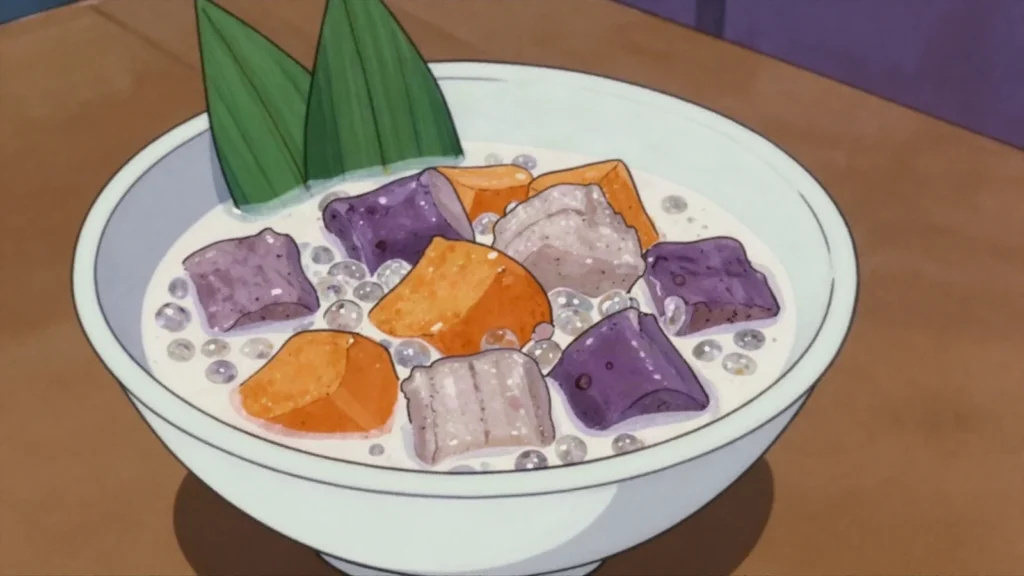
Bubur Cha Cha is a dessert from Malaysia: sweet potato and yam cubes in coconut milk with chewy sago pearls. A Peranakan dessert of Malacca and Penang, served warm in the evening or chilled with ice.
How long does Bubur Cha Cha take to make?
Bubur Cha Cha takes 30 min plus soaking of preparation and 40 min of cooking. The recipe makes 6 servings. It is rated medium to make.
What can I substitute in Bubur Cha Cha?
Yes, within limits. Any sweet potato and taro, though a mix of colours is better. Tapioca pearls in place of sago.
What is the most important thing to get right in Bubur Cha Cha?
Cut everything into even cubes of about two centimetres. Cut them the same size so they cook at the same rate, since sweet potato and taro cook differently. Steam or boil the root vegetables separately rather than cooking them in the coconut milk. Cooking them in coconut milk takes far longer, because the fat slows water absorbing into the vegetable.