
Ingredients
Dough
- 300 gplain flour
- 3egg yolks
- 1whole egg
- 3 tbspsour cream
- 2 tbspsugar
- 2 tbspspirit: rum, brandy or vodka
- a pinch of salt
- grated zest of 1 lemon
To fry
- oil or lard, for deep frying
To finish
- icing sugar, generously
Equipment
- a pasta machine or a rolling pin
- a fluted pastry wheel
To serve
- at Užgavėnės, before Lent
Directions
- Beat the yolks and whole egg with the sugar, sour cream, spirit and lemon zest. Work in the flour and salt to a firm dough. Keep it firm rather than soft, since it has to be rolled paper thin without tearing. Now knead it hard for 10 minutes.
- Knead it thoroughly, which is unusual for a pastry. This dough is rolled almost translucent, and only well-developed gluten will take that. Beat the dough with a rolling pin, folding it over and beating again, twenty or thirty times. It is genuinely how it is done and it is worth the noise.
- Rest it, wrapped, for at least 30 minutes. Rest it properly, or it will spring back and refuse to be rolled thin. Now roll it out as thin as you possibly can. Take it to 1 mm or less, thin enough to see the board through it. Thick pastry gives something doughy and heavy, and the aim is a brittle shard that shatters.
- Work with a portion at a time and keep the rest covered. Now cut it into strips about 3 cm wide and 12 cm long, with a fluted pastry wheel. Cut a slit lengthways down the centre of each strip, leaving both ends intact. Do not pull it tight, since the twist opens as it fries.
- Fry them a few at a time for 30 to 45 seconds a side. Thin pastry colours in seconds, so stay at the pan and turn them almost as soon as they go in.
- Take them out while they are still pale rather than deep brown, since they darken as they drain. Do not crowd the pan, which drops the temperature and makes them greasy. Drain them on a rack rather than paper.
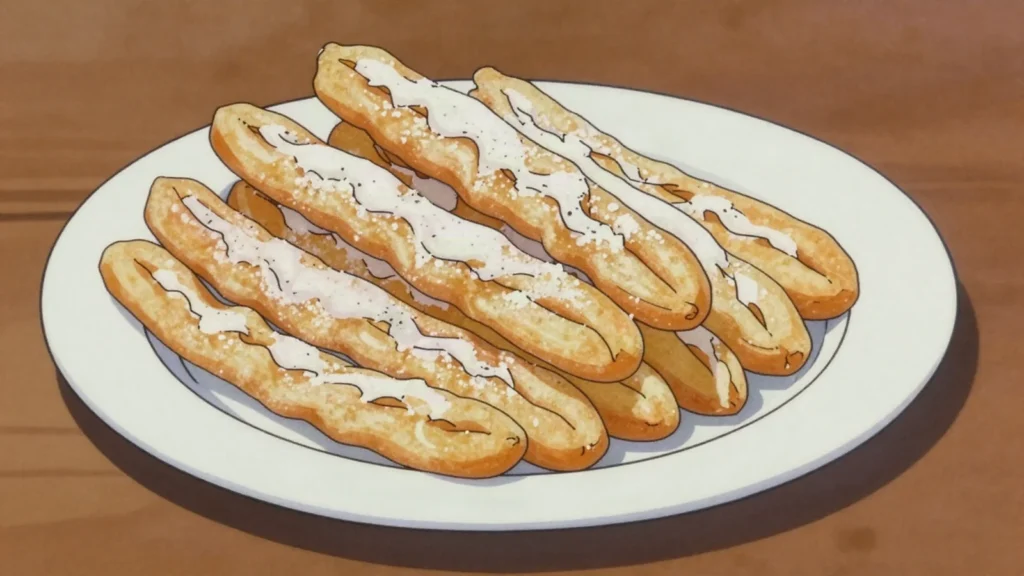
- Dust them after they have cooled a little rather than while piping hot, since sugar on very hot pastry melts into syrup. Be generous, and they should be almost white with it. Serve them piled on a plate at room temperature. They keep a week in a tin and stay crisp, which is unusual for fried pastry and is a consequence of how thin and dry they are.
Technique
- Faworki in Poland and verhuny in Ukraine are the close relatives.
- Beating the dough with a rolling pin is traditional and creates the blisters.
- They keep a week in a tin without softening.
Substitutions
- Vodka or any neutral spirit in place of rum.
- Cream in place of sour cream.
Variations
- Cut as plain strips without the twist.
- With vanilla in the dough.
- Faworki, the Polish version, which is very similar.
History
Fried before Lent to use up eggs and fat, a Carnival pastry shared with Poland, where it is known as faworki.
Frequently asked questions
What is Žagarėliai?
Žagarėliai is a dessert from Lithuania: thin twisted ribbons of fried dough dusted with icing sugar. Fried before Lent to use up eggs and fat, a Carnival pastry shared with Poland, where it is known as faworki.
How long does Žagarėliai take to make?
Žagarėliai takes 40 min plus 30 min resting of preparation and 20 min of cooking. The recipe makes about 50. It is rated medium to make.
What can I substitute in Žagarėliai?
Yes, within limits. Vodka or any neutral spirit in place of rum. Cream in place of sour cream.
What is the most important thing to get right in Žagarėliai?
Beat the yolks and whole egg with the sugar, sour cream, spirit and lemon zest. Work in the flour and salt to a firm dough. Keep it firm rather than soft, since it has to be rolled paper thin without tearing. Now knead it hard for 10 minutes.