
Ingredients
Fruit
- 600 grhubarb, or mixed berries
- 1.2 litreswater
- 180 ggranulated sugar, to taste
- 1strip of lemon peel
- 1cinnamon stick, if wanted
Thickener
- 5 tbsppotato starch
- 120 mlcold water
To serve
- cold milk, to pour over
- or whipped cream
- a little sugar, to dust the surface
Directions
- Trim the rhubarb and cut it into short lengths. Do not peel it, since the skin gives most of the colour.
- Put the fruit in a pan with the water and the lemon peel. Add the cinnamon stick if you are using it. Bring it to the boil and simmer for ten minutes. Strain it through a sieve into a clean pan. Press the fruit gently to get the juice without the pulp.
- Discard the lemon peel and the cinnamon. Stir the sugar into the hot juice until it dissolves. Taste it and add more if the fruit was very sharp. It should taste slightly too sweet while hot.
- Whisk the potato starch into the cold water until smooth. There should be no lumps and no dry pockets at all. Stir it again just before you use it, since it settles fast. Bring the juice to a bare simmer and then take it off the heat. Stir the juice steadily with a spoon.
- Pour the slaked starch in slowly in a thin stream while stirring. Return it to a low heat and keep stirring. Bring it just to the first bubble and take it straight off. Do not let it boil, since boiling breaks potato starch down.
- Use three for a thick pourable drink instead. Use seven for a firm set that holds its shape when turned out. Now cooling it, which needs one small trick. Pour it into individual bowls or one large dish. Dust the surface with a thin layer of caster sugar. This stops a tough skin forming as it cools.
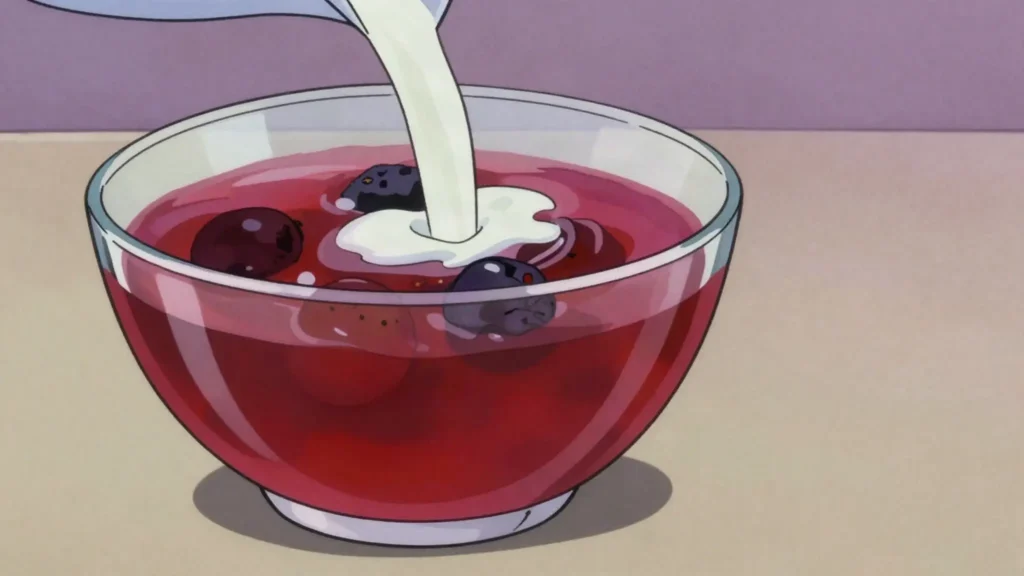
- Let it cool at room temperature and then chill it. It sets further in the fridge over a couple of hours. Serve it warm in bowls with cold milk poured over. The contrast of warm fruit and cold milk is the traditional pairing.
Technique
- Potato starch gives a clear glossy result where cornflour gives a cloudy one.
- Never let it boil after the starch goes in, or it thins out permanently.
- Dust sugar on the surface as it cools to stop a skin forming.
Substitutions
- Frozen berries in place of fresh, which work well.
- Cornflour if potato starch is unavailable, though the result is cloudier.
Variations
- Made from cranberries, which is the winter version.
- Made thick enough to turn out of a mould.
- With the fruit pulp left in for a rougher texture.
History
A Latvian everyday dessert thickened with potato starch and served warm or chilled.
Frequently asked questions
What is Ķīselis?
Ķīselis is a dessert from Latvia: berry or rhubarb juice thickened with starch, eaten with milk. A Latvian everyday dessert thickened with potato starch and served warm or chilled.
How long does Ķīselis take to make?
Ķīselis takes 10 min of preparation and 20 min of cooking. The recipe makes 6 servings. It is rated easy to make.
What can I substitute in Ķīselis?
Yes, within limits. Frozen berries in place of fresh, which work well. Cornflour if potato starch is unavailable, though the result is cloudier.
What is the most important thing to get right in Ķīselis?
Trim the rhubarb and cut it into short lengths. Do not peel it, since the skin gives most of the colour.