
Ingredients
The aubergine
- 800 gaubergine
- the long thin type if possible
- cut into strips or batons
- 1 teaspoonground turmeric
- 1 teaspoonsalt
- oil, for deep frying
The other vegetables
- 2large onions
- sliced thickly
- 6green chillies
- slit lengthways
- 8 clovesgarlic
- sliced
- a thumb of ginger, sliced thinly
The pickling mixture
- 150 mlwhite vinegar
- or coconut vinegar
- 3 tablespoonssugar
- or jaggery, grated
- 1 tablespoonmustard seeds
- ground coarsely
- 1 teaspoonchilli powder
- half a teaspoon ground turmeric
- 1 teaspoonsalt
- or to taste
Sometimes added
- a few curry leaves
- a small piece of cinnamon
- 3cardamom pods
- 1 tablespoonMaldive fish flakes
- see the note
To serve
- with rice and curry
- or as part of lamprais
- at room temperature
Directions
- Cut it into strips or into batons. Aim for pieces about a centimetre thick. Keep them a similar size for even frying. Toss the strips with salt and turmeric. Leave them for thirty minutes in a colander. Then pat the strips thoroughly dry. Oil that is too cool is absorbed rapidly. Hot oil seals the surface faster. Drain on a rack rather than on paper alone.
- Toss the aubergine with turmeric before frying. Wear gloves if that concerns you. Heat the oil in a deep heavy pan. Fill it no more than one third full. Never leave hot oil unattended at all.
- Keep a well fitting lid within reach. If it catches fire, turn off the heat. Fry the aubergine strips in batches. Do not crowd the pan at any point. Fry each batch for three or four minutes. The strips should be golden and softened.
- Lift them out with a slotted spoon. Drain them on a rack over paper. Fry the sliced onions in the same oil. Fry them until golden and slightly crisp. That takes about four minutes.
- Fry the slit green chillies briefly. They blister and soften in a minute. Stand back, since chillies spit in hot oil. Fry the garlic and ginger for thirty seconds. Lift everything out and drain it. Grind the mustard seeds coarsely. Soaking them in the vinegar first helps.
- Soak them for thirty minutes if you can. Add the ground mustard and the spices. Add the turmeric, chilli powder and salt. Add curry leaves and whole spices if using. Heat it gently until the sugar dissolves. Simmer it for two or three minutes. Do not boil it hard for very long. Check whether that matters for your guests. Put the fried aubergine in a large bowl.
- Add the fried onion, chilli, garlic and ginger. Pour the hot pickling mixture over them. Toss it all together very gently. Coat everything evenly in the mixture. It must be sweet, sour and salty at once. Add more sugar if it is too sharp. Add more vinegar if it is too sweet. Add salt gradually and taste again.
- Let the mixture cool completely first. Then leave it for at least a few hours. Keep it refrigerated rather than in a cupboard. Use a clean spoon every single time. Never put a used spoon back into the jar. Discard it if it smells wrong or bubbles. It also keeps well, which suits a party. Make it ahead rather than on the day. It keeps two weeks refrigerated.
Technique
- Deep-frying the aubergine is essential, not optional. It drives out water that would dilute the pickle and turn it soft, concentrates the flavour, and lets the pieces hold their shape. Grilling or baking gives a quite different dish.
- Aubergine absorbs oil like a sponge. Three things reduce it substantially: salt the strips for thirty minutes and pat them dry, fry at a genuine 180 degrees rather than cooler oil, and drain on a rack rather than sitting in absorbed oil on paper.
- Do not crowd the pan. Crowding drops the oil temperature, and cool oil is exactly when aubergine soaks it up.
- Grind the mustard seeds coarsely and soak them in the vinegar first if you can. Mustard develops its pungency only when wet, and some texture is wanted in the finished pickle.
- Do not boil the pickling mixture hard or for long. It drives off the vinegar’s sharpness, which is the point of it.
- Balance is the whole thing: sweet, sour, salty and hot, with none dominating. Taste and adjust before it goes to rest, since the flavours only mellow from there.
- It is a noticeably better dish the next day. The vinegar softens and the mustard mellows as they penetrate the aubergine, so make it ahead.
- Keep it refrigerated and use a clean spoon every time. Home pickles are not reliably shelf-stable, the vinegar is what preserves it, and a used spoon introduces bacteria into the jar.
- Maldive fish, dried cured tuna, is a fundamental Sri Lankan seasoning and appears in many traditional versions. It makes the dish non-vegetarian and it is a fish allergen. Many versions leave it out.
- Turmeric stains hands, boards and clothing. Wipe surfaces immediately.
Substitutions
- Long thin aubergines are best; the large round type works with more seeds and more water.
- Coconut vinegar replaces white vinegar and is the more traditional Sri Lankan choice.
- Jaggery replaces sugar and gives a darker, more caramel sweetness.
- Maldive fish can be left out entirely, which makes the dish vegetarian and is common.
- Curry leaves, cinnamon and cardamom are optional additions used in some households.
- Ground mustard powder replaces whole seeds at a cost, since the coarse texture is characteristic.
Variations
- Lamprais, the Burgher rice parcel baked in banana leaf, includes wambatu moju as a standard element.
- Seeni sambol, the sweet caramelised onion relish, is the other great Sri Lankan sweet-sour accompaniment.
- A version with far more chilli is made for those who want it fierce.
- Some cooks add fried cashews, which is a festive addition.
- Related fried aubergine pickles are made across South India under their own names.
- A version with the aubergine cut into rounds rather than strips is made in some households.
History
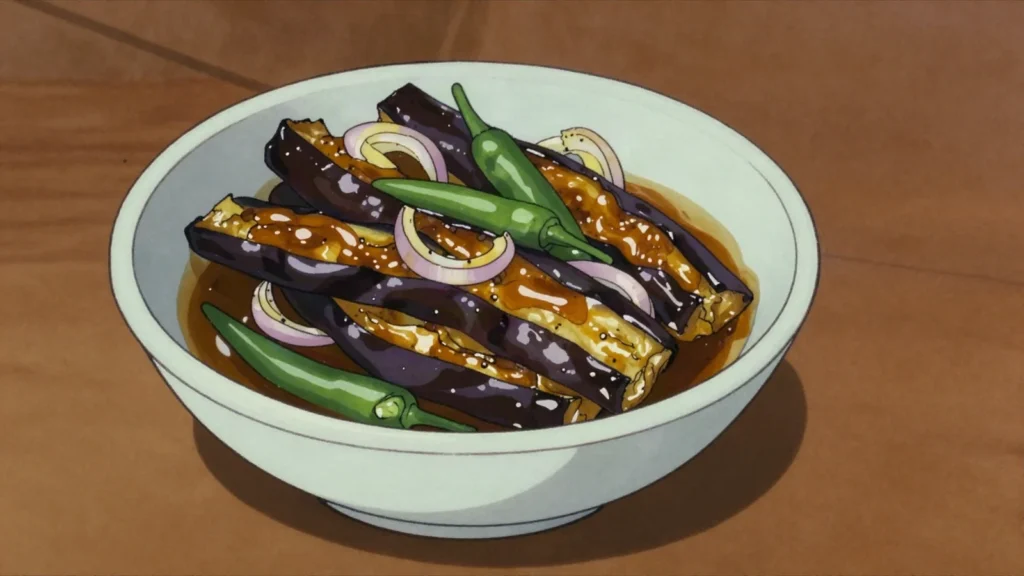
Sweet-sour fried aubergine pickle, a Burgher and wedding-table fixture and a standard element of the lamprais parcel.
Frequently asked questions
What is Wambatu Moju?
Wambatu Moju is a salad & side from Sri Lanka: caramelised pickled aubergine relish for festive rice. Sweet-sour fried aubergine pickle, a Burgher and wedding-table fixture and a standard element of the lamprais parcel.
How long does Wambatu Moju take to make?
Wambatu Moju takes 30 minutes of preparation and 40 minutes of cooking. The recipe makes serves 8 as a relish. It is rated medium to make.
What can I substitute in Wambatu Moju?
Yes, within limits. Long thin aubergines are best; the large round type works with more seeds and more water. Coconut vinegar replaces white vinegar and is the more traditional Sri Lankan choice. Jaggery replaces sugar and gives a darker, more caramel sweetness. Maldive fish can be left out entirely, which makes the dish vegetarian and is common. Curry leaves, cinnamon and cardamom are optional additions used in some households. Ground mustard powder replaces whole seeds at a cost, since the coarse texture is characteristic.
What is the most important thing to get right in Wambatu Moju?
Cut it into strips or into batons. Aim for pieces about a centimetre thick. Keep them a similar size for even frying. Toss the strips with salt and turmeric. Leave them for thirty minutes in a colander. Then pat the strips thoroughly dry. Oil that is too cool is absorbed rapidly. Hot oil seals the surface faster. Drain on a rack rather than on paper alone.