
Ingredients
Sap
- 3 litresfresh kithul sap
- from the fishtail palm
- tapped that morning
If sap is unavailable
- 1 kgkithul jaggery
- hakuru, broken up
- 250 mlwater
Sometimes added
- a little slaked lime
- to the collecting pot
- a piece of bark
- to slow fermentation
To serve
- buffalo curd, mee kiri
- wattalappam
- hoppers and pittu
- over ice cream
Directions
- Strain the fresh sap through cloth. Pour it into a wide heavy pot. A tall narrow pot takes much longer.
- Use the widest pot that you have. Bring the sap up to a full boil. Let it boil steadily and uncovered. Skim off any of the foam that rises. Do it through the first twenty minutes.
- Let it boil for well over an hour. It reduces to about a sixth of its volume. Stir it occasionally as it thickens. Stir it constantly from that point. Judging the treacle takes a real test. Dip a cold spoon into the syrup.
- Lift it out and let it cool a moment. It should coat the back of the spoon. Keep children well away from the pot. Keep boiling past the treacle stage. Test it by dropping a little into cold water.
- Pour it into moulds at that point. Let it cool and set completely. Break the jaggery into small pieces. Put it in a pan with the water. Warm it gently until it dissolves.
- Let it simmer to the thickness you want. Let the syrup cool down a little. Pour it into clean dry bottles.
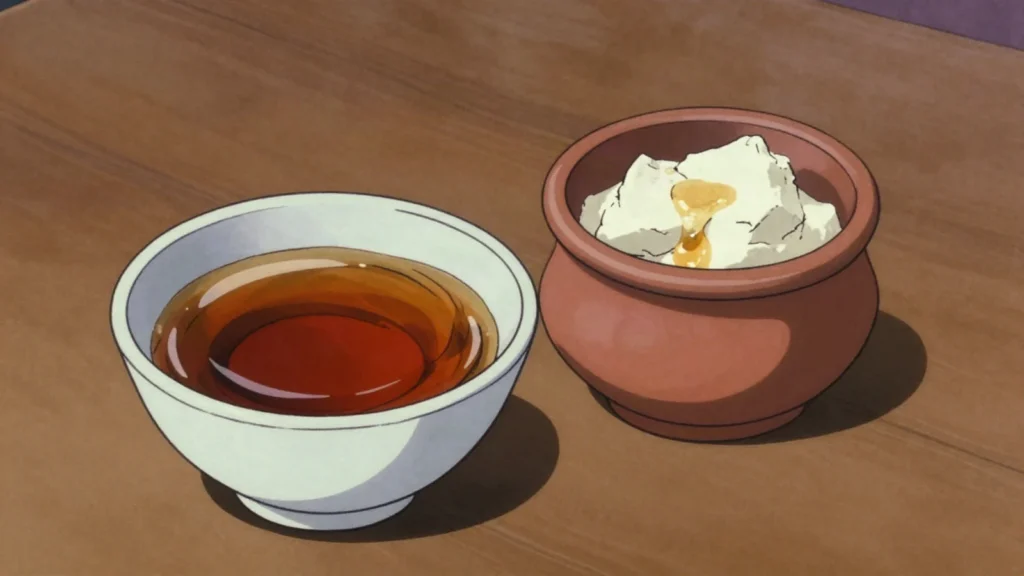
- Seal them once it has gone cold. Understanding how it keeps is worth a note. Pour it over buffalo curd in a clay pot. It keeps for months sealed and cool.
Technique
- Fresh palm sap begins fermenting almost immediately, with wild yeasts turning it to toddy within hours, which is why it must be boiled fresh; tappers coat the collecting pot with slaked lime to make the sap alkaline and slow the yeasts, and pieces of certain barks are used for the same purpose.
- Tappers climb the palms without machinery and often move between trees on rope walkways, which is skilled and genuinely dangerous work with falls a real hazard; the number of tappers has been declining as younger people take other work, and that decline is documented and discussed in Sri Lanka.
- Treacle and jaggery come from the same sap, treacle boiled to a pourable syrup and jaggery boiled further until it sets; the syrup thickens considerably as it cools, so stop while it still seems thin or it will set into jaggery instead.
Substitutions
- Kithul jaggery melted with a little water gives a workable treacle.
- Bottled kithul treacle is sold in Sri Lankan shops abroad; other palm syrups are not the same thing.
Variations
- Boiled further to a firm ball stage and poured into coconut shell moulds it becomes hakuru.
- Traditional open wood fires give a smokiness a gas hob cannot.
- It is poured over buffalo curd, wattalappam, hoppers, pittu and ice cream.
History
Tapped by climbers from kithul palms in the wet hill country; boiled further it sets into hakuru jaggery.
Frequently asked questions
What is Kithul Treacle?
Kithul Treacle is a sauce & condiment from Sri Lanka: dark, smoky syrup boiled from fishtail palm sap, poured over curd and sweets. Tapped by climbers from kithul palms in the wet hill country; boiled further it sets into hakuru jaggery.
How long does Kithul Treacle take to make?
Kithul Treacle takes 10 minutes of preparation and 1 hour 30 minutes of cooking. The recipe makes about 500 ml. It is rated medium to make.
What can I substitute in Kithul Treacle?
Yes, within limits. Kithul jaggery melted with a little water gives a workable treacle. Bottled kithul treacle is sold in Sri Lankan shops abroad; other palm syrups are not the same thing.
What is the most important thing to get right in Kithul Treacle?
Fresh palm sap begins fermenting almost immediately, with wild yeasts turning it to toddy within hours, which is why it must be boiled fresh; tappers coat the collecting pot with slaked lime to make the sap alkaline and slow the yeasts, and pieces of certain barks are used for the same purpose.