
Ingredients
Dough
- 500 gstrong white flour
- 200 mlwater
- 1 tspsalt
- 2 tbsphoney
To laminate
- 250 gstrutto, soft lard, or softened butter
Filling
- 250 mlwater
- 150 gsemolina
- a pinch of salt
- 250 gricotta, drained overnight
- 150 gsugar
- 1egg
- 100 gcandied orange peel, finely diced
- 1 tspground cinnamon
- 1 tspvanilla
- grated zest of 1 orange
To finish
- icing sugar
Equipment
- a pasta machine
- a strong pair of hands
Directions
- Make the dough first: mix the flour, water, salt and honey into a very stiff, dry dough. It should be genuinely hard and difficult to knead, much stiffer than a bread dough, and that stiffness is required.
- Knead it for 15 to 20 minutes until it becomes smooth and elastic, which takes real effort. Wrap it and rest it in the fridge for at least 2 hours, and overnight is better. That long rest relaxes the gluten enough to let you roll it paper thin, and without it the dough fights back and tears.
- Work with a portion at a time and keep the rest covered. Now lay the long sheet out and smear it thickly with soft lard. Use plenty of fat and spread it right to the edges with your hands. A thin scraping gives a solid pastry instead of a ribbed one. Roll the next sheet onto the end of the first, greasing as you go, building one continuous fat log.
- Keep the log tight throughout, because loose winding gives gaps rather than layers. The finished log should be about 10 cm across. Wrap it tightly and refrigerate overnight. The overnight chill is essential: it firms the fat so the log can be sliced cleanly, and a warm log smears instead of cutting.
- Bring the water to a boil with the salt and rain in the semolina, whisking. Cook it for 5 minutes, stirring, until it is very thick, then cool it completely. Beat the cooled semolina with the ricotta, sugar, egg, candied peel, cinnamon, vanilla and zest. Drain the ricotta overnight first, because a wet filling makes the shell soggy from within.
- Chill the filling until you need it. Now trim the ends of the log and cut it into discs about 1 cm thick. Take a disc, hold it in your palm, and push the centre outward with both thumbs, rotating as you go. The layers should slip and spiral out. Work each cone until it is 5 or 6 cm deep with thin walls. Do not overfill, because the filling expands and bursts the layers open.
- Pinch the open edge closed into the classic shell shape. Set them on a lined tray and chill 30 minutes. Now bake in a very hot oven, 220°C (430°F), for 20 to 25 minutes. Cool them slightly and dust heavily with icing sugar. Eat them warm, within an hour if you possibly can.
Technique
- Sfogliatella frolla is the shortcrust version with the same filling and is far easier.
- The Santa Rosa, with pastry cream and a cherry, is the ancestor from the Conca dei Marini convent.
- The lobster tail, aragosta, is the American descendant, made larger and filled with cream.
Substitutions
- Softened butter in place of strutto, which is easier to find and slightly less effective.
- The frolla version, if the laminating is too much.
Variations
- Sfogliatella frolla, made with shortcrust.
- Santa Rosa, with pastry cream and amarena cherry.
- Filled with pastry cream rather than semolina and ricotta.
History
Devised in a Amalfi coast convent, then reworked in Naples by pastry maker Pasquale Pintauro around 1818.
Frequently asked questions
What is Sfogliatella?
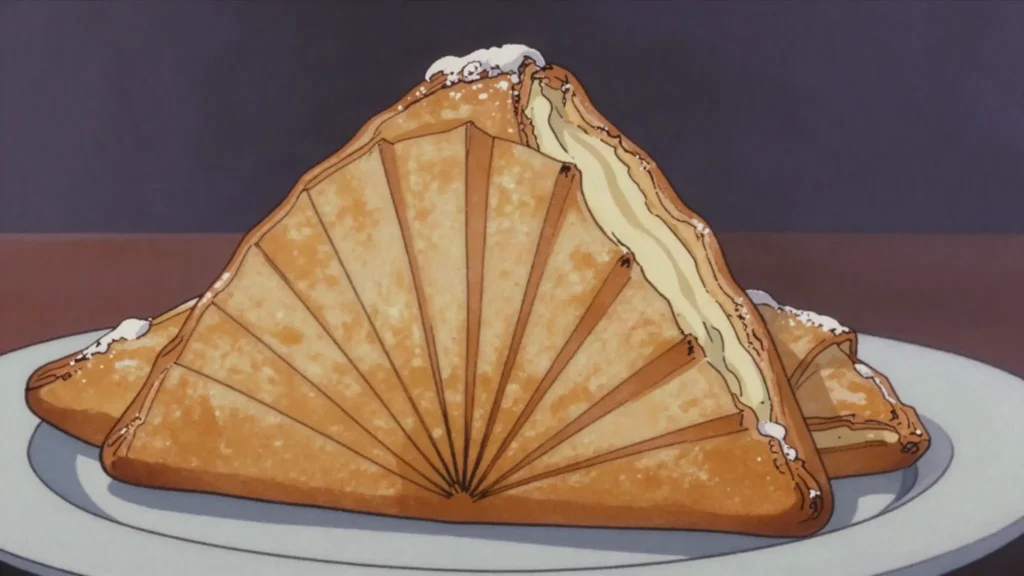
Sfogliatella is a bread & pastry from Italy: ribbed shell of crisp layered pastry filled with semolina and ricotta. Devised in a Amalfi coast convent, then reworked in Naples by pastry maker Pasquale Pintauro around 1818.
How long does Sfogliatella take to make?
Sfogliatella takes 2 hr plus overnight chilling of preparation and 25 min of cooking. The recipe makes about 16. It is rated hard to make.
What can I substitute in Sfogliatella?
Yes, within limits. Softened butter in place of strutto, which is easier to find and slightly less effective. The frolla version, if the laminating is too much.
What is the most important thing to get right in Sfogliatella?
Work with a portion at a time and keep the rest covered. Now lay the long sheet out and smear it thickly with soft lard. Use plenty of fat and spread it right to the edges with your hands. A thin scraping gives a solid pastry instead of a ribbed one. Roll the next sheet onto the end of the first, greasing as you go, building one continuous fat log.