
Ingredients
The squid
- 4medium squid
- with tubes intact
- cleaned, tentacles reserved
The stuffing
- the chopped tentacles
- 100 gtofu, crumbled and squeezed
- 1carrot, finely diced
- 3spring onions, chopped
- 1/2onion, finely chopped
- 3eggs, beaten
- 2garlic cloves, crushed
- 1 tablespoonsoy sauce
- 1 teaspoonsesame oil
- salt and black pepper
To bind and seal
- 3 tablespoonsflour
- or potato starch
- cocktail sticks
To serve
- sliced across
- soy sauce with vinegar
- and a little chilli
Directions
- Fill the tube about two thirds only. Leave real room at the open end. Squid must be cleaned carefully here. Pull the head gently from the body. Pull it out slowly and steadily. Pull it out and discard it entirely. Rinse the whole inside of the tube.
- Rub out any remaining membrane. Turn it inside out if it helps. Turn it back the right way after. Peel the purple skin off the tube. Cut the tentacles from the head. Discard the head and the beak. It is inedible and must come out.
- Chop the tentacles fairly finely. Squeeze the crumbled tofu dry. Wet tofu makes a sloppy filling. Squeeze it hard in a clean cloth. Combining it is straightforward enough.
- Put the tofu into a large bowl. Add the chopped tentacles to it. Add the carrot, onion and spring onion. Add the garlic to them as well. Add the soy sauce and sesame oil. Season it with salt and black pepper. Pour the beaten eggs over the mixture.
- Mix it all together thoroughly. The egg must coat everything evenly. Mix it properly rather than briefly. Judging the filling takes a look. Add a little flour if it is too wet. It should be scoopable rather than pourable. Dust the inside with a little flour. Flour helps the filling grip the tube. It stops the filling sliding out.
- Spoon the filling into each tube. Pack it firmly but not tightly. Fill it about two thirds only. Leave a good gap at the opening. Fold the open end right over it. Prick each tube a few times with a fork. Steam builds inside the sealed tube. Bring a steamer right up to a boil. Lay the stuffed tubes in the basket. Leave space between the tubes. They need steam all around them.
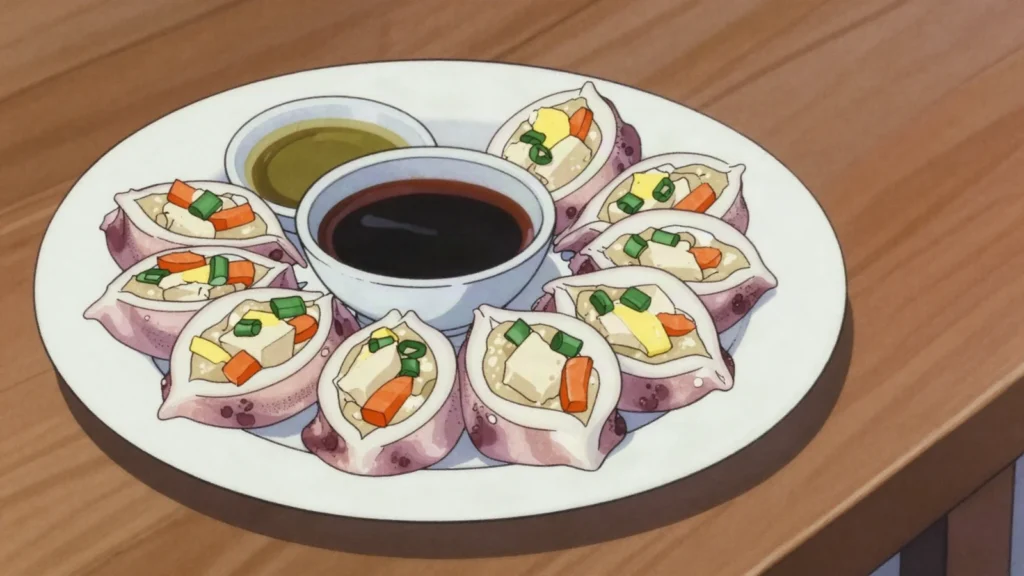
- Cover it and steam them for twenty minutes. That must set right through it. Steam them for longer if it is. Squid goes rubbery if overcooked. Let them rest for ten minutes. Hot slices fall apart as you cut. Remove the cocktail sticks first. Cut the tubes across into rounds. Cut them about a centimetre thick. Thicker ones do not show the pattern.
- Use a sharp knife and cut cleanly. Serving them is done warm or cool. Lay the rounds out on a plate. Serve soy sauce with vinegar alongside. Add a little chilli to the dip. They keep two days refrigerated. Steam them briefly again to reheat. They are also very good eaten cold.
Technique
- Fill the tube about two thirds only and leave a real gap at the opening: squid shrinks considerably as it cooks while the filling expands, and both effects push the same way — an overfilled tube splits. Prick each tube a few times with a fork as well, since steam builds inside the sealed casing and the pressure can burst it.
- The beaten egg is what binds the filling and sets as the squid steams, holding the slices together; without it the filling falls out when cut. Make the filling moist but not wet, adding a little flour if needed — a wet filling leaks out as it steams.
- Clean the squid carefully, since a torn tube cannot be stuffed: reach in, grip the head and pull it out slowly rather than hard, draw out the transparent quill, and rinse the tube through. Push the hard beak out from the base of the tentacles and discard it.
Substitutions
- Potato starch stands in for the flour used to dust the tube’s inside, which helps the filling grip and absorbs residual water.
- The purple skin peels off in a sheet; it is edible but tougher and colours the slices, and some cooks leave it on.
Variations
- Sundae is normally made in intestine casing; on the Hamgyong coast that was scarce where squid was abundant, so the dish uses what the place has.
- Let them rest ten minutes before slicing, since hot slices fall apart and the filling firms as it cools; cut about a centimetre thick.
- The chopped tentacles go into the stuffing, so the whole animal is used.
History
A Hamgyong dish using squid instead of scarce intestine casing, spread through the North’s east-coast fishing ports.
Frequently asked questions
What is Ojingeo Sundae?
Ojingeo Sundae is a main from North Korea: squid tubes stuffed with vegetables and egg, steamed then sliced. A Hamgyong dish using squid instead of scarce intestine casing, spread through the North’s east-coast fishing ports.
How long does Ojingeo Sundae take to make?
Ojingeo Sundae takes 45 minutes of preparation and 30 minutes of cooking. The recipe makes serves 4. It is rated hard to make.
What can I substitute in Ojingeo Sundae?
Yes, within limits. Potato starch stands in for the flour used to dust the tube’s inside, which helps the filling grip and absorbs residual water. The purple skin peels off in a sheet; it is edible but tougher and colours the slices, and some cooks leave it on.
What is the most important thing to get right in Ojingeo Sundae?
Fill the tube about two thirds only. Leave real room at the open end. Squid must be cleaned carefully here. Pull the head gently from the body. Pull it out slowly and steadily. Pull it out and discard it entirely. Rinse the whole inside of the tube.