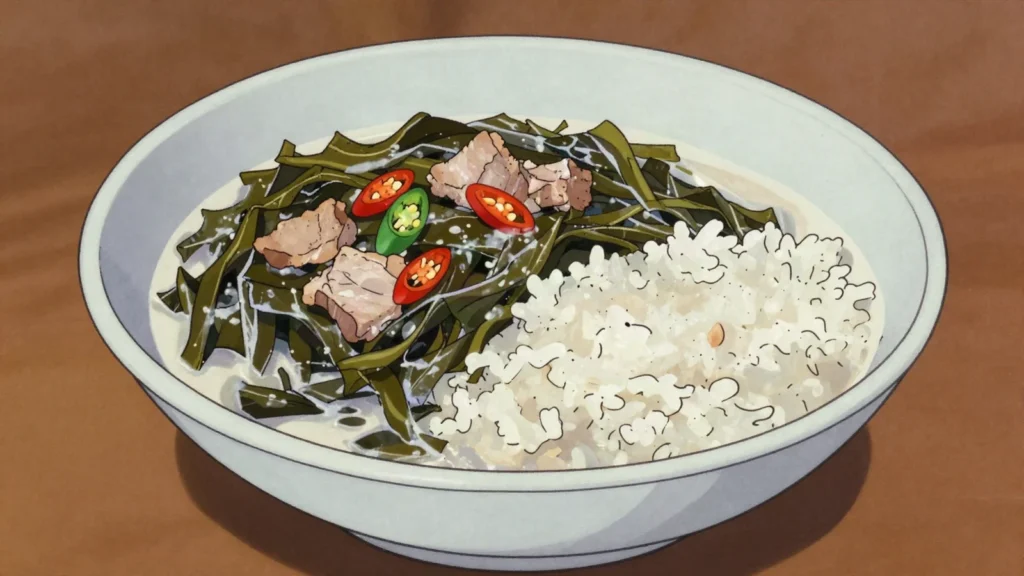

Ingredients
Taro leaves
- 80 gdried taro leaves, gabi
Coconut
- 800 mlthick coconut milk
- 400 mlcoconut cream, for finishing
Aromatics
- 1onion, chopped
- 8garlic cloves, crushed
- 1thumb ginger, in matchsticks
- 6siling labuyo, or bird’s eye chillies
- 2long green chillies, sliced
Savoury
- 200 gpork belly, in small dice, or 150 g smoked fish, flaked
- 3 tbspbagoong alamang, shrimp paste
- 2 tbspfish sauce, to taste
To serve
- steamed rice
Directions
- Use properly dried taro leaves, which are sold in Filipino shops. Do not substitute fresh taro leaves unless you know how to prepare them.
- Break them up roughly with your hands if the pieces are very large. Pour the coconut milk into a wide heavy pot. Add the onion, garlic, ginger and whole chillies.
- Add the pork belly or the smoked fish. Stir in the shrimp paste as well. Bring it to a gentle simmer over a medium-low heat. Simmer it for fifteen minutes so the aromatics infuse. The pork should render and begin to soften.
- Scatter the dried taro leaves over the surface. Do not stir it, and resist the temptation entirely. Keep the heat low so it barely simmers. Coconut milk splits if it boils hard.
- Cook it uncovered for forty-five minutes to an hour. The mixture should be dark green to almost black. Taste a very small amount carefully. There should be no itch or scratch at the back of the throat.
- Pour in the thick coconut cream. Add the sliced long green chillies. Simmer for another fifteen minutes, stirring now and then.
- Taste it and add fish sauce for salt. It should be salty, rich and very hot. Cook it down further if it is still loose. Now serving, which is done with a lot of rice. Serve it in a small bowl or on the side of a plate. It keeps for several days and is generally better the next day.
Technique
- Taro leaves contain calcium oxalate; long cooking is what breaks it down, so never undercook them.
- Do not stir the pot until the leaves have fully collapsed, which takes at least forty-five minutes.
- If a taste leaves any itch at the back of the throat, keep cooking.
Substitutions
- Smoked fish in place of pork, which is common in Bicol.
- Dried taro leaves only; fresh leaves need different handling.
Variations
- With dried shrimp instead of pork.
- Made hotter, with far more siling labuyo.
- Vegetarian, with the shrimp paste and pork left out and salt added.
History
Dried taro leaves, slow-cooked in coconut milk with chili until the leaves soften and the coconut milk reduces into a thick, spicy sauce, developed in the Bicol region of the southern Philippines, an area known within Filipino cuisine specifically for its heavy use of coconut milk and chili, distinguishing Bicolano cooking’s flavour from many other Filipino regional cuisines that use both ingredients more sparingly. Taro leaves must be properly dried and cooked thoroughly before eating, since raw or undercooked taro leaves contain compounds that irritate the mouth and throat, a preparation necessity that shaped laing’s slow-cooking technique. It remains one of the most iconic dishes specifically associated with Bicolano regional identity within wider Filipino cuisine.
Frequently asked questions
What is Laing?
Laing is a main from Philippines: bicol taro leaves simmered in coconut milk and chilies. Dried taro leaves, slow-cooked in coconut milk with chili until the leaves soften and the coconut milk reduces into a thick, spicy sauce, developed in the Bicol region of the southern Philippines, an area known within Filipino cuisine specifically for its heavy use of coconut milk and chili, distinguishing Bicolano cooking’s flavour from many other Filipino regional cuisines that use both ingredients more sparingly. Taro leaves must be properly dried and cooked thoroughly before eating, since raw or undercooked taro leaves contain compounds that irritate the mouth and throat, a preparation necessity that shaped laing’s slow-cooking technique. It remains one of the most iconic dishes specifically associated with Bicolano regional identity within wider Filipino cuisine.
How long does Laing take to make?
Laing takes 20 min of preparation and 1 hour 30 min of cooking. The recipe makes 6 servings. It is rated medium to make.
What can I substitute in Laing?
Yes, within limits. Smoked fish in place of pork, which is common in Bicol. Dried taro leaves only; fresh leaves need different handling.
What is the most important thing to get right in Laing?
Use properly dried taro leaves, which are sold in Filipino shops. Do not substitute fresh taro leaves unless you know how to prepare them.