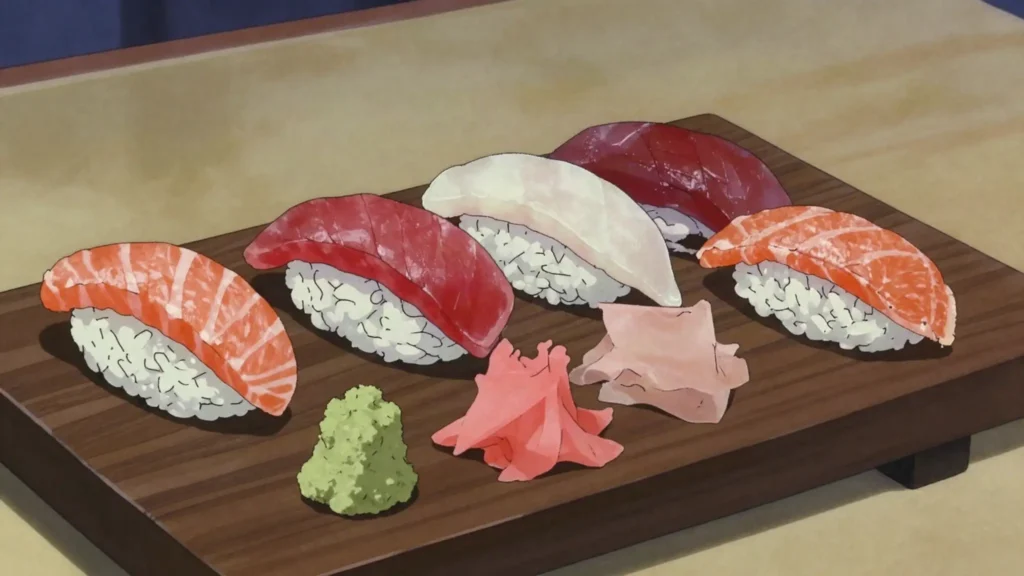

Ingredients
Shari (sushi rice)
- 600 gJapanese short-grain rice (koshihikari or sasanishiki)
- 660 mlwater
- 1 piecekombu, 5 cm
- 90 mlrice vinegar, or 70 ml akazu red vinegar for Edomae style
- 45 gsugar (omit or halve for Edomae)
- 12 gfine sea salt
Neta (toppings)
- 250 gsashimi-grade tuna loin (akami and chutoro)
- 200 gsea bream or flounder, skinned
- 8raw prawns, skewered straight and blanched 90 seconds
- 150 gmackerel, salted 40 minutes then vinegar-cured 30 minutes
- 4scallops, sliced in half horizontally
To serve
- 1 tbspfreshly grated wasabi rhizome
- 60 mlnikiri (soy sauce simmered with mirin and sake, cooled)
- 60 ggari, pickled ginger
- tezu: 200 ml water mixed with 2 tbsp rice vinegar, for your hands
Directions
- Wash the rice in several changes of water, rubbing gently, until the water runs almost clear, then drain in a sieve 30 minutes. Cook with the measured water and the kombu, and rest it covered 10 minutes off the heat.
- Warm the vinegar, sugar and salt until dissolved. Tip the hot rice into a hangiri or wide wooden tray and pour the dressing over a rice paddle so it spreads.
- Cut through the rice with the paddle at a slant, never stir, while fanning it. Work until it is glossy and each grain is separate, and stop while it is still at body temperature. Cover with a damp cloth: shari must never go in the fridge.
- Slice the fish across the grain with a single long pull of a very sharp yanagiba, 8–10 mm thick for nigiri, angling the blade so each slice is a broad, even sheet with a clean face.
- Wet your hands lightly with tezu and shake off the excess. Take about 16 g of rice and roll it in your right palm into a soft loose oblong, no more than a few movements.
- Lay a slice of fish across the fingers of your left hand, smear a dab of wasabi on it, set the rice ball on top and press once with the thumb, then flip and press the sides. The whole nigiri should take three or four movements.
- The finished piece should hold together when lifted but collapse in the mouth. If it is dense, you squeezed it.
- Brush the fish with nikiri rather than putting soy on the table. Serve each piece the moment it is made, fish side down onto the tongue.
- Eat with the fingers or chopsticks, in one bite, and reset the palate with gari between different fish.
Technique
- Sushi means the vinegared rice, not the fish. Edomae sushi began as Tokyo street food in the 1820s when fish had to be cured, marinated or cooked because there was no refrigeration; a real Edomae counter still serves zuke tuna, vinegar-cured kohada and simmered conger.
- Parasite safety is not optional for raw fish: freeze at minus 20°C (-4°F) for 7 days, or minus 35°C (-31°F) for 15 hours, which is what the EU and FDA require for most species. Tuna handled for sashimi is the usual exception.
- Rice temperature is the professional obsession. Cold hard rice ruins good fish; skin temperature is the target.
- Fresh wasabi is a grated rhizome with a sweet green heat that fades in minutes. The green paste on supermarket trays is horseradish with dye.
Substitutions
- No sashimi-grade fish: make cooked-topping nigiri with blanched prawn, seared and torched salmon belly, unagi or tamagoyaki, all traditional at any counter.
- No hangiri: use a wide non-metal tray or a wooden chopping board covered with a damp cloth, and fan the rice with a magazine.
- Rice vinegar with a little sugar stands in for akazu; Edomae red vinegar is made from sake lees and is hard to find outside Japan.
Variations
- Maki and temaki rolls, the home format; chirashi, sliced fish scattered over a bowl of shari.
- Oshizushi from Osaka, pressed in a wooden box, and the older narezushi of Lake Biwa, fermented in rice for months.
- Zuke, tuna marinated in soy and mirin, a survival of the pre-refrigeration technique.
History
Descended from narezushi, a Southeast Asian method of preserving fish by packing it in salted, fermented rice for months, eaten only after discarding the rice. Edo-period cooks shortened that process by vinegaring fresh rice instead of fermenting it, and by the early 1800s Tokyo street vendor Hanaya Yohei is widely credited with pressing that vinegared rice with a slice of raw fish by hand, inventing what is now called edomae, or Edo-style, sushi as a fast bite for busy city workers rather than a slow-preserved food. Refrigeration in the 20th century let raw fish travel further and made sushi a global dish rather than a coastal one, while the pressed and rolled forms eaten today all trace back to that Edo street-stall shortcut.
Frequently asked questions
What is Sushi?
Sushi is a main from Japan: vinegared rice with raw fish or seafood, as nigiri or rolls. Descended from narezushi, a Southeast Asian method of preserving fish by packing it in salted, fermented rice for months, eaten only after discarding the rice. Edo-period cooks shortened that process by vinegaring fresh rice instead of fermenting it, and by the early 1800s Tokyo street vendor Hanaya Yohei is widely credited with pressing that vinegared rice with a slice of raw fish by hand, inventing what is now called edomae, or Edo-style, sushi as a fast bite for busy city workers rather than a slow-preserved food. Refrigeration in the 20th century let raw fish travel further and made sushi a global dish rather than a coastal one, while the pressed and rolled forms eaten today all trace back to that Edo street-stall shortcut.
How long does Sushi take to make?
Sushi takes 1 hr of preparation and 1 hr, including rice of cooking. The recipe makes 4 servings, about 32 pieces of nigiri. It is rated hard to make.
What can I substitute in Sushi?
Yes, within limits. No sashimi-grade fish: make cooked-topping nigiri with blanched prawn, seared and torched salmon belly, unagi or tamagoyaki, all traditional at any counter. No hangiri: use a wide non-metal tray or a wooden chopping board covered with a damp cloth, and fan the rice with a magazine. Rice vinegar with a little sugar stands in for akazu; Edomae red vinegar is made from sake lees and is hard to find outside Japan.
What is the most important thing to get right in Sushi?
Cut through the rice with the paddle at a slant, never stir, while fanning it. Work until it is glossy and each grain is separate, and stop while it is still at body temperature. Cover with a damp cloth: shari must never go in the fridge.