
Ingredients
Rice
- 400 gshort-grain white rice, rinsed and soaked 30 min
- 480 mlwater
Namul (seasoned vegetables)
- 200 gspinach, blanched 30 seconds and squeezed dry
- 200 gsoybean sprouts (kongnamul), boiled 5 min
- 1courgette, julienned
- 1carrot, julienned
- 150 gshiitake mushrooms, sliced
- 60 ggosari (soaked bracken fern), cut into 5 cm lengths
- 60 gdoraji (bellflower root), rubbed with salt and rinsed
- 4 tbsptoasted sesame oil, divided
- 4garlic cloves, minced, divided
- 3 tbsptoasted sesame seeds
- 2 tbspsoy sauce
- fine salt, to taste
Beef
- 250 gbeef sirloin, cut into fine matchsticks
- 1 tbspsoy sauce
- 1 tspsugar
- 1 tspsesame oil
- 1garlic clove, minced
- 1 pinchblack pepper
Yangnyeom gochujang sauce
- 4 tbspgochujang
- 1 tbsptoasted sesame oil
- 1 tbspsugar or rice syrup
- 1 tbspwater
- 1 tsprice vinegar
- 1 tsptoasted sesame seeds
To finish
- 4eggs
- 2 tbspneutral oil
- 1 sheetgim (dried seaweed), toasted and shredded
Directions
- Cook the soaked rice with the water, covered, for 15 minutes, then rest 10 minutes off the heat. It should be firm and slightly dry so it does not turn to paste when mixed.
- Season each vegetable separately, which is the whole discipline of the dish. Dress the squeezed spinach with 1 tsp sesame oil, a little garlic, salt and sesame seeds and do the same, individually, with the boiled bean sprouts.
- Stir-fry the courgette and the carrot separately in a hot pan with a little oil and salt for 1–2 minutes each, until barely softened and still bright.
- Fry the shiitake with 1 tbsp soy sauce and a splash of sesame oil for 3 minutes until glossy, and cook the gosari and doraji separately with garlic, soy and sesame oil for 4–5 minutes each.
- Marinate the beef matchsticks for 15 minutes, then stir-fry over high heat for 2 minutes until just cooked and lacquered.
- Whisk the gochujang sauce ingredients into a smooth, spoonable paste. It should be pourable but not runny.
- Fry the eggs in the neutral oil over medium heat until the whites are set with crisp lacy edges and the yolks are entirely liquid.
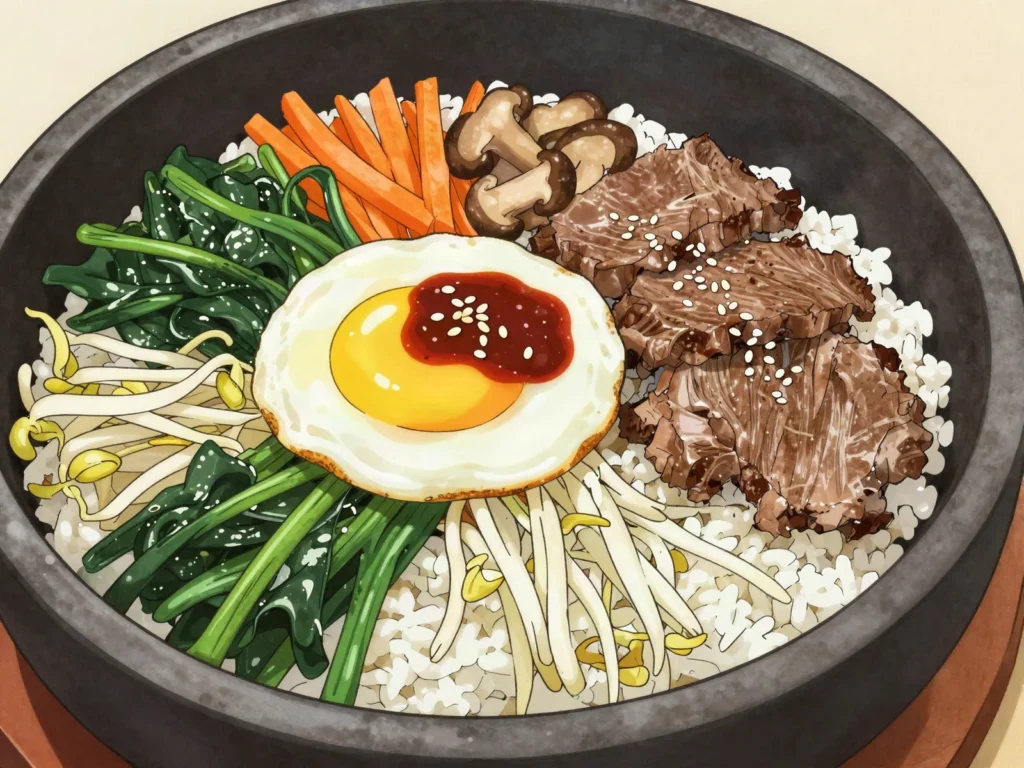
- Pack the hot rice into wide bowls, arrange the namul and beef in separate wedges of colour around the rim, put the egg in the centre, scatter with shredded gim and serve the sauce alongside. At the table, add sauce to taste and mix hard with a spoon until everything is a uniform orange.
Technique
- Bibim means ‘mixed’ and bap means ‘rice’: the arrangement is for the eye only, and the dish is not correct until the eater has destroyed it with a spoon.
- Season the namul one vegetable at a time. Dressing them together collapses the distinct textures and flavours that make the mixed bowl interesting.
- Jeonju is the city most associated with the dish, and its version cooks the rice in beef broth and adds hwangpomuk, a yellow mung bean jelly.
Substitutions
- Gosari and doraji are the hardest items to source: leave them out rather than substituting, or use blanched, seasoned enoki and thin-sliced lotus root.
- For a vegetarian bowl, drop the beef and add extra shiitake and 200 g of pan-fried firm tofu seasoned with soy and sesame.
- Gochujang has no true substitute; miso plus chilli powder gets you a different but usable sauce.
Variations
- Dolsot bibimbap, served in a scorching stone bowl brushed with sesame oil so a crisp rice crust (nurungji) forms at the base.
- Yukhoe bibimbap, topped with raw seasoned beef and a raw yolk instead of a fried egg.
- Boribap, made with barley rice and served with doenjang-based vegetables.
History
Its name simply means mixed rice, and one common explanation traces it to a practical New Year’s Eve custom of using up all of a household’s leftover side dishes, or banchan, before the new year began, by combining them over rice in one bowl rather than serving each separately. Another account ties an early version to a communal ritual meal shared during ancestral rites, in which rice and offerings were mixed together afterward before being eaten by the family. Dolsot bibimbap, served in a very hot stone bowl that keeps cooking the rice into a crisp crust at the bottom, developed later as a specific regional and then nationally popular variation, now often more strongly associated abroad with bibimbap than the plain-bowl version.
Frequently asked questions
What is Bibimbap?
Bibimbap is a main from South Korea: rice bowl of seasoned vegetables, beef and fried egg, mixed with gochujang. Its name simply means mixed rice, and one common explanation traces it to a practical New Year’s Eve custom of using up all of a household’s leftover side dishes, or banchan, before the new year began, by combining them over rice in one bowl rather than serving each separately. Another account ties an early version to a communal ritual meal shared during ancestral rites, in which rice and offerings were mixed together afterward before being eaten by the family. Dolsot bibimbap, served in a very hot stone bowl that keeps cooking the rice into a crisp crust at the bottom, developed later as a specific regional and then nationally popular variation, now often more strongly associated abroad with bibimbap than the plain-bowl version.
How long does Bibimbap take to make?
Bibimbap takes 50 min of preparation and 30 min of cooking. The recipe makes 4 servings. It is rated medium to make.
What can I substitute in Bibimbap?
Yes, within limits. Gosari and doraji are the hardest items to source: leave them out rather than substituting, or use blanched, seasoned enoki and thin-sliced lotus root. For a vegetarian bowl, drop the beef and add extra shiitake and 200 g of pan-fried firm tofu seasoned with soy and sesame. Gochujang has no true substitute; miso plus chilli powder gets you a different but usable sauce.
What is the most important thing to get right in Bibimbap?
Season each vegetable separately, which is the whole discipline of the dish. Dress the squeezed spinach with 1 tsp sesame oil, a little garlic, salt and sesame seeds and do the same, individually, with the boiled bean sprouts.