
Ingredients
The offal
- 1.5 kgtripe and intestines
- goat or cattle
- cleaned, see the notes
- 500 gother offal
- lung, heart or liver
- optional
To clean
- coarse salt
- plenty of it
- vinegar or lemon
- boiling water
The pot
- 2onions, chopped
- 4garlic cloves, crushed
- 2bay leaves
- 1 tablespoonblack peppercorns
- 1stock cube
- salt
- about 2 litres water
To serve
- seswaa
- pounded meat
- bogobe or pap
- at a slaughter or celebration
Directions
- Turn the intestines inside out. Rinse them under running water. Rub coarse salt into the tripe. Salt provides genuine abrasion. It also helps clean the surface. Use it after the salt scrubbing. All of the salt must come off. Rinse through several changes of water. It should smell clean afterward. Wash hands and boards after handling it. Keep it away from other food entirely.
- Rinse everything under running water. Rinse it thoroughly inside and out. Turn intestines inside out to rinse. Rinse until the water runs clear. Rub coarse salt over everything. Rub it in hard with your hands. Work it right over every surface. Give it several full hard minutes.
- Rub vinegar or lemon all over it. Let it sit for about ten minutes. All of the salt must come off it. Rinse through several changes of water. It should feel clean and smooth.
- Cover the offal with cold water. Bring it up to a rolling boil. Let it boil for about fifteen minutes. Discard all of that first water. Rinse the offal through once again. Cover it with fresh cold water. Add the onion, garlic and spices. They also help with the smell.
- Add all of them right at the start. Bring the pot up to a bare simmer. Keep it at the barest simmer only. It should barely bubble at the surface. Simmer it for at least three hours. Tripe needs genuinely that long. Salt can toughen offal considerably. Season it only once it is tender.
- Check the water level regularly. Three hours of simmering uses water. Top the pot up with boiling water. Cold water stops the cooking dead. Cut a piece off and bite into it. It should be tender and yielding. Lift the offal out and let it cool. Let it cool enough to handle it. It is far easier to chop warm. Work while it is all still warm. Chop everything finely on a board.
- Chop it all genuinely very small. About half a centimetre is right. Use a large heavy sharp knife. Take real care as you chop it. Return the chopped offal to the pot. Return it to its cooking liquid. Reduce it if there is too much. It should just moisten the offal.
- Simmer it for another thirty minutes. It should be moist rather than wet. Cook it down until it is right. Add the stock cube and taste it. Season it only now that it is tender. Add salt gradually and taste again.
- Add plenty of black pepper to it. Judging it takes a careful look. Cook it longer if anything is. Serving it is always done hot. Serve it right alongside seswaa. It keeps three days refrigerated.
Technique
- Tripe and intestines need thorough cleaning, which is genuinely hard unpleasant work that cannot be shortened: turn intestines inside out and scrape them with a blunt knife under running water, rub coarse salt in hard over every surface for several minutes as an abrasive, then vinegar or lemon for the smell, then rinse through several changes until all the salt is gone and it smells of nothing much. Most tripe is sold already cleaned by the butcher, which is the sensible route, but it still needs washing at home.
- Boil it fifteen minutes and discard that first water entirely, which carries the strong smell along with scum and impurities, then start again with fresh water. This is not an optional step.
- Tripe needs at least three hours at the barest simmer — a hard boil toughens it, undercooked tripe is rubbery and there is no shortcut. Test by biting a piece: it should be tender and yielding with no bounce at all, and any bounce means another hour. Do not salt it early, since salt can toughen offal; season only once it is tender.
Substitutions
- Lung, heart and liver often go in alongside the tripe and intestines; the whole animal is used at a slaughter, with serobe taking the offal and seswaa the muscle meat.
- Some cooks chop the offal before cooking and others after; chopping after is far easier and both are genuinely done.
Variations
- Chop it while still warm, since cold offal goes firm and rubbery and is far harder to cut, and use a large heavy sharp knife — tripe is slippery and tough, and a blunt knife slips dangerously.
- Chop it genuinely small, about half a centimetre, which is characteristic of serobe and gives its uniform soft texture; it takes real time and work.
- Return the chopped offal to its own cooking liquid, which carries real flavour, and simmer another thirty minutes until it is moist rather than wet — it should not swim in liquid. Offal here is prized rather than tolerated: serobe is looked forward to and is not a poverty food at all.
History
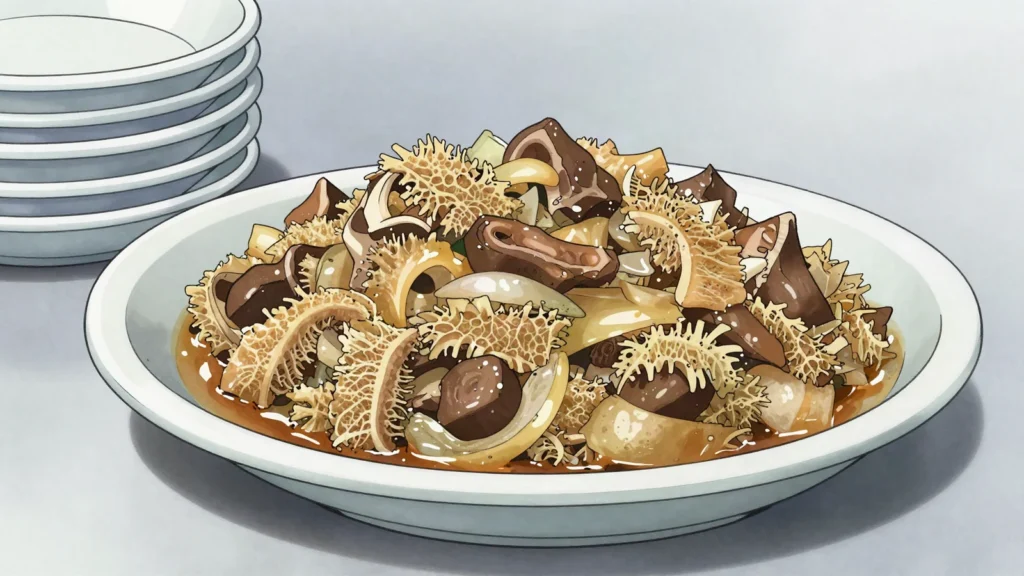
Goat or cattle tripe and intestines cleaned, chopped and stewed until soft, eaten at slaughters and celebrations alongside seswaa.
Frequently asked questions
What is Serobe?
Serobe is a main from Botswana: finely chopped tripe and offal, festive delicacy. Goat or cattle tripe and intestines cleaned, chopped and stewed until soft, eaten at slaughters and celebrations alongside seswaa.
How long does Serobe take to make?
Serobe takes 1 hour 30 minutes of preparation and 3 hours of cooking. The recipe makes serves 8. It is rated hard to make.
What can I substitute in Serobe?
Yes, within limits. Lung, heart and liver often go in alongside the tripe and intestines; the whole animal is used at a slaughter, with serobe taking the offal and seswaa the muscle meat. Some cooks chop the offal before cooking and others after; chopping after is far easier and both are genuinely done.
What is the most important thing to get right in Serobe?
Turn the intestines inside out. Rinse them under running water. Rub coarse salt into the tripe. Salt provides genuine abrasion. It also helps clean the surface. Use it after the salt scrubbing. All of the salt must come off. Rinse through several changes of water. It should smell clean afterward. Wash hands and boards after handling it. Keep it away from other food entirely.