
Ingredients
Rice base
- 500 gglutinous rice flour
- 1.5 litreswater
- 400 gyeotgireum (barley malt powder), for saccharifying
Ferment
- 700 ggochugaru (Korean sun-dried chilli powder), coarse-ground
- 300 gmejugaru (powdered fermented soybean meju)
- 200 gcoarse sea salt
- 150 mlrice syrup or maltose (jocheong)
- 100 mlsoju or Korean rice wine, to loosen and protect the surface
Equipment
- 1onggi earthenware crock or a large glass jar, scalded
- 1cotton cloth, for the lid
- a sunny rooftop, terrace or windowsill
Directions
- Steep the barley malt powder in the 1.5 litres of tepid water for 2 hours, then squeeze the sediment through a cloth and keep only the cloudy liquid; this carries the enzymes that convert rice starch into sugar.
- Whisk the glutinous rice flour into the malt water and hold it at 55–60°C (130–140°F) for 4–5 hours, stirring occasionally. The porridge will visibly thin and turn sweet as the starch is broken down.
- Bring the sweetened liquid to a boil and reduce it by about a third, to a thick, glossy, pourable syrup. Cool it to below 40°C (105°F), or you will kill the fermentation before it starts.
- Beat in the mejugaru until smooth and completely lump-free, then the gochugaru a third at a time. The colour will shift from ochre to deep brick red.
- Stir in the rice syrup and most of the salt, holding back 2 tbsp. The paste should be thick enough to hold a furrow but still slump slowly.
- Pack it into the scalded onggi, pressing out air pockets, smooth the top flat, then pour the soju over the surface and sprinkle with the reserved salt to protect against surface mould.
- Cover with cotton cloth tied down and stand the crock outdoors in the sun. Open the lid on dry, sunny days and close it at night, in rain and in humid weather. Stir once a week for the first month.
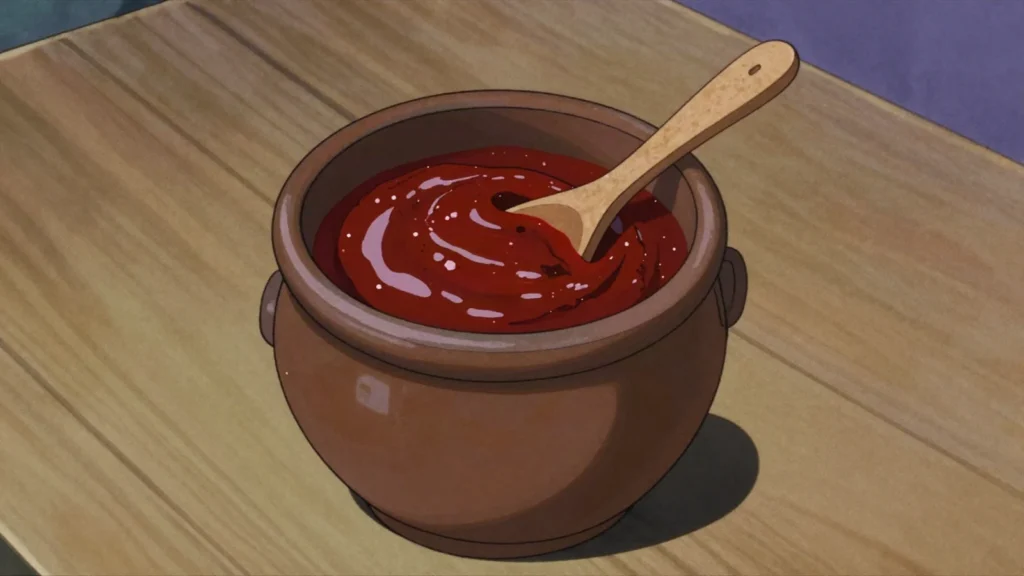
- Ferment 3 to 6 months. It is ready when it has darkened to a deep glossy red-brown, smells sweet-hot rather than raw, and tastes of chilli, malt sugar and savoury soy all at once. Refrigerate after opening.
Technique
- Gochujang is defined by the saccharified grain: without the barley malt step you get a chilli-soy paste with no sweetness and no depth. The sweetness is enzymatic, not added sugar.
- Sun exposure is genuinely part of the method. The daily temperature swing on a Korean rooftop drives the ferment, and the practice of jangdokdae, a raised terrace of crocks, exists for exactly this.
- Food safety: salt of about 6–8 percent of the total weight plus the alcohol seal keeps it safe. Scrape off and discard any fuzzy coloured mould on the surface; a white film is yeast and can be stirred in or skimmed.
Substitutions
- Mejugaru and yeotgireum are sold by Korean grocers and online; there is no honest substitute for either, and a paste made without them is not gochujang.
- Glutinous rice flour can be replaced with cooked and blended glutinous rice, or with barley flour for the older, rustic boribap-country style.
- For a quick approximation, blend gochugaru, white miso, rice syrup, salt and a splash of soy and use within a month, accepting that it is a sauce, not a ferment.
Variations
- Sunchang gochujang, from the North Jeolla county with a protected reputation for it, made with a higher proportion of meju.
- Boritgochujang, made with barley instead of glutinous rice, coarser and less sweet.
- Yangnyeom gochujang, the table sauce made by loosening the paste with sesame oil, vinegar and sugar for bibimbap.
History
The first recipe appears in the 1766 farming manual Jeungbo Sallim Gyeongje, generations after chilies arrived; Sunchang county remains the famed source.
Frequently asked questions
What is Gochujang?
Gochujang is a sauce & condiment from South Korea: sweet-hot fermented paste of chili, glutinous rice and soybean, sun-aged on rooftops. The first recipe appears in the 1766 farming manual Jeungbo Sallim Gyeongje, generations after chilies arrived; Sunchang county remains the famed source.
How long does Gochujang take to make?
Gochujang takes 1 hr of preparation and 3 to 6 months fermenting of cooking. The recipe makes about 2.5 kg. It is rated hard to make.
What can I substitute in Gochujang?
Yes, within limits. Mejugaru and yeotgireum are sold by Korean grocers and online; there is no honest substitute for either, and a paste made without them is not gochujang. Glutinous rice flour can be replaced with cooked and blended glutinous rice, or with barley flour for the older, rustic boribap-country style. For a quick approximation, blend gochugaru, white miso, rice syrup, salt and a splash of soy and use within a month, accepting that it is a sauce, not a ferment.
What is the most important thing to get right in Gochujang?
Ferment 3 to 6 months. It is ready when it has darkened to a deep glossy red-brown, smells sweet-hot rather than raw, and tastes of chilli, malt sugar and savoury soy all at once. Refrigerate after opening.