
Ingredients
The noodle dough
- 400 gplain flour
- plus extra for dusting
- 1egg
- 1 teaspoonsalt
- about 150 ml cold water
- added gradually
The broth
- 700 glamb on the bone
- shoulder or neck, in pieces
- or beef shin
- 2.5 litrescold water
- 2onions, chopped
- 2carrots, diced small
- 2potatoes, diced
- optional
- 3 tablespoonsoil
- or lamb fat
The seasoning
- 2tomatoes, chopped
- or 1 tablespoon tomato purée
- 1 teaspoonground cumin
- 1 teaspoonground coriander
- half a teaspoon turmeric
- optional
- salt and black pepper
- 2bay leaves
To finish
- a very large bunch of herbs
- coriander, dill and parsley
- chopped finely
- chakka, strained sour milk
- or thick plain yoghurt
- see the safety note
To serve
- flatbread
- sliced raw onion
- black pepper
- green tea
Directions
- Put the flour in a bowl with the salt. Make a well and add the beaten egg. Add cold water gradually while mixing. Cold water gives a firmer dough. Warm water makes it slack and sticky. Add water only until it just comes together. This dough should be quite stiff. Turn it out onto a floured surface. Knead it hard for a full ten minutes. It should become smooth and elastic.
- Wrap it and rest it for thirty minutes. An hour is better if you have the time. Divide it into three or four pieces. Keep the pieces you are not using covered. Dry dough cracks and will not roll.
- Roll each piece out on a floured surface. Roll it as thin as you possibly can. You should almost see the surface through it. Turn it and flour it as you roll. Long thin rolling pins are used in the region. Take it down to the second thinnest setting. Now let the sheets dry slightly. Lay them out for about ten minutes. Slightly dry sheets cut far more cleanly.
- Dust each sheet generously with flour. Roll it up loosely into a flat log. Do not roll it tightly or it sticks. Slice as thinly as you possibly can. Take your time with this step. Toss them with flour so they separate. Spread them on a floured tray or cloth.
- Let them dry a little while you cook the broth. Heat the oil in a large heavy pot. Brown the lamb pieces well in batches. Do not crowd the pot or it steams.
- Lift the meat out and set it aside. Add the chopped onions to the pot. Cook them until soft and golden. That softening takes about ten minutes. Add the tomatoes or the tomato purée. Fry it for two or three minutes. Add the cumin, coriander and turmeric. Fry the spices briefly in the oil.
- Return the meat with any resting juices. Add the cold water and the bay leaves. Bring the pot slowly up to a boil. Skim off the grey foam that rises. Keep skimming until no more appears. Simmer it gently for about an hour. The meat should become fully tender. Add the carrots after forty minutes. Add the potatoes ten minutes later. Some households include them and some do not.
- Season the broth with salt and pepper. Taste it carefully at this stage. It should be a good soup on its own. Shake the excess flour off the noodles first. Too much loose flour makes it pasty. Add them to the simmering broth. Stir once so they do not clump. Cook them for only three to five minutes. Fresh thin noodles cook very fast.
- Taste one to check it is done. It should be tender with no floury centre. Add them at the very end, off the heat. Stir them through and cover the pot. Let the pot stand for two minutes. It is thick, tangy and slightly salty. Use thick plain yoghurt instead.
- Strain it through muslin for a few hours. That stops it seizing into lumps. Serve the soup very hot in deep bowls. Make sure each bowl gets meat and noodles. Grind plenty of black pepper on top. Serve flatbread alongside for dipping. Leftovers keep two days in the fridge. Add more water or stock when reheating. The soup will never be quite the same.
Technique
- The fineness of the noodles is what defines ugro. Thread-thin is the target, and cutting them that fine is genuinely admired as a mark of care. Rest the dough a full thirty minutes or it springs back as you roll.
- Cook the noodles in the broth, not separately. Their starch thickens it slightly, and that thickening is characteristic — a thin clear broth is not ugro.
- Let the rolled sheets dry for about ten minutes before cutting. Slightly dry sheets cut cleanly; wet ones stick together when rolled up. Do not let them go brittle, which makes them crack.
- Fresh thin noodles cook in three to five minutes and turn to mush if left. Taste one rather than trusting the clock.
- Add the herbs off the heat at the very end and use far more than seems right. Long cooking destroys their fragrance entirely.
- Add the sour milk in the bowl, not the pot. It can curdle in a hot pot, and adding it at the table lets each person judge how much they want. Loosen it with a little hot broth first so it does not seize.
- Traditional chakka is made from naturally soured raw milk, which can carry harmful bacteria that souring does not reliably destroy. Thick plain yoghurt strained through muslin for a few hours is a close and safe substitute.
- Hand-cut noodle soups run right across Central Asia — unash in Turkmenistan, kesma in Uzbekistan, lagman as the pulled-noodle cousin. The atlas records the family and adjudicates no origin claim.
Substitutions
- Beef shin replaces lamb and needs a similar simmer.
- A pasta machine replaces hand rolling and saves considerable effort; use the second thinnest setting.
- Bought fresh thin egg noodles replace homemade at a real cost to the character of the dish.
- Thick plain yoghurt, strained, replaces chakka safely.
- The potatoes are optional; some households include them and some do not.
- A vegetarian version with a good vegetable broth and chickpeas is genuinely made.
Variations
- Turkmen unash is the close relative, usually made with beans alongside the noodles.
- Uzbek kesma is another hand-cut noodle soup from the same family.
- Lagman, the Uyghur and Dungan pulled-noodle dish, is the better-known regional noodle dish.
- A version with chickpeas or beans added makes a heavier and more filling soup.
- Some households serve the noodles drained, with the broth alongside in a separate bowl.
- A version with far more tomato gives a redder, sharper soup.
History
The noodles are rolled and sliced very fine; the soup is often finished with chakka at the table.
Frequently asked questions
What is Ugro?
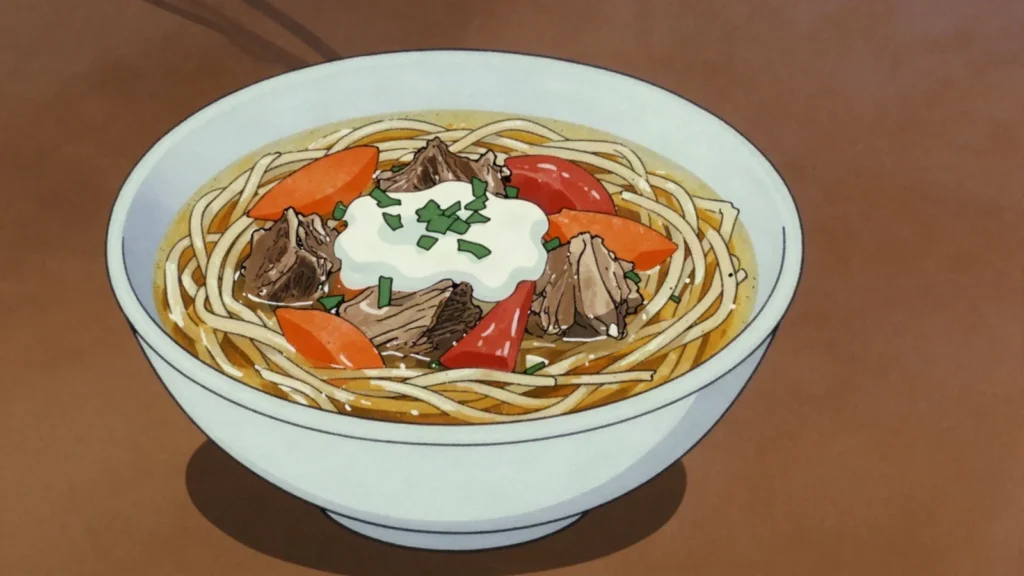
Ugro is a soup & stew from Tajikistan: hand-cut thin noodles simmered in meat broth with herbs and sour milk. The noodles are rolled and sliced very fine; the soup is often finished with chakka at the table.
How long does Ugro take to make?
Ugro takes 1 hour of preparation and 1 hour 30 minutes of cooking. The recipe makes serves 6. It is rated medium to make.
What can I substitute in Ugro?
Yes, within limits. Beef shin replaces lamb and needs a similar simmer. A pasta machine replaces hand rolling and saves considerable effort; use the second thinnest setting. Bought fresh thin egg noodles replace homemade at a real cost to the character of the dish. Thick plain yoghurt, strained, replaces chakka safely. The potatoes are optional; some households include them and some do not. A vegetarian version with a good vegetable broth and chickpeas is genuinely made.
What is the most important thing to get right in Ugro?
Dust each sheet generously with flour. Roll it up loosely into a flat log. Do not roll it tightly or it sticks. Slice as thinly as you possibly can. Take your time with this step. Toss them with flour so they separate. Spread them on a floured tray or cloth.