
Ingredients
The fishcake
- 600 gmixed fried fishcake
- satsuma-age or Taiwanese tian bu la
- sliced into strips and rounds
- or an assortment of shapes
- from a Chinese or Japanese grocer
The broth
- 1.5 litreslight chicken or pork stock
- or dashi
- 1large daikon radish
- peeled, in thick rounds
- 2 tablespoonssoy sauce
- 1 tablespoonrice wine
- 1 teaspoonsugar
- salt, to taste
Commonly added
- 4hard-boiled eggs, peeled
- 200 gfried tofu puffs
- 2corn cobs, in thick rounds
- 200 gkonjac cake, scored
- see the note on konjac
The sweet sauce
- 3 tablespoonsmiso paste
- or 3 tablespoons soy bean paste
- 3 tablespoonssugar
- 2 tablespoonstomato ketchup
- 1 tablespoonsoy sauce
- 150 mlwater
- 1 teaspooncornflour
- mixed with a little cold water
To serve
- bamboo skewers
- chopped coriander
- chilli sauce, on the side
- a small bowl for the broth
Directions
- Peel it thickly, since the skin is fibrous. Cut it into rounds about three centimetres thick. That stops them breaking up as they simmer. Bring the stock to a simmer in a large pot. Add the soy sauce, rice wine and sugar. The broth should taste light and slightly sweet.
- Add the daikon rounds to the simmering broth. Simmer them gently for about thirty minutes. They should turn translucent and be fully soft. Add the hard-boiled eggs at this stage too. The eggs take on colour from the broth.
- Simmer it for five to eight minutes only. Too much leaves the fishcake tasting of nothing. Add the tofu puffs at the same time. Put the miso, sugar and ketchup in the pan.
- Add the soy sauce and the water. Whisk it smooth over a low heat. Bring it to a gentle simmer while stirring. Stir the cornflour into a little cold water first. Never add dry cornflour straight to hot liquid.
- Pour the slurry in while whisking constantly. The sauce thickens within about a minute. Take it off the heat once it thickens. Overcooking cornflour makes it go thin again.
- Taste it and balance the sweet against the salt. It should be clearly sweet with a savoury depth. Lift the fishcake and vegetables from the broth. Arrange them in a bowl or on a plate. Cut the daikon and eggs into halves if large.
- Spoon the sweet sauce generously over the top. Do not drown everything in it though. Scatter chopped coriander over the bowl. Ladle some of the broth into small bowls. Serve bamboo skewers for spearing the pieces. The leftover broth keeps three days chilled.
Technique
- The name is a pun. Tian bu la is written with characters reading ‘sweet not spicy’, but it comes from the Japanese word tempura — specifically the Kansai regional usage, where tenpura means the fried fish paste cake known elsewhere in Japan as satsuma-age. It is not battered deep-fried tempura in any sense.
- Japan ruled Taiwan from 1895 to 1945, and this dish is one of many that arrived in that period and was then reworked. The sweet miso-and-ketchup sauce is the Taiwanese addition; Japanese oden has nothing like it. It was an occupation, and the food that came out of it is real — both things are true.
- Konjac cake carries a genuine choking hazard because it does not break down easily when chewed. Konjac jelly sweets have caused deaths, mostly among children given small firm cubes. Cut it small, score it, chew it properly, and do not give large pieces to young children.
- Add the fishcake last and simmer it only five to eight minutes. It is already cooked, and long boiling makes it swell, go spongy and leach its flavour into the broth.
- Bevel the cut edges of the daikon rounds. It stops them breaking apart during the long simmer, and it takes ten seconds.
- Never tip dry cornflour into hot liquid. Mix it with cold water first, then pour it in while whisking, and stop cooking once it thickens — overcooked cornflour thins out again.
- Fishcake contains fish and frequently shellfish, egg and wheat starch. Check the label if you are feeding anyone with an allergy.
- Stall broth tastes better because the same pot runs all evening and everything cooked in it adds savour. A home pot on its first use will be lighter.
Substitutions
- Dashi replaces chicken or pork stock and gives a cleaner, more Japanese character.
- Any assortment of fried fish paste products works — Japanese satsuma-age, Korean eomuk, or Chinese fish cake all belong to the same family.
- Soy bean paste replaces miso in the sauce; Taiwanese stalls use both.
- Konjac can be left out entirely if the choking concern outweighs the appeal, and nothing essential is lost.
- Fried tofu puffs replace fishcake for a vegetarian version; use a kombu and shiitake broth in place of meat stock.
- Sweet potato or taro chunks replace corn as the starchy addition.
Variations
- Oden, the Japanese ancestor, uses the same simmered assortment in dashi but is served with mustard rather than a sweet sauce.
- Korean eomuk-tang uses the same fishcake on skewers in a light anchovy broth.
- Some Taiwanese stalls serve it dry, drained of broth and coated heavily in the sweet sauce.
- A soup version, served with all the broth in the bowl and noodles added, is sold at some stalls.
- Deep-fried tian bu la, refried to order and served with sauce and no broth, is another night market variant.
- Some stalls add pig blood cake, a steamed rice and blood cake, to the same pot.
History
Named from Japanese tempura but closer to satsuma-age fishcake, a Taiwanese reworking of a colonial-era import.
Frequently asked questions
What is Tian Bu La?
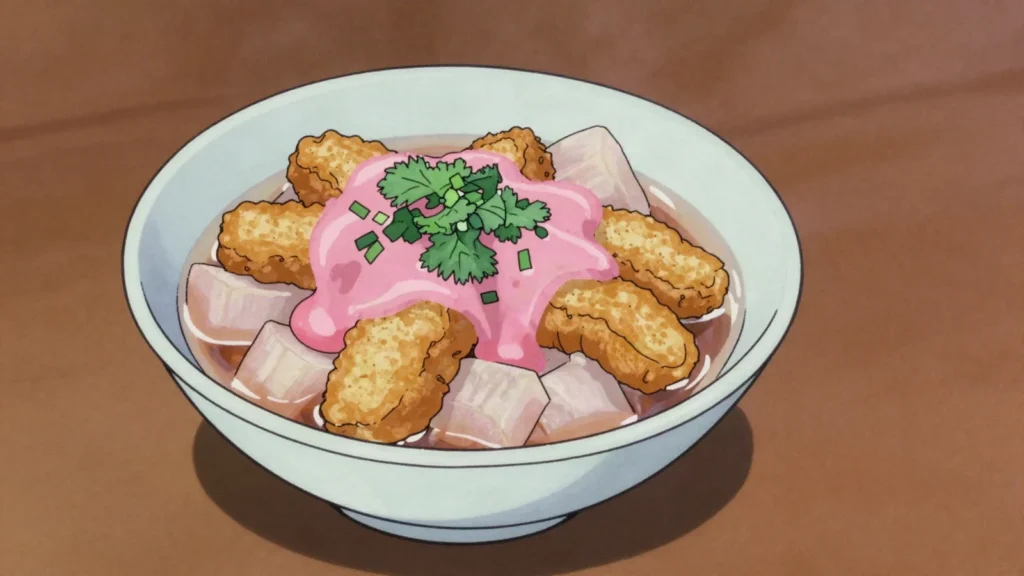
Tian Bu La is a street food from Taiwan: fried fishcake pieces simmered in broth with sweet sauce and daikon. Named from Japanese tempura but closer to satsuma-age fishcake, a Taiwanese reworking of a colonial-era import.
How long does Tian Bu La take to make?
Tian Bu La takes 20 minutes of preparation and 30 minutes of cooking. The recipe makes serves 4. It is rated medium to make.
What can I substitute in Tian Bu La?
Yes, within limits. Dashi replaces chicken or pork stock and gives a cleaner, more Japanese character. Any assortment of fried fish paste products works — Japanese satsuma-age, Korean eomuk, or Chinese fish cake all belong to the same family. Soy bean paste replaces miso in the sauce; Taiwanese stalls use both. Konjac can be left out entirely if the choking concern outweighs the appeal, and nothing essential is lost. Fried tofu puffs replace fishcake for a vegetarian version; use a kombu and shiitake broth in place of meat stock. Sweet potato or taro chunks replace corn as the starchy addition.
What is the most important thing to get right in Tian Bu La?
Add the soy sauce and the water. Whisk it smooth over a low heat. Bring it to a gentle simmer while stirring. Stir the cornflour into a little cold water first. Never add dry cornflour straight to hot liquid.