
Ingredients
Batter
- 6very ripe sweet bananas, ndizi or gonja
- 250 gcassava flour
- 50 gmillet flour, optional
- a pinch of salt
To fry
- oil, for deep frying
Directions
- Use bananas that are almost black, well past the point you would eat them.
- The ripeness is the recipe. There is no sugar in kabalagala and every bit of the sweetness comes from the fruit, so under-ripe bananas give something bland and starchy.
- Peel and mash them thoroughly to a smooth pulp, with no lumps.
- Work the cassava flour in a little at a time until you have a thick, sticky dough that just holds together.
- Add the flour gradually and stop early. Too much and the pancakes are dry and hard; the dough should be barely workable rather than smooth.
- Let it rest 10 minutes, which lets the cassava flour hydrate and stops the dough drinking oil in the pan.
- Oil your hands and the surface, take a small ball of dough, and pat it into a thin round about 8 cm across.
- Oil rather than flour for shaping, because extra flour at this stage stiffens the dough.
- Heat the oil to about 170°C (340°F).
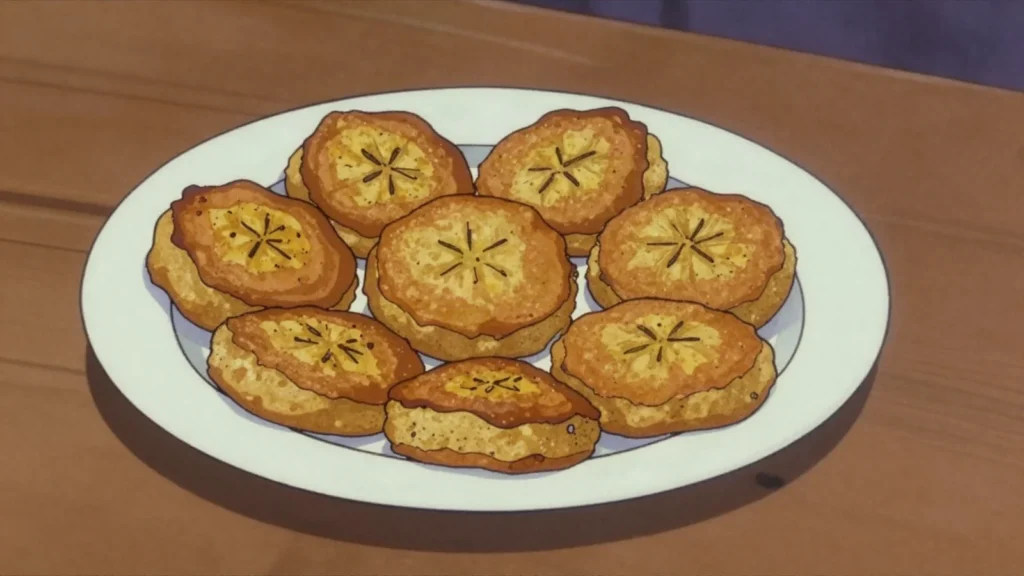
- Slide the rounds in a few at a time and fry for 2 to 3 minutes a side, until deep golden brown.
- Moderate heat rather than fierce. They are dense and need time in the middle, and hot oil colours the outside long before that.
- Drain on paper and eat them warm.
- They are chewy rather than fluffy, which is correct, and cassava flour is what gives that texture.
- They are sold from roadside stands and taxi parks across Uganda, often called pancakes locally, and are eaten as a snack at any time of day.
Technique
- Ndizi are the small sweet bananas; gonja is the sweet cooking plantain, and either works.
- They keep a day and are eaten cold without complaint.
- Some vendors add a little cinnamon or cardamom, though the plain version is standard.
Substitutions
- Wheat flour in place of cassava, which gives a softer and less chewy result.
- Very ripe plantain instead of banana.
Variations
- With grated coconut worked into the dough.
- Made larger, as a single thick pancake.
- With a little chilli, which is a Kampala street variation.
History
A Buganda snack named for the Kampala neighbourhood, cooked on roadside pans and eaten hot from the paper.
Frequently asked questions
What is Kabalagala?
Kabalagala is a street food from Uganda: small pancakes of ripe sweet banana and cassava flour, fried in oil. A Buganda snack named for the Kampala neighbourhood, cooked on roadside pans and eaten hot from the paper.
How long does Kabalagala take to make?
Kabalagala takes 20 min of preparation and 20 min of cooking. The recipe makes about 20. It is rated easy to make.
What can I substitute in Kabalagala?
Yes, within limits. Wheat flour in place of cassava, which gives a softer and less chewy result. Very ripe plantain instead of banana.
What is the most important thing to get right in Kabalagala?
Use bananas that are almost black, well past the point you would eat them.