
Ingredients
Batter
- 200 gplain flour
- 1 tspbaking powder
- ½ tspbicarbonate of soda
- 50 gsugar
- 1egg
- 300 mlmilk
- 1 tbsphoney
- a pinch of salt
Fillings
- 400 gred bean paste
- or custard
- or taro paste
- or peanut butter and sugar
- or shredded cabbage and pork, for savoury
To cook
- oil, for brushing
Equipment
- a wheel cake pan with deep round moulds
- or two crumpet rings in a heavy pan
To serve
- hot, in a paper sleeve
Directions
- Whisk the egg, sugar and honey, then add the milk. Sift in the flour, baking powder, bicarbonate and salt and whisk until just smooth. Stop as soon as the lumps are gone, since over-whisking develops gluten and gives a tough, chewy cake.
- Chill the filling and, if using custard, make it thick. Get it properly hot before the first cake, and expect to sacrifice one while you find the heat.
- Fill about two-thirds of the moulds fully as the base halves, and put a thinner layer in the rest as the tops. Let the base halves cook for a minute until the surface begins to set but is still wet on top.
- Keep the filling well inside the rim, leaving a clear border of batter. Filling that reaches the edge means the two halves never join and the cake falls apart. Work quickly and confidently. The top half must still be slightly soft underneath so it fuses to the base rather than sitting on it.
- Press it down gently to seal the seam. Now cook the joined cake a further 3 to 4 minutes, turning it once in the mould. Turn it so both faces colour evenly. It should be golden brown on both flat faces with a paler band around the side.
- Press it gently: it should feel springy and firm rather than soft. The batter around a cold filling needs longer than it looks, so give it the time.
- Lift it out and serve it immediately, in a paper sleeve. It must be eaten hot, since the outside softens as it cools and the pleasure is the contrast between the crisp faces and the soft middle.
Technique
- Imagawayaki is the Japanese original and taiyaki the fish-shaped relative.
- The two-halves-joined method is what makes them thick and straight-sided.
- Taro is among the most popular Taiwanese fillings.
Substitutions
- Crumpet rings in a heavy pan, in place of a dedicated mould.
- Ready-made red bean paste, which is sold in tins.
Variations
- Filled with taro paste.
- Filled with custard.
- Savoury, with cabbage and pork.
History
Adapted from Japanese imagawayaki during the colonial period and reinvented with Taiwanese fillings after 1945.
Frequently asked questions
What is Wheel Cake?
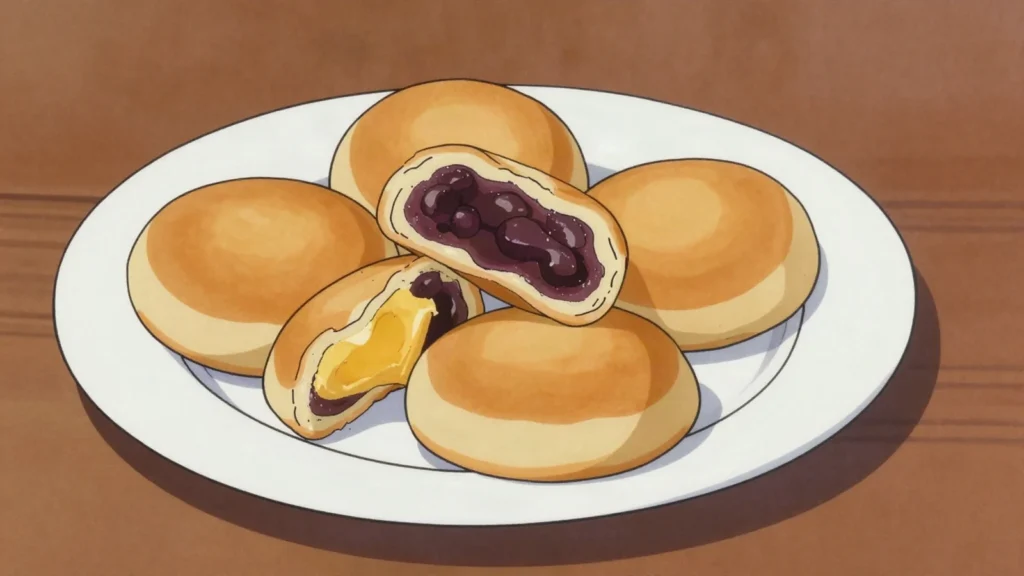
Wheel Cake is a street food from Taiwan: round griddled cakes filled with red bean, custard or taro. Adapted from Japanese imagawayaki during the colonial period and reinvented with Taiwanese fillings after 1945.
How long does Wheel Cake take to make?
Wheel Cake takes 20 min plus 30 min resting of preparation and 25 min of cooking. The recipe makes 8 cakes. It is rated medium to make.
What can I substitute in Wheel Cake?
Yes, within limits. Crumpet rings in a heavy pan, in place of a dedicated mould. Ready-made red bean paste, which is sold in tins.
What is the most important thing to get right in Wheel Cake?
Keep the filling well inside the rim, leaving a clear border of batter. Filling that reaches the edge means the two halves never join and the cake falls apart. Work quickly and confidently. The top half must still be slightly soft underneath so it fuses to the base rather than sitting on it.