
Ingredients
Dough
- 400 gorange sweet potato, peeled and cubed
- 180 gsweet potato starch, plus more as needed
- 60 gcaster sugar
- a pinch of salt
To fry
- neutral oil, for deep frying
Equipment
- a wok or deep pan
- a slotted spoon or spider
- a wire skimmer, for pressing
Directions
- Use orange-fleshed sweet potato for colour and sweetness. The starch must be sweet potato starch and not cornflour. Steam the cubes until they are completely tender. This takes about twenty minutes over boiling water.
- Mash the hot sweet potato until it is entirely smooth. Push it through a sieve if any lumps remain. Stir the sugar and salt into the hot mash. Add the starch in three or four additions. Mix it in with a spatula at first because it is too hot to touch. Then knead it with your hands as it cools enough. Add more starch a spoonful at a time if it is too wet.
- Add a teaspoon of hot water if it is too dry and cracking. The exact amount depends on how wet your sweet potato is. Roll the dough into a long rope on a starched surface. Cut it into pieces about two centimetres long. Roll each piece into a smooth ball between your palms. Keep them under a cloth so they do not dry out. Any crack in the surface will stop the ball puffing.
- Pour oil into a wok to a depth of eight centimetres. Never fill the pan more than halfway with oil. Heat it gently to only 130C to start with. This first frying must be at a low temperature. Stir them gently so they do not stick together. Fry them at that low heat for about five minutes. Use a wire skimmer or the back of a slotted spoon.
- Press it down until it flattens, then release it. It will spring back and take in air as it does. Repeat this pressing every thirty seconds or so. Work steadily around the whole batch as you go. The balls will visibly swell over several minutes.
- Keep pressing for about eight minutes in total. Finishing them needs a rise in temperature. Fry them for a final minute or two at that heat. This is what makes the outside crisp and golden.
- Keep turning them so they colour evenly. Lift them out with a spider onto a wire rack. Draining on a rack keeps them crisp underneath. Let the oil come back down before the next batch. Serving them is done hot in a paper bag. Shake the bag to knock off any excess oil. They lose their crispness within about twenty minutes.
Technique
- The hollow interior comes entirely from the repeated pressing during the low-temperature fry.
- Skipping that step gives a solid, dense ball that is perfectly edible but is not the night market snack.
Substitutions
- Tapioca starch is the nearest substitute for sweet potato starch and gives a slightly springier chew.
- Taro or pumpkin can replace the sweet potato using the same method and starch ratio.
Variations
- Purple sweet potato gives a striking violet ball.
- Some stalls dust them with plum powder, which is salty and sour.
- A cheese-filled version is sold at some modern night market stalls.
History
A night-market fryer snack made from Taiwan’s abundant sweet potato crop, sold by the scoopful in paper bags.
Frequently asked questions
What is Sweet Potato Balls?
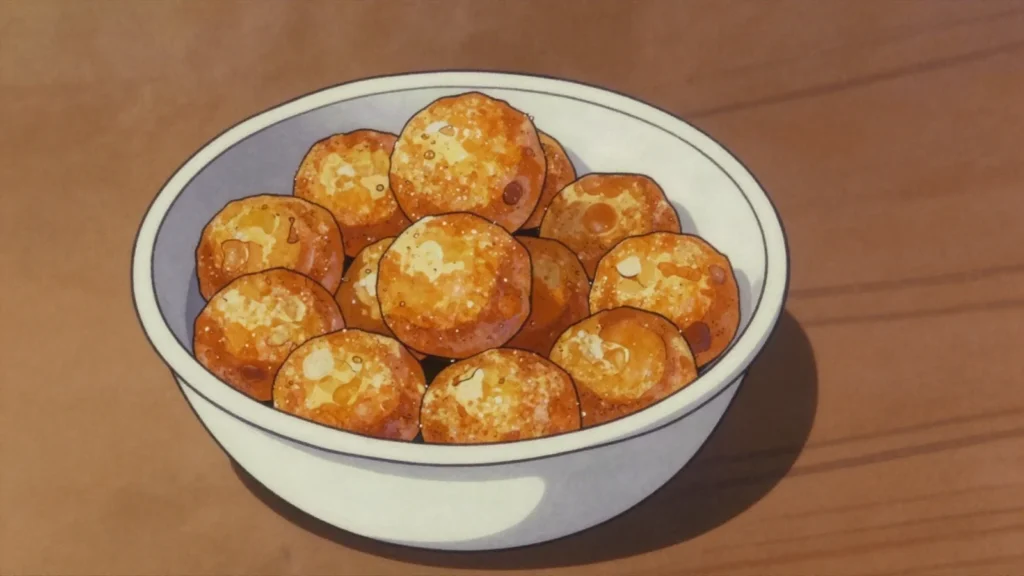
Sweet Potato Balls is a street food from Taiwan: hollow fried sweet-potato dough spheres, crisp outside and chewy within. A night-market fryer snack made from Taiwan’s abundant sweet potato crop, sold by the scoopful in paper bags.
How long does Sweet Potato Balls take to make?
Sweet Potato Balls takes 40 minutes of preparation and 20 minutes of cooking. The recipe makes about 40 balls. It is rated medium to make.
What can I substitute in Sweet Potato Balls?
Yes, within limits. Tapioca starch is the nearest substitute for sweet potato starch and gives a slightly springier chew. Taro or pumpkin can replace the sweet potato using the same method and starch ratio.
What is the most important thing to get right in Sweet Potato Balls?
Use orange-fleshed sweet potato for colour and sweetness. The starch must be sweet potato starch and not cornflour. Steam the cubes until they are completely tender. This takes about twenty minutes over boiling water.