
Ingredients
Taro dough
- 300 gtaro, peeled and cubed
- 120 gsweet potato starch
- 40 gsugar
Sweet potato dough
- 300 gorange sweet potato, peeled and cubed
- 120 gsweet potato starch
- 40 gsugar
Syrup
- 150 gbrown sugar or muscovado
- 500 mlwater
- 2 slicesof ginger
To serve
- cooked red beans
- cooked mung beans
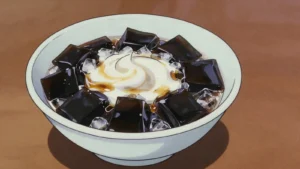
- grass jelly, cubed
- cooked barley or tapioca pearls
- crushed ice, for the cold version
- evaporated milk, optional
Directions
- Rinse your hands well if you do get sap on them. Never taste raw taro at any stage. Steam the taro and the sweet potato separately. Keeping them separate keeps the two colours distinct. Steam each until completely tender, about twenty minutes. Mash each one thoroughly while it is still hot. Push it through a sieve if it is at all lumpy.
- Stir the sugar into each hot mash separately. Add the starch in two or three additions to each. Mix with a spatula until it is cool enough to handle. It should be smooth, soft and just slightly tacky. Add a spoonful of hot water if it cracks.
- Add a little more starch if it sticks to everything. The exact amount depends on how wet your roots were. Dust the surface with a little starch. Roll each dough into a long rope about two centimetres thick.
- Cut it into short pieces about two centimetres long. Leave them as short cylinders rather than rounding them. Toss them in a little starch so they do not stick together. Making the syrup takes ten minutes. Put the sugar, water and ginger in a pan. Bring it to the boil and stir until the sugar dissolves.
- Simmer it for five minutes and take it off the heat. Let it cool if you are making the iced version. Chill it in the refrigerator for a cold dessert. Boiling the balls is fast and needs watching. Bring a large pan of water to a rolling boil. Drop in one colour of balls at a time.
- Stir gently so they do not stick to the base. Once they float, give them two more minutes. Lift them out with a slotted spoon. Drop the cooked balls straight into iced water. Leave them for one minute and then drain them. That cold shock is what makes them properly springy. Toss the drained balls in a spoonful of the syrup. This stops them sticking together as they sit.
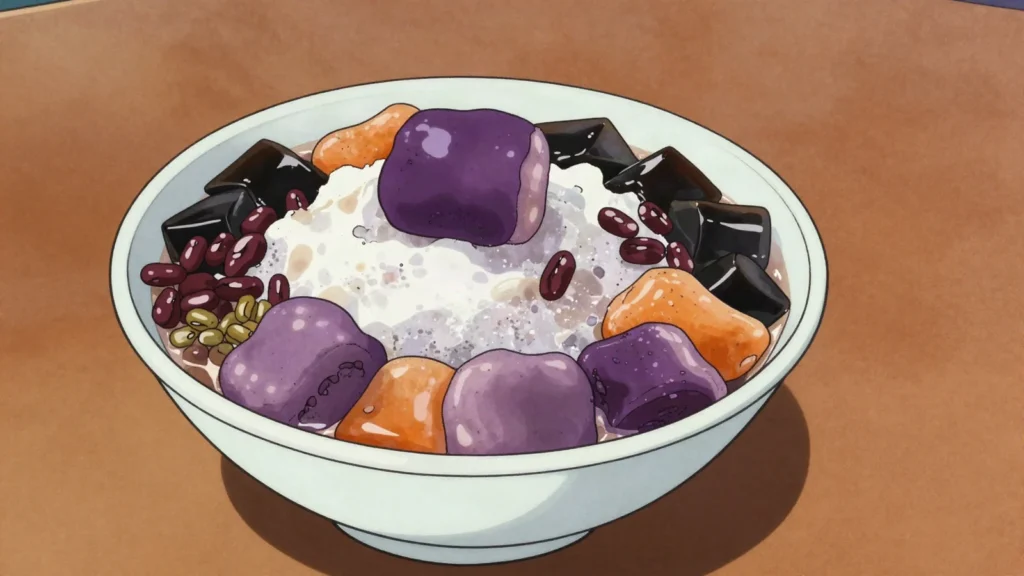
- Pile the taro and sweet potato balls over the ice. Add spoonfuls of red beans and mung beans. Add cubes of grass jelly and cooked barley. Pour the cold syrup over the whole bowl. Drizzle evaporated milk over the top if you like. Serve the balls in hot ginger syrup instead. That is what Jiufen shops sell in cold weather. Boil them from frozen, adding two minutes to the time.
Technique
- A City of Sadness was directed by Hou Hsiao-hsien and won the Golden Lion at Venice in 1989.
- Its success is widely credited with turning Jiufen from a declining mining town into a major destination.
Substitutions
- Tapioca starch replaces sweet potato starch and gives a slightly softer chew.
- Purple sweet potato or pumpkin can be used to make additional colours of ball.
Variations
- The hot ginger syrup version is what is eaten in winter.
- Some shops add tangyuan or taro chunks to the bowl.
- A green tea flavoured ball is sold at some modern stalls.
History
A speciality of the hillside town of Jiufen, whose teahouse street revived after the 1989 film A City of Sadness drew crowds.
Frequently asked questions
What is Taro Balls?
Taro Balls is a dessert from Taiwan: chewy taro and sweet-potato dumplings in iced syrup with beans and jelly. A speciality of the hillside town of Jiufen, whose teahouse street revived after the 1989 film A City of Sadness drew crowds.
How long does Taro Balls take to make?
Taro Balls takes 1 hour of preparation and 30 minutes of cooking. The recipe makes serves 6. It is rated medium to make.
What can I substitute in Taro Balls?
Yes, within limits. Tapioca starch replaces sweet potato starch and gives a slightly softer chew. Purple sweet potato or pumpkin can be used to make additional colours of ball.
What is the most important thing to get right in Taro Balls?
Rinse your hands well if you do get sap on them. Never taste raw taro at any stage. Steam the taro and the sweet potato separately. Keeping them separate keeps the two colours distinct. Steam each until completely tender, about twenty minutes. Mash each one thoroughly while it is still hot. Push it through a sieve if it is at all lumpy.