
Ingredients
The coconut
- 1large mature coconut
- grated
- about 400 g grated flesh
- or 400 g desiccated coconut
- unsweetened
The syrup
- 400 gbrown sugar
- or dark cane syrup
- 150 mlwater
- or coconut water
- a pinch of salt
Sometimes added
- half a teaspoon ground ginger
- a pinch of cinnamon
- grated lime zest
- a splash of vanilla
To shape
- a greased tray
- or greased banana leaf
- a metal spoon
- wax paper, to wrap
Directions
- Grate it on the coarse side of a grater. Soak it briefly in warm water first. Brown sugar or dark cane syrup is traditional. Tableta should be firm and chewy rather than soft. Keep children and pets out of the kitchen. Have a bowl of cold water ready first. Hold a sugar burn under cold running water.
- Keep it there for at least twenty minutes. Do not pull hardened sugar off the skin. Work on a stable surface with a firm grip. Take real care with that step. Never leave it unlabelled on a shared table. Drain the coconut water through the soft eyes. One of them is soft enough to pierce. Top it up with plain water if needed. Crack the coconut around its middle. Hold it in one hand over a bowl.
- Turn it as you tap all the way round. Use the back of a heavy knife rather than the blade. Keep your fingers well clear of the strike point. Work over a bowl in case it slips. Never hold it in your palm while striking hard.
- Work around the edge to loosen it. Warming the halves briefly helps it release. Peel the brown skin off the white flesh. Use a vegetable peeler or a sharp knife. Grate the coconut flesh coarsely. Use the coarse side of a box grater. Grease a tray thoroughly before you start. There is no time once it is ready.
- Use a neutral oil and spread it generously. Put the sugar and coconut water in a heavy pan. Use a genuinely heavy based pan for this. Thin pans give hot spots that burn the sugar.
- Use one considerably larger than it seems to need. Warm it gently until the sugar dissolves. Stir it only until it is entirely clear. Then stop stirring completely. Add the grated coconut to the syrup. Add it once the syrup is boiling steadily.
- Stir it thoroughly through the syrup. The mixture becomes thick and stiff. Cook the mixture until it is thick and dark. Give it about twenty minutes over a moderate heat. Stir it constantly right through that time. It is ready when it holds together in a mass. Drop a little into cold water to test it. It should form a firm ball you can pick up. Cook it longer rather than taking it off early.
- Stir in ginger, cinnamon or lime zest. Add them near the end of the cooking. Stir them through the mixture thoroughly. Drop spoonfuls onto the greased tray. Work quickly, since it sets as it cools.
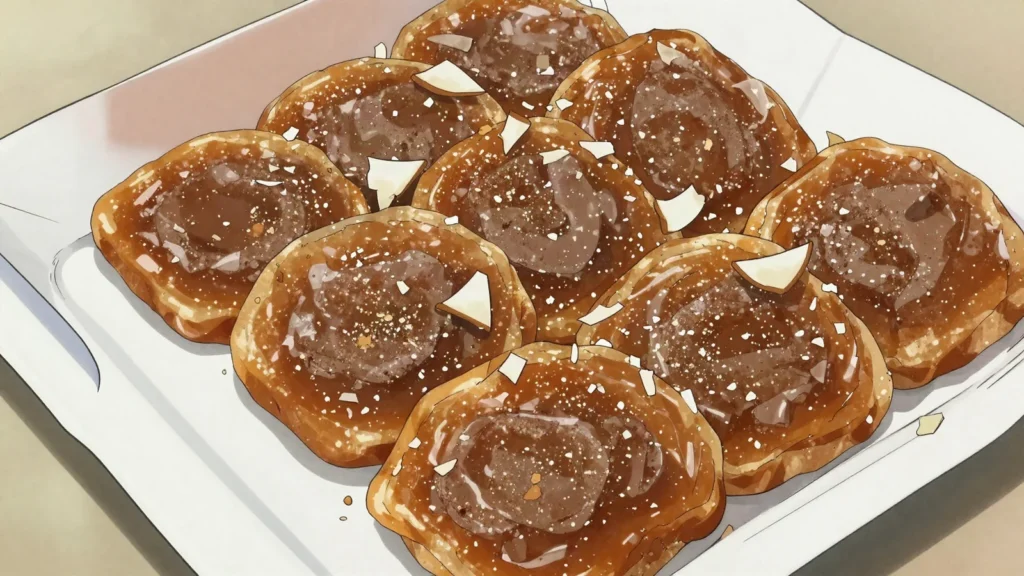
- Drop rough rounds about six centimetres across. Use a metal spoon dipped in oil. Do not touch it with your hands at all. Pour the whole mixture out and press it flat. Then score it into squares while still warm.
- Cut it apart once it has cooled and firmed. Press it down with a greased spoon or spatula. Aim for about one centimetre thick. Press it firmly so it holds together. Do not touch it while it is hot. Let the tableta cool completely and firm up. It firms up within about an hour.
- Let it cool at room temperature. Do not refrigerate it to speed the setting. Wrap each piece of it in wax paper. It stops the pieces sticking together. Twist the ends closed like a sweet. Keep the wrapped pieces in an airtight tin. An airtight tin keeps it firm for weeks. Seal it well wherever you are. It keeps three weeks in an airtight tin. Keep it sealed and away from any damp.
Technique
- Boiling sugar reaches extreme temperatures, sticks to skin instantly and keeps burning — this is the most dangerous stage. Never touch or taste it hot, keep children out of the kitchen, and have cold water ready. Hold any sugar burn under cold running water at least twenty minutes, do not pull the hardened sugar off, and seek medical help for anything beyond very minor.
- Opening a coconut is genuinely awkward and it slips easily. Drain the water first through the soft eye, then tap around the equator with the back of a heavy knife, turning as you go, working over a bowl and keeping fingers well clear of the strike point — never hold it in your palm while striking hard.
- Undercooked tableta stays sticky and never sets, which is the commonest failure. Test by dropping a little into cold water: it should form a firm ball you can pick up, and if it disperses it needs longer. Stir constantly throughout, scraping the base, since coconut and sugar catch instantly.
Substitutions
- Desiccated unsweetened coconut works reasonably, soaked briefly in warm water first, but it lacks the oil and moisture of fresh and gives a drier less rich result; the atlas records that honestly. Use a mature coconut rather than a young one, whose flesh is soft and jelly-like.
- White sugar replaces brown or dark cane syrup for a pale sweet result, though dark is more usual. Ground ginger is the most common flavouring addition in Belize, with cinnamon, lime zest and vanilla also used.
Variations
- Keep the coconut water drained from the nut and use it in the syrup — it carries flavour and a little sweetness and is worth keeping rather than discarding. Grate the flesh coarsely for strands rather than fine powder, which gives the characteristic texture.
- Coconut and sugar sweets run across the Caribbean — Haitian tablèt, Jamaican coconut drops and Trinidadian sugar cake are all relatives, some soft and fudgy, some hard, some white and some dark. Belizean tableta is usually dark and firm, and the atlas records them as separate dishes.
- Grease the tray before the syrup goes on the heat, since there is no time afterward. Drop rough spoonfuls with an oiled metal spoon or press the whole lot flat and score it warm; both forms are genuinely sold. Cool it at room temperature rather than the refrigerator, where condensation makes it sticky, and store it wrapped in wax paper in an airtight tin — coconut fat goes rancid in warmth and light.
History
Sold in wax paper at bus stops and village shops, one of Belize’s oldest home-made confections.
Frequently asked questions
What is Tableta?
Tableta is a snack from Belize: hard slab of grated coconut boiled with sugar or cane syrup. Sold in wax paper at bus stops and village shops, one of Belize’s oldest home-made confections.
How long does Tableta take to make?
Tableta takes 20 minutes of preparation and 30 minutes of cooking. The recipe makes makes about 20. It is rated medium to make.
What can I substitute in Tableta?
Yes, within limits. Desiccated unsweetened coconut works reasonably, soaked briefly in warm water first, but it lacks the oil and moisture of fresh and gives a drier less rich result; the atlas records that honestly. Use a mature coconut rather than a young one, whose flesh is soft and jelly-like. White sugar replaces brown or dark cane syrup for a pale sweet result, though dark is more usual. Ground ginger is the most common flavouring addition in Belize, with cinnamon, lime zest and vanilla also used.
What is the most important thing to get right in Tableta?
Grate it on the coarse side of a grater. Soak it briefly in warm water first. Brown sugar or dark cane syrup is traditional. Tableta should be firm and chewy rather than soft. Keep children and pets out of the kitchen. Have a bowl of cold water ready first. Hold a sugar burn under cold running water.