
Ingredients
The fruit
- 600 gKakadu plums (Terminalia ferdinandiana), also called gubinge or billygoat plum, stoned
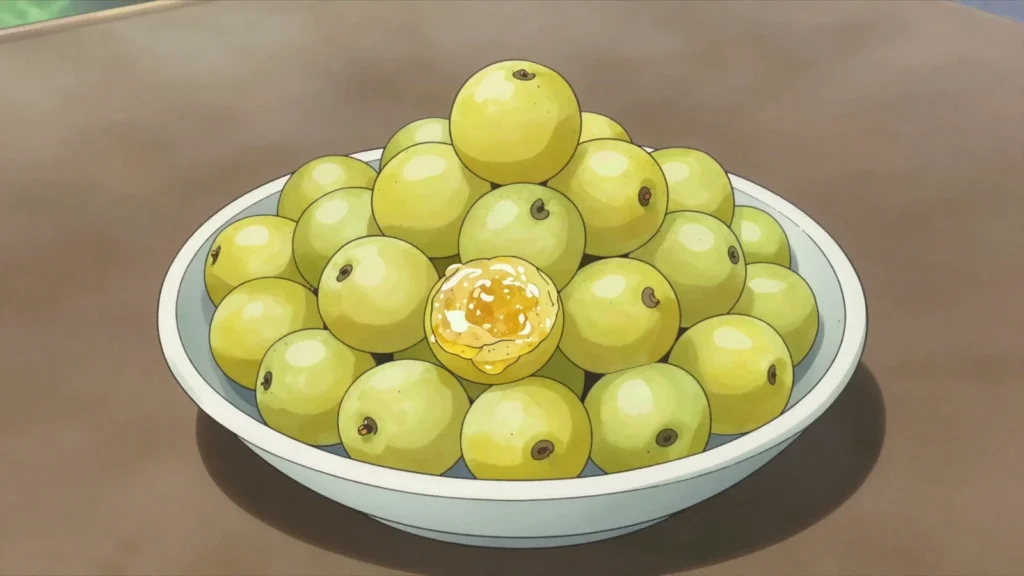
- the fruit is small, pale green-yellow, about 2 cm long, with a single hard stone and a fibrous, very tart flesh
Jam
- 600 gstoned Kakadu plum flesh
- 450 gjam sugar with added pectin, or 450 g sugar plus 1 tbsp powdered pectin
- 250 mlwater
- juice of 1 lemon
- 1 pinchsalt
Fresh, the traditional way
- a handful of ripe fruit
- cold water
Modern uses
- 1 tspKakadu plum powder stirred into 250 ml sparkling water
- 2 tbspof the jam with a sharp cheddar or a fresh goat’s cheese
Directions
- Cut the flesh away from the hard central stone with a small knife; the stones are large relative to the fruit, so expect to lose about a third of the weight.
- Simmer the flesh with the water in a heavy pan over low heat for 20 minutes, until it collapses to a soft pulp and the fibres separate. Push about half the pulp through a coarse sieve to break up the worst of the fibre, then return it to the pan with the rest; the fruit is genuinely stringy and this step is what makes the jam spreadable.
- Add the sugar, lemon juice and salt and stir over low heat until every crystal has dissolved, which you can check by dragging a spoon across the base and feeling for grit. Raise the heat and boil hard for 8 to 12 minutes, skimming the foam, until the setting point of 105°C (225°F) is reached, or a spoonful chilled on a cold saucer wrinkles when you push it with a finger.
- Pour into hot sterilised jars, leaving 5 mm of headspace, seal immediately and invert for 2 minutes, then cool upright; the jam will set fully within 24 hours. The taste is intensely sour with a stewed-apple and pear note behind it, and one or two is usually enough.
Technique
- Kakadu plum has the highest recorded vitamin C content of any fruit, commonly measured at 3,000 to 5,000 mg per 100 g and sometimes far higher, which is over fifty times that of an orange. Long boiling destroys much of it, so the fresh fruit and the powder are the better sources.
- It has been eaten by Aboriginal people across northern Australia for tens of thousands of years, and the harvest is now an important source of income for Indigenous communities in the Kimberley and Arnhem Land. Buy from Indigenous-owned suppliers where you can.
- The fruit is extremely astringent raw and the flesh is fibrous, so almost all culinary use involves either cooking it down or drying and milling it into powder.
- The high vitamin C and organic acid content mean it needs less added acid than most jams, but pectin is still useful because the fruit itself is only moderately pectin-rich.
Substitutions
- Out of season or outside Australia, Kakadu plum powder is widely sold; use 2 tbsp of powder stirred into a base of stewed green apple to approximate the jam.
- Sour green plums, damsons or unripe crab apples make a jam of similar sharpness, though without the distinctive stewed-pear aroma.
Variations
- A Kakadu plum and wattleseed jam adds 1 tbsp of roasted ground wattleseed for a coffee-toned depth.
- Kakadu plum chutney, with onion, ginger and vinegar, is served with cheese across northern Australia.
- The powder is stirred into yoghurt, smoothies and desserts as a modern native-ingredient garnish.
History
Called gubinge in the Kimberley, it carries among the highest vitamin C levels recorded in any fruit and is harvested by Aboriginal ranger groups.
Frequently asked questions
What is Kakadu Plum?
Kakadu Plum is a snack from Australia: tart green native fruit eaten fresh or made into jam and sauces. Called gubinge in the Kimberley, it carries among the highest vitamin C levels recorded in any fruit and is harvested by Aboriginal ranger groups.
How long does Kakadu Plum take to make?
Kakadu Plum takes 20 min of preparation and 40 min of cooking. The recipe makes about 700 ml jam, or 4 servings fresh. It is rated easy to make.
What can I substitute in Kakadu Plum?
Yes, within limits. Out of season or outside Australia, Kakadu plum powder is widely sold; use 2 tbsp of powder stirred into a base of stewed green apple to approximate the jam. Sour green plums, damsons or unripe crab apples make a jam of similar sharpness, though without the distinctive stewed-pear aroma.