
Ingredients
The okra
- 600 gfresh okra
- or 400 g frozen sliced
- sliced thinly
- some grated
The greens and fish
- 300 gsweet potato leaves
- or spinach, chopped
- 500 gfirm white fish
- in thick steaks
- 200 gsmoked fish, flaked
- 200 gprawns, optional
The base
- 150 mlred palm oil
- 2onions, chopped
- 6garlic cloves, crushed
- 1scotch bonnet, whole
- 2 tablespoonsdried shrimp
- or fermented fish
- 1stock cube
- salt and black pepper
To serve
- plain white rice
- plenty of it
- in a wide shared dish
- with the stew over
Directions
- Lift it out before it splits in the pot. Wash your hands thoroughly after handling it. Trim the tops and tails from the okra. Cut off the hard stem cap at the top. Trim the very tip if it is dry or hard. Then wash and dry them thoroughly.
- Slice most of the okra into thin rounds. Thin slices release far more mucilage. Slice it all before you start cooking. Grate about a quarter of the okra coarsely. Use a coarse grater for that portion. Wash and chop the greens finely. Wash them through several changes of water. They should merge into the stew.
- Cut the fresh fish into thick steaks. Keep the pieces large rather than small. Season them with salt and set them aside. Flake the smoked fish and check it for bones.
- Remove anything at all that you find. Bones in a thick stew are genuinely unpleasant. Heat the red palm oil in a large heavy pot. Warm it gently rather than getting it smoking. It should be warm and fluid rather than hot. Add the onion and cook it in the palm oil. Give it about ten minutes until soft. Stir it so it does not catch on the base. Then add the crushed garlic for a minute.
- Add the dried shrimp or fermented fish. Break them up as they go into the oil. Let them cook for a minute or two. Use less than you think you need at first. Too much makes the dish overpowering. Start small and add more if needed. Pour in enough water to make a broth. About a litre and a half is a starting point. Keep hot water ready to thin it. It should be soupy at this stage.
- Add all the sliced and grated okra to the pot. Add it all at once rather than in stages. Stir it thoroughly through the liquid. Keep stirring so it does not clump. Simmer the okra gently for about thirty minutes. It should be thick rather than at all soupy.
- Stir it regularly right through that time. Thick okra stew catches on the base easily. Stir it every few minutes without fail. Stir the chopped greens into the stew. Add them about twenty minutes before the end. They wilt down within a few minutes. Drop the whole scotch bonnet into the pot. Leave it completely whole and unbroken. A burst bonnet makes the whole pot fiercely hot.
- Add the fresh fish for the last fifteen minutes. Fish cooks quickly and breaks up if overcooked. Shake the pot gently rather than stirring it. The pieces should stay whole in the bowl. Add any prawns for the last five minutes. Five minutes is genuinely enough for them. Season the stew with salt and pepper.
- Taste it carefully before adding any salt. It may need very little more at all. Cook plenty of plain white rice. Make more rice than seems necessary. This stew is rich and needs plenty beneath it. Spread the rice out in a wide serving dish. Spread it in an even layer across the dish. Arrange the fish pieces on the surface. Every part of the rice should be covered.
Technique
- Okra’s mucilage is the entire point here rather than something to reduce — it is what thickens the stew, so slice it finely and grate about a quarter to release still more. A thin superkanja has gone wrong. Stir regularly and scrape the base, since thick okra stew catches easily and a burnt patch ruins the pot.
- This contains fish, dried shellfish and often prawns, and the dried shrimp is invisible in the finished dish. Fish and shellfish allergies are separate and both can be severe, so name both. Check flaked smoked fish for small sharp bones with your fingers.
- Dried shrimp and fermented fish are genuinely strong and a little goes a very long way — start with less than you think you need, since too much makes the dish overpowering.
Substitutions
- Senegal has an almost identical dish called soupou kandia. The two are genuinely the same stew, and the atlas records both rather than merging them: Gambia and Senegal share peoples and languages across a border that is a colonial creation, cutting through Mandinka, Wolof and Fula peoples while food, language and family cross it constantly. The Gambian version often carries more greens and the Senegalese leans more on shellfish — real differences, but small ones.
- Spinach replaces sweet potato leaves, the traditional green, and both are genuinely used in Gambian kitchens. Frozen sliced okra works perfectly well and thickens just as well as fresh.
Variations
- Red palm oil has no real substitute here and is entirely different from refined palm oil. Industrial palm oil is linked to deforestation, a genuine documented concern, while West African red palm oil is largely smallholder produced under a different system; the atlas records both accurately without pretending they are the same or condemning a traditional food.
- Warm the palm oil gently rather than getting it smoking, since overheating loses its colour and flavour, and cook the onion in it about ten minutes before anything else goes in.
- Add the greens about twenty minutes before the end, the fresh fish for the last fifteen and any prawns for the last five, lowering the fish in gently and shaking the pot rather than stirring — stirring breaks it into small pieces and it should stay whole. Taste before adding salt, since the dried fish and stock cube have already salted it.
History
Kanja is Mandinka for okra; the stew is thickened with palm oil and smoked fish and is shared with Senegal, where it is soupou kandia.
Frequently asked questions
What is Superkanja?
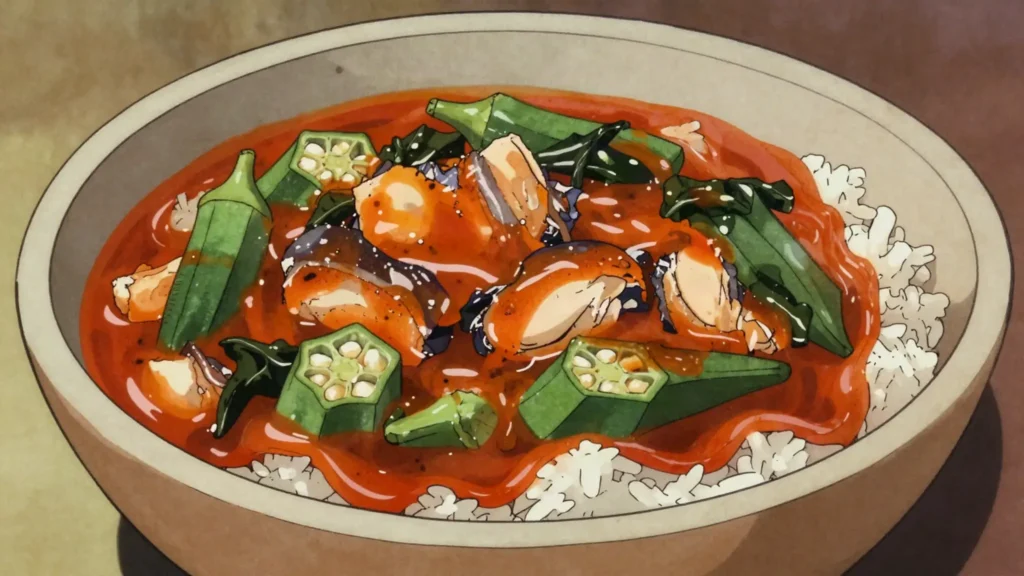
Superkanja is a soup & stew from Gambia: okra, palm oil, fish and greens stew served over rice. Kanja is Mandinka for okra; the stew is thickened with palm oil and smoked fish and is shared with Senegal, where it is soupou kandia.
How long does Superkanja take to make?
Superkanja takes 40 minutes of preparation and 1 hour 15 minutes of cooking. The recipe makes serves 6. It is rated medium to make.
What can I substitute in Superkanja?
Yes, within limits. Senegal has an almost identical dish called soupou kandia. The two are genuinely the same stew, and the atlas records both rather than merging them: Gambia and Senegal share peoples and languages across a border that is a colonial creation, cutting through Mandinka, Wolof and Fula peoples while food, language and family cross it constantly. The Gambian version often carries more greens and the Senegalese leans more on shellfish — real differences, but small ones. Spinach replaces sweet potato leaves, the traditional green, and both are genuinely used in Gambian kitchens. Frozen sliced okra works perfectly well and thickens just as well as fresh.
What is the most important thing to get right in Superkanja?
Cut the fresh fish into thick steaks. Keep the pieces large rather than small. Season them with salt and set them aside. Flake the smoked fish and check it for bones.