Ingredients
Batter
- 400 gdried black-eyed peas
- 1small onion, roughly chopped
- 1scotch bonnet, deseeded, or to taste
- 1 tspsalt
- 60–80 mlcold water, as little as possible
To fry
- 700 mlred palm oil or groundnut oil
To serve
- pap (ogi), or bread
Directions
- Soak the peas in cold water for 4 hours. Rub handfuls between your palms under water and the skins will lift and float; pour them off and repeat until the peas are white. This is what makes akara pale and light instead of grey and dense.
- Drain thoroughly and grind with the onion and scotch bonnet to a thick smooth paste, adding water a spoonful at a time and no more than you must.
- Beat the paste hard with a wooden spoon or whisk for 4–5 minutes until it visibly lightens and thickens. Drop a small spoonful into a glass of water: it should float. If it sinks, keep beating.
- Beat in the salt at the very end. Salt added early draws water out of the paste and slackens it.
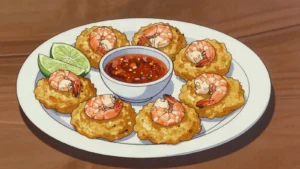
- Heat the oil to 180°C (350°F). Slide in heaped tablespoons of batter, four or five at a time, and fry 4–5 minutes, turning once, until deep gold and firm.
- Drain on a rack and eat hot, with pap for breakfast or bread for a sandwich.
Technique
- The float test is the only honest check that enough air is in the batter. Everything else about akara follows from it.
- Too much water is the commonest fault: a loose batter spreads in the oil and fries flat and greasy.
- Do not crowd the pan. Each fritter needs room to turn itself over as it cooks.
Substitutions
- Frozen peeled black-eyed peas remove the soaking and skinning at some cost to lightness.
- Groundnut oil for a cleaner-tasting fritter; red palm oil for the traditional flavour and colour.
Variations
- Acarajé, the Bahian descendant, split and stuffed with vatapá and shrimp.
- A version with crayfish powder and chopped pepper beaten into the batter, sold in Lagos.
History
Yoruba and Gun bean fritters carried across the Atlantic by enslaved West Africans from ports like Ouidah, surviving in Bahia as acarajé.
Frequently asked questions
What is Akara?
Akara is a street food from Benin: black-eyed pea fritters fried in palm oil. Yoruba and Gun bean fritters carried across the Atlantic by enslaved West Africans from ports like Ouidah, surviving in Bahia as acarajé.
How long does Akara take to make?
Akara takes 25 min plus 4 hr soaking of preparation and 20 min of cooking. The recipe makes about 18 fritters. It is rated medium to make.
What can I substitute in Akara?
Yes, within limits. Frozen peeled black-eyed peas remove the soaking and skinning at some cost to lightness. Groundnut oil for a cleaner-tasting fritter; red palm oil for the traditional flavour and colour.
What is the most important thing to get right in Akara?
Soak the peas in cold water for 4 hours. Rub handfuls between your palms under water and the skins will lift and float; pour them off and repeat until the peas are white. This is what makes akara pale and light instead of grey and dense.