Ingredients
The meat
- 1chicken, jointed
- about 1.5 kg
- or 800 g firm fish
- in thick steaks
- salt and black pepper
The base
- 3onions, chopped
- 6tomatoes, chopped
- or 400 g tinned
- 3 tablespoonstomato purée
- 1sweet pepper, chopped
- 5garlic cloves, crushed
- 1scotch bonnet, whole
- 100 mloil
- or red palm oil
The rice and vegetables
- 500 glong grain rice
- rinsed
- 3potatoes, cubed
- 2carrots, sliced
- about 1 litre hot water
- or stock
To serve
- hot from the pot
- in a shared dish
- with a fresh chilli sauce
- and sliced onion
Directions
- Rinse the rice until the water runs clear. Keep the lid on once the rice goes in. Steam is what cooks the rice through. Do not stir the rice while it cooks. Leave it entirely alone until it is done. Chicken must be cooked right through completely. Keep raw and cooked chicken well apart. Lift it out before it splits in the pot. Wash your hands thoroughly after handling it.
- Joint the chicken into serving pieces. Cut it into eight or ten pieces on the bone. Season the pieces well with salt and pepper. Let them sit for a few minutes.
- Brown the chicken pieces in the hot oil. Get the oil genuinely hot before they go in. Brown them well on every side. Work in batches rather than crowding the pot. Take the time to do it properly. Lift the browned chicken out and set it aside. Set it on a plate and keep the juices.
- Cook the onion in the same oil until soft. Give it about ten minutes over a moderate heat. Stir it so that residue comes away entirely. It should soften and turn golden. Add the garlic and the chopped sweet pepper. Garlic burns and turns bitter within a minute. Add the tomato purée and cook it briefly. Fry the purée in the oil for two minutes.
- Cook the tomatoes down until thick and dark. Give them about fifteen minutes over a moderate heat. Oil rising from a tomato base is a good sign. Do not rush past that stage at all. Put the browned chicken back into the sauce. Add any juices from the plate as well. Turn the pieces to coat them in the sauce. Add the whole scotch bonnet at this point. Then add enough hot water to make a broth.
- Simmer the chicken in the sauce for twenty minutes. It also lets the sauce take up its flavour. Keep it at a gentle simmer rather than a boil. Taste and season the sauce well at this point. The sauce must be strongly seasoned now.
- Make it taste slightly too strong on its own. Add the potato and carrot to the pot. Cut them into chunks rather than small dice. They should be visible in the finished dish. Stir the rinsed rice into the pot. Stir it through so it is evenly distributed. Check the liquid level at this moment. It should cover the rice by about a centimetre.
- Add hot water if it does not cover the rice. Spoon some out if there is far too much. Cover the pot tightly and lower the heat. The lid must fit genuinely tightly. Steam escaping means the rice will not cook. Lay foil under a loose lid if needed. Turn the heat down as low as it will go. Cook it undisturbed for about twenty-five minutes. Do not lift the lid during that time.
- Leave the pot entirely alone throughout. The heat must be genuinely low throughout. Lift the lid after twenty-five minutes and check. Taste a grain from the top of the pot. It should be tender with no hard centre.
- Sprinkle a little hot water over if it is hard. Then cover it again for five more minutes. Leave the lid off briefly if it is too wet. Take the pot off the heat and leave it covered. Give it ten minutes off the heat with the lid on. Lift out the scotch bonnet before serving. Use a fork rather than a spoon for that.
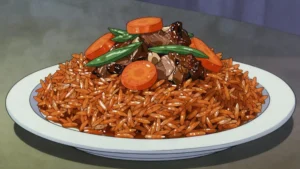
- Work gently from the edges inward. Do not mash it or stir it hard. Turn the whole dish out into a wide serving dish. Spread the rice out across the dish. Arrange the chicken and vegetables on top. Serve a fresh chilli sauce alongside it. It keeps two days refrigerated in a covered bowl. Sprinkle water over it and steam it to reheat.
Technique
- Getting the liquid right is the whole challenge of a one-pot rice: roughly two parts liquid to one part rice, counting what is already in the sauce, and it should cover the rice by about a centimetre when it goes in. Check at that moment and adjust then rather than later — too much gives sticky mush and too little leaves hard grains.
- Do not lift the lid or stir once the rice goes in. Steam is what cooks it, every lift lets that escape, and stirring breaks the grains and releases starch, turning the pot to porridge. Leave it entirely alone for twenty-five minutes, then rest it covered off the heat for ten more.
- The scotch bonnet goes in whole and must be lifted out before serving — biting into it is genuinely unpleasant. Wash hands thoroughly after handling it.
Substitutions
- Firm fish in thick steaks replaces the chicken and is equally traditional; add it much later, since fish cooks far faster. Red palm oil replaces the neutral oil and is used in some southern Chadian versions.
- One-pot tomato rice dishes run across the Sahel — Senegalese thieboudienne, Nigerian and Ghanaian jollof among them — and souroundou is the Chadian member. They are related rather than identical, each with its own seasoning and method, and the atlas records them separately.
Variations
- Rinse the rice until the water runs clear, since surface starch makes the grains clump and this dish wants them separate. Brown the chicken first and lift it out, returning it later — leaving it in through the whole cooking overcooks it entirely.
- Fry the tomato purée two minutes to remove its raw taste, then cook the fresh tomatoes down about fifteen minutes until the oil separates and rises. West African cooks watch for exactly that separation, which shows the water has cooked out; do not rush past it.
- Season the sauce strongly before the rice goes in, so it tastes slightly too strong on its own — the rice absorbs a great deal of that seasoning, and an under-seasoned sauce gives bland rice. Scrape up the browned layer from the pot base and share it over the top; it is prized rather than a fault.
History
A festive one-pot rice of southern Chad, close relative of the rice dishes found across the Sahel.
Frequently asked questions
What is Souroundou?
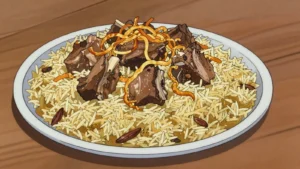
Souroundou is a main from Chad: rice cooked with chicken or fish, tomato, pepper and potato in one pot. A festive one-pot rice of southern Chad, close relative of the rice dishes found across the Sahel.
How long does Souroundou take to make?
Souroundou takes 25 minutes of preparation and 1 hour of cooking. The recipe makes serves 6. It is rated medium to make.
What can I substitute in Souroundou?
Yes, within limits. Firm fish in thick steaks replaces the chicken and is equally traditional; add it much later, since fish cooks far faster. Red palm oil replaces the neutral oil and is used in some southern Chadian versions. One-pot tomato rice dishes run across the Sahel — Senegalese thieboudienne, Nigerian and Ghanaian jollof among them — and souroundou is the Chadian member. They are related rather than identical, each with its own seasoning and method, and the atlas records them separately.
What is the most important thing to get right in Souroundou?
Rinse the rice until the water runs clear. Keep the lid on once the rice goes in. Steam is what cooks the rice through. Do not stir the rice while it cooks. Leave it entirely alone until it is done. Chicken must be cooked right through completely. Keep raw and cooked chicken well apart. Lift it out before it splits in the pot. Wash your hands thoroughly after handling it.