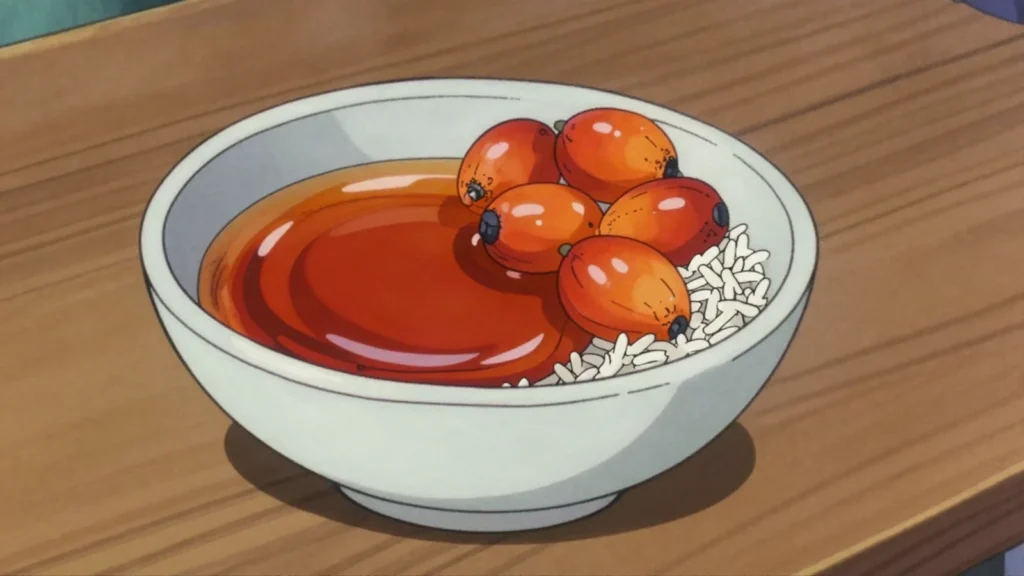

Ingredients
Fruit
- 5 kgfresh oil palm fruit, ripe and orange
Also
- water, for boiling and washing
Equipment
- a large pot
- a mortar or a press
- muslin or a fine sieve
Used in
- plassas
- palm nut soup
- jollof rice
- banga soup
- and almost every Sierra Leonean stew
Directions
- Strip the fruits from the bunch and rinse them. Boil them in plenty of water for about an hour, until the flesh is completely soft. Boiling does two things at once: it softens the flesh so the oil can be pressed out, and it deactivates the enzymes that would otherwise turn the oil rancid within days.
- Drain the boiled fruit and let it cool enough to handle. Pound to separate the flesh from the nuts, not to crush the nuts themselves. Keep pounding until you have a fibrous orange mash and the nuts are clean. Pick out the nuts and set them aside, because palm kernel oil is pressed from them separately.
- Add hot water to the mash and work it hard with your hands. Squeeze and knead the fibres in the water, which releases the oil from them.
- Strain the mixture through a sieve or muslin, pressing hard, and discard the fibre. Let the strained liquid stand, and the oil will rise and separate from the water beneath.
- Skim the oil off the top, or pour the water out from underneath. Now boil the skimmed oil gently in a clean pot until the last of the water has evaporated. Stand well back while it spits, and do not leave the pot. Skim off any scum and let it settle.
- Pour the clear oil into clean dry bottles, leaving any sediment behind. It solidifies below about 25°C into a soft orange fat, which is normal and it melts again in the heat.
- Use it as the cooking fat in stews and soups, where its colour and flavour are the whole point. For some dishes, such as Nigerian ayamase, the oil is deliberately heated until it loses its colour, which is a specific technique rather than the norm.
Technique
- It is sold bottled in African shops everywhere and almost nobody presses their own outside farming areas.
- Palm kernel oil, from the inner nut, is white and quite different.
- Good red palm oil should smell fresh and fruity rather than sharp or rancid.
Substitutions
- Bottled unrefined red palm oil from an African shop, which is what most people use.
- There is no substitute for its colour and flavour in West African cooking.
Variations
- Bleached, for Nigerian ayamase and ofada stew.
- Infused with country spices as a finishing oil.
- Blended with vegetable oil, which is common for lighter dishes.
History
Pressed from the boiled fruit of the oil palm, which grows wild through the country; its colour and flavour define Sierra Leonean plassas.
Frequently asked questions
What is Red palm oil?
Red palm oil is a sauce & condiment from Sierra Leone: deep orange unrefined palm oil, the cooking fat of every stew. Pressed from the boiled fruit of the oil palm, which grows wild through the country; its colour and flavour define Sierra Leonean plassas.
How long does Red palm oil take to make?
Red palm oil takes 1 hr of preparation and 2 hr of cooking. The recipe makes about 1 litre. It is rated hard to make.
What can I substitute in Red palm oil?
Yes, within limits. Bottled unrefined red palm oil from an African shop, which is what most people use. There is no substitute for its colour and flavour in West African cooking.
What is the most important thing to get right in Red palm oil?
Strip the fruits from the bunch and rinse them. Boil them in plenty of water for about an hour, until the flesh is completely soft. Boiling does two things at once: it softens the flesh so the oil can be pressed out, and it deactivates the enzymes that would otherwise turn the oil rancid within days.