
Ingredients
The fish
- 600 gsalanga
- salted sun-dried fish
- or any dried salted fish
- soaked, see the notes
The sauce
- 3onions, sliced
- 6garlic cloves, crushed
- 400 gtomatoes, chopped
- 2 tablespoonstomato paste
- 2hot chillies, chopped
- or to taste
- juice of 2 limes
- 4 tablespoonsoil
- black pepper
To fry, alternatively
- oil, for shallow frying
- lime wedges
- sliced raw onion
- chilli
To serve
- boule
- or rice
- or millet porridge
Directions
- Salt and dryness together prevent spoilage. It then keeps for months without cooling. Soak it in plenty of cold water. Give it several hours at least. Taste a small piece to judge it. Rinse a small piece and taste it. It should be pleasantly salty only.
- Soak it longer if it still is. Soak the fish in the refrigerator. Warm soaking water grows bacteria. That applies over several hours. Break the dried fish into pieces. It is genuinely hard and stiff when dry. Break it along its natural lines. Take real care as it is very hard. Cover the pieces with cold water.
- Use far more water than you have fish. The salt must have somewhere to go. Cover it by several centimetres. Change the water every few hours. Discard each change of water entirely. Rinse a small piece and taste it. It should be pleasantly salty only.
- Soak it longer if it is too strong. Take the proper time to do it. Drain all the fish thoroughly. Pat it dry with kitchen paper. Pull out any large ones you find. Warn people about the rest of them. Heat a shallow layer of oil in a pan.
- Use a steady medium-high heat here. It should sizzle when the fish goes in. Stand well back as it goes in. Cooking it takes a few minutes. Fry it until golden and crisp. Give it about three minutes a side. Lift the fish out onto a wire rack.
- Let all the excess oil drip away. That softens the crust within minutes. Serve it with lime and raw onion. Heat the oil in a heavy deep pot. Add all the sliced onion to it.
- Cook it for about twelve minutes. It should soften and turn golden. Add the crushed garlic to the pot. Give it about one full minute. Add the tomato paste and cook it out. Frying it for two minutes removes that. Stir it often so it does not catch. Add the chopped tomatoes and chilli.
- Cook them down for eight minutes. It should thicken up noticeably. Add the soaked fish to the sauce. Add a little water if it is dry. Simmer it for about twenty minutes. The fish takes up the sauce flavour. Taste it before adding any salt. It often needs none at all added. Add plenty of black pepper though. Squeeze fresh lime over at the end.
- Add the lime right at the very end. Judging it takes a careful look. Cook it down further if it is thin. Add more water if it is too thick. Serving it is always done hot. Serve it with boule or with rice. Children should be watched particularly.
Technique
- Dried salted fish is inedibly salty and must be soaked in plenty of cold water for several hours, with the water changed two or three times and each change discarded. Very salty fish needs overnight. The only reliable test is to rinse a small piece and taste it — it should be pleasantly salty rather than overwhelming, and soaking longer fixes it. Soak it in the refrigerator, since warm water grows bacteria over several hours.
- Dried fish keeps small sharp bones — run your fingers over the flesh and pull out any large ones, then warn people about the rest, watching children particularly. Eat it slowly.
- Buy dried fish that smells clean, of salt and sea rather than rancid or sour, since a rancid smell means old oxidised fat. It should be firm and dry to the touch; avoid any that is damp, sticky or showing mould.
Substitutions
- Any dried salted fish stands in for salanga, which names the product rather than one species — several fish from the Chari River and Lake Chad are dried this way.
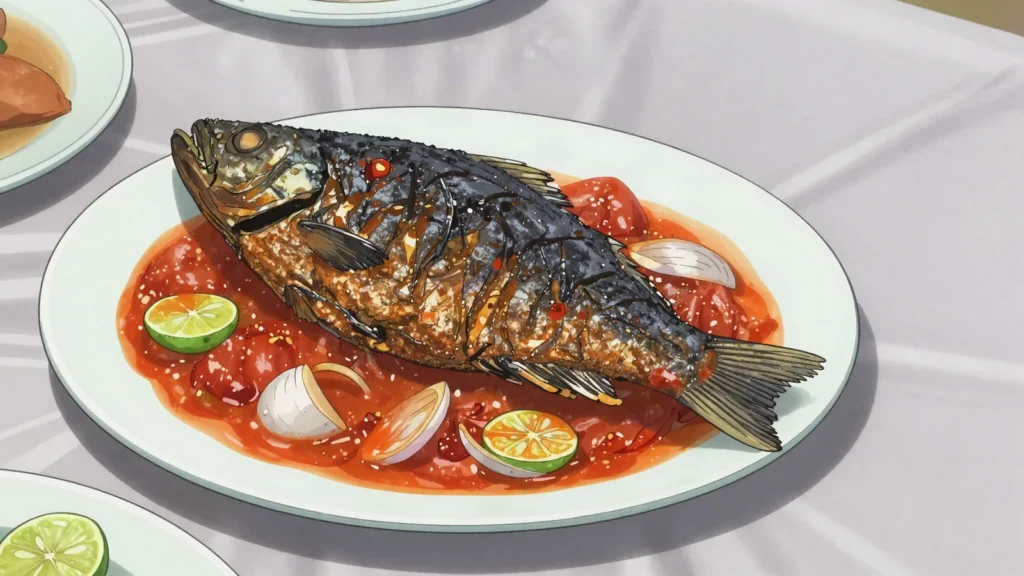
- It is either simply fried and eaten with lime, raw onion and chilli, or stewed in a tomato and chilli sauce and served over a starch; both are genuinely made and the atlas gives both routes.
Variations
- Pat the soaked fish genuinely dry before frying, since damp fish spits violently in hot oil, and lower it in gently rather than dropping it. It also waters down a sauce if wet.
- Dried fish is preserved rather than raw, so the cooking is for flavour and texture rather than safety — twenty minutes in the sauce is quite enough. Taste before adding any salt at all, since the fish brings a great deal, and squeeze the lime in right at the end, since long cooking dulls its sharpness.
- Salting and sun-drying removes most of the water, and salt and dryness together prevent spoilage so the fish keeps for months without refrigeration — which matters where cooling is limited and fresh fish spoils within hours. That makes salanga a real trade good sold across Chad, Cameroon and Nigeria. Lake Chad has shrunk enormously, a well documented change that has reduced the fishery and affected fishing communities.
History
Fish from the Chari River and Lake Chad are salted and sun-dried into salanga, a trade good sold across Chad, Cameroon and Nigeria.
Frequently asked questions
What is Salanga?
Salanga is a main from Chad: sun-dried fish fried or sauced with chili and lime; everyday favourite. Fish from the Chari River and Lake Chad are salted and sun-dried into salanga, a trade good sold across Chad, Cameroon and Nigeria.
How long does Salanga take to make?
Salanga takes 20 minutes plus soaking of preparation and 40 minutes of cooking. The recipe makes serves 6. It is rated medium to make.
What can I substitute in Salanga?
Yes, within limits. Any dried salted fish stands in for salanga, which names the product rather than one species — several fish from the Chari River and Lake Chad are dried this way. It is either simply fried and eaten with lime, raw onion and chilli, or stewed in a tomato and chilli sauce and served over a starch; both are genuinely made and the atlas gives both routes.
What is the most important thing to get right in Salanga?
Use far more water than you have fish. The salt must have somewhere to go. Cover it by several centimetres. Change the water every few hours. Discard each change of water entirely. Rinse a small piece and taste it. It should be pleasantly salty only.