
Ingredients
The green noodles
- 400 gplain flour
- 150 gfresh dill
- thick stalks removed
- 2eggs
- about 80 ml water
- 1 teaspoonsalt
The stew
- 500 glamb, cubed
- or beef
- 2onions, sliced
- 3carrots, cut in batons
- 2potatoes, cubed
- 1red pepper, sliced
- 3tomatoes, chopped
- 4garlic cloves, sliced
- 1 teaspooncumin seeds
- 1 teaspoonpaprika
- 3 tablespoonsoil
- salt and black pepper
The dressing
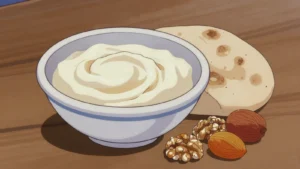
- 300 gthick yoghurt
- or suzma
- 2garlic cloves, crushed
- a little water, to loosen
- salt
To serve
- the noodles beneath
- the stew spooned over
- yoghurt drizzled across
- in one wide bowl
Directions
- Add the water gradually rather than all at once. You may well need less than the recipe suggests. Keep raw and cooked meat separate while you work. The yoghurt dressing is uncooked dairy served cold. Keep the yoghurt refrigerated until you serve it.
- Wash the dill thoroughly and pick off the thick stalks. Thick stalks are fibrous and will not blend smooth. Pick through it properly rather than rushing that. Then dry it reasonably well before blending it. Blend the dill with the eggs until entirely smooth. The eggs give the blender enough liquid to work with.
- Blend it until no visible pieces of dill remain. It should be a thick bright green purée at that point. Take the time to blend it properly at this stage. Put the flour and salt into a large mixing bowl. Make a well in the centre of the flour first.
- Pour the dill and egg purée into that well. Work it together with your hands as you go. Add the water very gradually as you work the dough. You may need much less water than the recipe gives. Add it a spoonful at a time and judge as you go. Stop as soon as the dough comes together properly. Knead the dough hard for about ten full minutes. Under-kneaded dough tears when you try to roll it thin.
- Turn it a quarter turn and repeat that steadily. It goes from rough and sticky to smooth and springy. Wrap the dough and let it rest for thirty minutes. Unrested dough springs back and refuses to roll thin. Heat the oil in a heavy pan and brown the lamb. Brown it in batches rather than crowding the pan.
- Take the time to do it properly in batches. Add the sliced onion to the pan with the meat. Cook it for about ten minutes until soft and golden. Stir it so that residue lifts off the base entirely. That residue is pure flavour and should not be wasted.
- Add the cumin seeds, paprika and sliced garlic now. Give them about one minute in the hot pan. Heat releases the aromatic oils in the spices. Garlic burns quickly, so keep it moving constantly.
- Add the carrot, pepper and chopped tomato now. The carrots go in early since they take longest. Cut them into batons rather than thin slices. Thin slices simply dissolve into the finished stew. Add just enough hot water to barely cover everything. This is a thick stew rather than a soup.
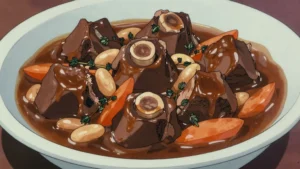
- Simmer the stew gently for about an hour in all. Lamb needs that long to become properly tender. Keep it at a bare simmer rather than a hard boil. Add the cubed potato for the last thirty minutes. Thirty minutes is enough to cook it right through. Season the stew well with salt and black pepper. Taste it carefully near the end of the cooking. It should be well seasoned and clearly savoury.
- Whisk the yoghurt with the crushed garlic and salt. Thin it with a little water until it drizzles. Add the water gradually and whisk it smooth. Keep it refrigerated until the moment you serve. Divide the rested dough into three or four pieces. Smaller pieces are far easier to roll out thin.
- Keep the pieces you are not using covered up. Work with one piece at a time on a floured surface. Roll each piece out as thin as you possibly can. About two millimetres is the target thickness. Flour the surface and the pin generously as you work. Turn the dough regularly to keep it from sticking.
- Roll from the centre outward in every direction. A pasta machine does this faster if you have one. Roll the sheet up loosely and cut it across into strips. Flour the sheet well before you roll it up. Cut strips about half a centimetre wide across the roll. Spread the cut noodles out on a floured tray. Toss them in flour so they do not stick together. They can sit for an hour or so before cooking.
- Boil the noodles in well salted water until just done. Fresh noodles cook in about three or four minutes. Salt the cooking water generously before boiling. The noodles themselves are otherwise fairly plain. Drain the noodles and toss them in a little oil. The oil stops them sticking together as they sit. Toss them while they are still genuinely hot. Do not rinse them, as that washes off the starch.
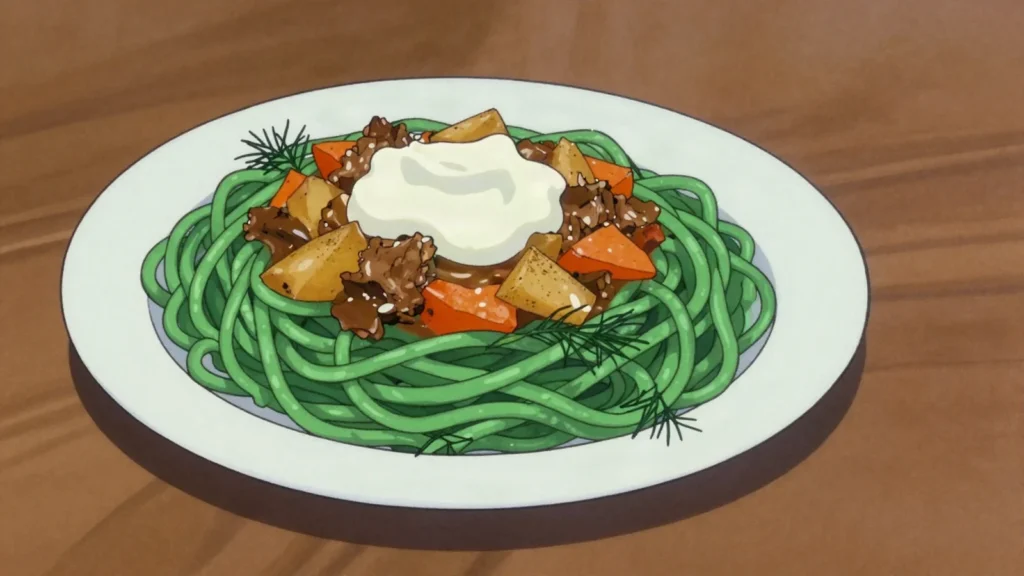
- Put a bed of green noodles in each wide bowl. Spread them out across the base of the bowl. Their colour should be visible around the edges. Spoon the hot stew over the centre of the noodles. Keep it in the middle rather than covering everything. The green noodles should still show around the edge. Cook the noodles fresh each time you serve it.
Technique
- The colour comes entirely from the quantity of dill, so do not reduce the hundred and fifty grams — roughly three or four supermarket bunches. Blend it with the eggs to a genuinely smooth purée, since any unblended dill shows as dark specks rather than even colour.
- The dill purée carries a great deal of water into the dough, so add the measured water very gradually and expect to need less than stated. The dough must be firm rather than soft — a firm dough rolls thin without tearing, while a soft one sticks to everything.
- Rest the kneaded dough at least thirty minutes, and an hour if you can: unrested dough springs back and refuses to roll thin.
Substitutions
- Beef stands in for lamb directly. Thick Greek yoghurt is a reasonable substitute for suzma, the Uzbek strained yoghurt, which is thicker and sharper.
- A pasta machine rolls the sheets faster than a pin and works perfectly well; hand rolling with a long pin is the traditional method.
Variations
- Knead the dough hard for a full ten minutes until smooth, elastic and springing back from a pressed finger — under-kneaded dough tears when rolled thin. Roll it to about two millimetres, since thick noodles are heavy and dull in the bowl.
- Flour the sheet well before rolling it up to cut, or it sticks to itself and will not unroll, and toss the cut strips in flour on a tray rather than piling them damp. Salt the cooking water generously, since that is the only chance to season the noodles directly.
- Assemble in three layers: noodles underneath, stew spooned over the centre so the green still shows around the edge, and the garlic yoghurt drizzled across in lines. The eater stirs it together, and the contrast of cold sharp yoghurt against the hot stew is the point.
History
Khiva dish coloured by dill kneaded into the dough and served with a yoghurt dressing.
Frequently asked questions
What is Shivit oshi?
Shivit oshi is a main from Uzbekistan: bright green dill noodles topped with meat and vegetable stew. Khiva dish coloured by dill kneaded into the dough and served with a yoghurt dressing.
How long does Shivit oshi take to make?
Shivit oshi takes 1 hour of preparation and 1 hour 30 minutes of cooking. The recipe makes serves 4. It is rated hard to make.
What can I substitute in Shivit oshi?
Yes, within limits. Beef stands in for lamb directly. Thick Greek yoghurt is a reasonable substitute for suzma, the Uzbek strained yoghurt, which is thicker and sharper. A pasta machine rolls the sheets faster than a pin and works perfectly well; hand rolling with a long pin is the traditional method.
What is the most important thing to get right in Shivit oshi?
Add the water gradually rather than all at once. You may well need less than the recipe suggests. Keep raw and cooked meat separate while you work. The yoghurt dressing is uncooked dairy served cold. Keep the yoghurt refrigerated until you serve it.