
Ingredients
The pumpkin
- 1small round pumpkin
- about 1.5 kg
- firm and unblemished
- kabocha is ideal
The custard
- 5eggs
- or 4 eggs and 2 yolks
- 250 mlthick coconut milk
- 150 gpalm sugar
- grated
- or brown sugar
- a pinch of salt
- 2pandan leaves, knotted
- or 1 teaspoon vanilla
The equipment
- a large steamer
- or a pot with a rack
- a heatproof plate
- a fine sieve
To serve
- cut into wedges
- warm or chilled
- with coconut cream
Directions
- Steam is genuinely gentle heat. That gives a smooth silky custard. Keep the water at a bare simmer. The steam should be gentle and steady. Skim the foam off before steaming. That gives a smooth clean surface. Steam condenses on the steamer lid. It must be prevented entirely. Wrap the steamer lid in a cloth. It stops it dripping down at all. Brown sugar is the substitute.
- Wash the whole pumpkin thoroughly. The skin must be genuinely clean. Cut around the stem in a circle. Cut a thin slice off the base first. It also stops it rolling about.
- Use a heavy sharp knife for it. Cut slowly and away from your hand. Scoop out all the seeds and fibres. Use a large spoon for the scraping. Be thorough about the scraping. Leave the walls reasonably thick. About two centimetres is right. Use kitchen paper to dry it out. Warm the coconut milk with the pandan. Warm it rather than boiling it. Give it about ten full minutes.
- Let the coconut milk cool a little. Hot milk scrambles the eggs at once. Let the milk cool for ten minutes. Beat the eggs in a large bowl. Beat them gently rather than whisking hard. Beat them just until combined. Add the grated palm sugar to the eggs. Grate or chop the palm sugar first.
- Rub it into the eggs with your fingers. It is genuinely how it is done. Stir the warm coconut milk in. Add it gradually while stirring. Stir it rather than whisking it. Add the pinch of salt as well. Pour the custard through a fine sieve.
- Strain it twice if it looks uneven. It gives a genuinely smooth custard. Skim any foam off the surface. Lift the foam off with a spoon. That gives a smooth clean top.
- Set the pumpkin on a heatproof plate. A hot pumpkin is hard to handle. Pour the custard into the pumpkin. Fill it to about two centimetres below the rim. Leave real room at the very top. Bring the steamer water to a simmer. Keep it at a bare simmer only. Wrap the steamer lid in a cloth.
- Tie the cloth over the whole lid. That stops water dripping onto the custard. Steam it for about one full hour. A larger one takes considerably longer. Check it after about fifty minutes.
- Check the steamer water occasionally. An hour of steaming uses real water. Top the pot up with boiling water. Cold water stops the steaming. Shake the whole plate very gently. The custard should barely wobble. Take it out at a slight wobble. Let it cool completely before slicing. Slicing it warm gives a runny mess.
- Cut it into wedges with a sharp knife. Use a long sharp knife for it. Cut down through in one movement. Cut it as you would cut a cake. Serving it is done warm or cold. Serve the wedges on a flat plate. Thick coconut cream is poured over.
Technique
- Keep the steamer water at a bare simmer rather than a rolling boil: fierce steam bubbles the custard, leaving it full of holes and going watery and grainy. Gentle steady steam is genuinely essential for a smooth set.
- Wrap the steamer lid in a cloth tied over it, which absorbs the condensation — otherwise water drips onto the custard and pits and waters the surface. This is not optional.
- Strain the custard through a fine sieve to remove the chalazae, the white cords that anchor the yolk and stay rubbery when cooked, along with any lumps or undissolved sugar. Skim the foam off too, since it sets into surface bubbles.
Substitutions
- Vanilla stands in for pandan, a fragrant leaf giving a grassy vanilla-like aroma, and brown sugar for palm sugar, which is less sharply sweet with a caramel note.
- Rub the grated palm sugar into the eggs with your fingers rather than whisking, which is the traditional method: it dissolves the sugar without creating foam and is gentler than whisking entirely.
Variations
- Cut a thin slice off the base of the pumpkin first so it sits flat and does not roll while you cut the lid — pumpkin skin is tough and the knife can slip badly. Angle the lid cut inward so the lid sits back in rather than falling through.
- Leave the walls about two centimetres thick, since thin walls collapse in the steamer and make it hard to slice, and pat the inside completely dry, since wet pumpkin waters the custard and stops it setting.
- Take it out when the custard has only a slight wobble in the centre, since it firms further as it cools and overset custard goes rubbery. Let it cool completely, at least two hours, before slicing — warm custard gives a runny mess, and chilled slices cut far more cleanly.
History
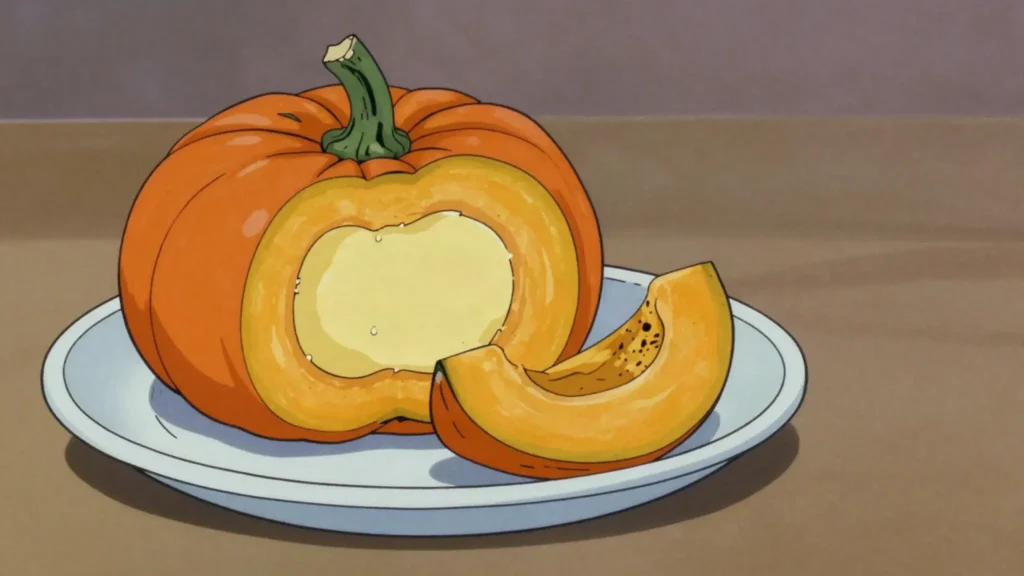
A Lao and Isan sweet cut into wedges so each slice shows custard set inside pumpkin flesh.
Frequently asked questions
What is Sangkhaya Mak Eu?
Sangkhaya Mak Eu is a dessert from Laos: small pumpkin hollowed out, filled with coconut custard and steamed whole. A Lao and Isan sweet cut into wedges so each slice shows custard set inside pumpkin flesh.
How long does Sangkhaya Mak Eu take to make?
Sangkhaya Mak Eu takes 30 minutes of preparation and 1 hour of cooking. The recipe makes serves 6. It is rated medium to make.
What can I substitute in Sangkhaya Mak Eu?
Yes, within limits. Vanilla stands in for pandan, a fragrant leaf giving a grassy vanilla-like aroma, and brown sugar for palm sugar, which is less sharply sweet with a caramel note. Rub the grated palm sugar into the eggs with your fingers rather than whisking, which is the traditional method: it dissolves the sugar without creating foam and is gentler than whisking entirely.
What is the most important thing to get right in Sangkhaya Mak Eu?
Steam is genuinely gentle heat. That gives a smooth silky custard. Keep the water at a bare simmer. The steam should be gentle and steady. Skim the foam off before steaming. That gives a smooth clean surface. Steam condenses on the steamer lid. It must be prevented entirely. Wrap the steamer lid in a cloth. It stops it dripping down at all. Brown sugar is the substitute.