
Ingredients
The octopus
- 1octopus
- about 1.5 kg, cleaned
- fresh or frozen
- see the notes
The pot
- 1onion, halved
- 2bay leaves
- a few peppercorns
- 1cork, optional
- see the note
The dressing
- juice of 4 limes
- 4 tablespoonsoil
- 2onions, sliced very thin
- 2hot chillies, chopped
- 3garlic cloves, crushed
- chopped coriander
- salt and black pepper
To serve
- chilled
- as a starter
- or a bar snack
Directions
- Freeze fresh octopus if you have it. The octopus takes up the dressing. Rinse the whole octopus thoroughly. Rinse it under cold running water. Check right inside the head cavity. Remove anything left inside it. Discard the hard beak entirely. Cut around them with a small knife. Discard them along with the beak. Bring a large pot of water to a boil.
- Add the onion, bay and peppercorns. Do not salt the water at all here. Salt toughens octopus as it cooks. Season the octopus only afterward. It is done for appearance only. Bring it back to a bare simmer. Keep it at the barest simmer only. It should barely bubble at the surface.
- Simmer it for about one full hour. A large octopus takes rather longer. Let the octopus cool in its liquid. Cooling in the liquid keeps it moist. Let it cool for at least an hour. Rub the loose skin off if you like. Use kitchen paper to grip the skin. Slice the octopus into thin rounds.
- Slice it about half a centimetre thick. Thin slices take up the dressing. Keep the slices reasonably even. Nothing needs to be discarded. Slice the onion as thin as you can. Very thin slices are genuinely wanted.
- Use a sharp knife or a mandoline. Take real care with a mandoline. Rinse the sliced onion in cold water. Drain and dry it thoroughly after. Whisk the lime juice with the oil. Add the garlic and the chilli. It should be sharp and quite hot. Taste it and adjust before mixing. Season it with salt and pepper.
- Pour the dressing over the octopus. Add all the sliced onion to it. Toss it all together very gently. Coat every slice in the dressing. Use a large spoon to turn it over. Work it through it thoroughly. Refrigerate it for a few hours. Stir chopped coriander through it. Add it shortly before serving.
- Keep some back to scatter on top. Serving it is done genuinely cold. Turn it out into a serving dish. Scatter coriander over the top. Add a few lime wedges alongside. Serve it cold from the fridge. It is served cold as a starter.
Technique
- Octopus is genuinely tough and needs either very brief or long cooking — anything between the two is rubbery, which is a real and documented effect. This dish takes the long route: a bare simmer for about an hour, since a hard boil toughens it considerably. Test with a knife pushed into the thickest arm, which should go in with no resistance, but stop there since octopus can be overcooked too and goes soft and falls apart.
- Do not salt the cooking water at all, since salt toughens octopus as it cooks — season only afterwards. Let it cool in its liquid rather than lifting it out hot, which dries it considerably.
- Freezing octopus genuinely tenderises it, since ice crystals break the muscle fibres — a documented effect, so most sold octopus having been frozen is no mark against it. Freeze fresh octopus if you have it.
Substitutions
- A cork added to the pot is said to tenderise the octopus; there is no good evidence for that and the long cooking is what does the work, but many cooks do it and it does no harm — the atlas records the practice honestly.
- Rubbing the loose purple skin off after cooking gives a paler cleaner look where leaving it on gives colour and texture; it makes little difference to taste and both are genuinely done.
Variations
- Octopus is a mollusc rather than a crustacean, and some shellfish allergies cover both while others cover only one — say plainly that the dish is octopus rather than assuming anyone knows it counts.
- Slice it about half a centimetre thick, since thin slices take up the dressing where thick chunks stay bland inside; the arms give neat rounds and the head slices into strips, and both are used entirely.
- Rest the dressed salad a couple of hours so the octopus takes up the lime and the onion softens, but not more than a day — the lime starts to cure the octopus and the texture goes soft and mealy. Stir the coriander in shortly before serving, since herbs go dark and limp in acid.
History
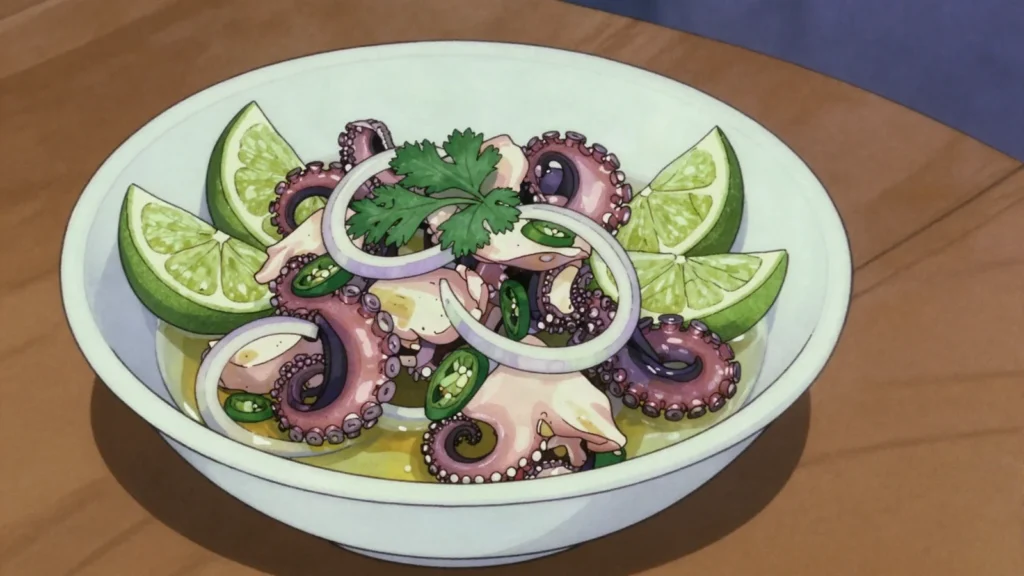
Boiled octopus sliced thin and dressed with onion, lime and chili, served cold as a starter or bar snack.
Frequently asked questions
What is Salade ourite?
Salade ourite is a salad & side from Mauritius: octopus salad with lime, chili and onion. Boiled octopus sliced thin and dressed with onion, lime and chili, served cold as a starter or bar snack.
How long does Salade ourite take to make?
Salade ourite takes 30 minutes of preparation and 1 hour of cooking. The recipe makes serves 6. It is rated medium to make.
What can I substitute in Salade ourite?
Yes, within limits. A cork added to the pot is said to tenderise the octopus; there is no good evidence for that and the long cooking is what does the work, but many cooks do it and it does no harm — the atlas records the practice honestly. Rubbing the loose purple skin off after cooking gives a paler cleaner look where leaving it on gives colour and texture; it makes little difference to taste and both are genuinely done.
What is the most important thing to get right in Salade ourite?
Freeze fresh octopus if you have it. The octopus takes up the dressing. Rinse the whole octopus thoroughly. Rinse it under cold running water. Check right inside the head cavity. Remove anything left inside it. Discard the hard beak entirely. Cut around them with a small knife. Discard them along with the beak. Bring a large pot of water to a boil.