
Ingredients
The yam
- 1.2 kgyam
- peeled and cut into large chunks
- white or yellow yam
- see the note on handling
The meat
- 300 gbeef or goat
- cut into small pieces
- on the bone if possible
- or 200 g smoked fish
- for a version without meat
The base
- 3 tablespoonsoil
- or red palm oil
- 2large onions, chopped
- 4 clovesgarlic, crushed
- a thumb of ginger, grated
- 4tomatoes, chopped
- or 1 tin chopped tomatoes
- 2 tablespoonstomato purée
- 1or 2 hot chillies
- or to taste
- 1stock cube
- 1bay leaf, optional
- about 800 ml water
- salt and black pepper
Sometimes added
- 1aubergine, cubed
- a handful of okra
- a handful of greens
- a squeeze of lemon
To serve
- on its own, as a one-pot meal
- or with rice
- a chilli sauce
Directions
- Wash your hands after peeling. Look for a firm tuber with no soft spots. Cut sections should look white or pale yellow. Discard any showing dark or slimy patches.
- Cut the yam into lengths of about eight centimetres. Stand each piece upright. Cut down through the thick skin with a knife. Cut it into large chunks. About four centimetres is right. Drop the pieces into cold water. That holds them until you cook them.
- Cut it small so it goes further. Heat the oil in a heavy pot. Brown the meat. Do not crowd the pot. Brown it properly, in batches if needed. Lift the meat out. Add the onions to the pot. Cook them for about ten minutes until soft. Add the garlic, ginger and chillies. Cook them for two minutes. Add the tomato purée and cook it two minutes. Add the chopped tomatoes.
- Cook them down for about ten minutes. Do not move on before you see it. Return the meat. Add the water and stock cube. Add the bay leaf. Bring it to a simmer. Simmer it covered for about thirty minutes. Goat and beef both need that. Add it when the meat is nearly tender. Yam needs about thirty minutes.
- Add water if it is not. The pot looks wet at first and dries considerably. Simmer it for about thirty minutes. Stir gently and not often. Shake the pot instead. It should be soft right through.
- Mash a chunk or two against the pot if it is thin. Season with salt and black pepper. Taste it carefully. It tastes flat if underseasoned. Soak it, bone it and add it with the yam. Leave out both meat and fish. Use vegetable stock and more vegetables.
- Serve it hot in bowls. A hot sauce sits on the table. Add water when reheating it. That matters less in a stew this thick.
Technique
- Add the yam when the meat is nearly tender. Yam needs about thirty minutes — added at the start it disintegrates entirely, and timing it against the meat is the whole trick.
- Cut the yam into large four-centimetre chunks. It softens considerably in a stew and small pieces vanish; some breakdown is wanted, since it thickens the stew naturally.
- Keep hot water beside the pot. Yam absorbs a great deal of liquid and a pot that looks wet at the start dries out considerably.
- Shake the pot rather than stirring once the yam is in. Vigorous stirring breaks it apart.
- Brown the meat properly without crowding the pot. With so little meat in the dish, that browned flavour matters more than it would in a meat stew.
- Wait for the oil to separate and rise from the tomato and onion base. That is the standard West African indicator it has cooked properly.
- Mash a chunk or two of yam against the side of the pot if it is thin. That thickens it better than any added flour.
- Season it properly. Yam absorbs a great deal of salt and the dish tastes flat without enough — but the stock cube brings salt too, so taste before adding more.
- This is a yam stew with meat for flavour, not a meat stew with yam added. Meat is expensive and a small amount flavours a large pot — the atlas’s phrase “modest meat” is accurate rather than euphemistic, and it sets the proportions.
- Yam is not sweet potato — it is a Dioscorea tuber with rough bark-like skin and starchy dry flesh. Cultivated yam is safe cooked but never raw, some wild species are genuinely toxic, and raw yam sap makes some people’s skin itch.
- Peel yam with a knife, not a peeler. Cut it into lengths, stand each upright and lever the thick skin off in strips, then drop the pieces into cold water, since peeled yam browns as it sits.
- Smoked fish in place of the meat is an entirely standard version, not a compromise. Soak it, bone it and add it with the yam.
Substitutions
- Goat, beef or lamb all serve; on the bone gives more flavour.
- Smoked fish replaces the meat entirely and is a standard version.
- Vegetable stock and more vegetables make a fully vegetarian stew.
- Red palm oil replaces vegetable oil for colour and a distinct flavour.
- Aubergine, okra or greens can all be added.
- Cassava or sweet potato replace yam, giving a different but workable stew.
Variations
- Ragoût d’igname made with smoked fish alone is common in households where meat is scarce.
- Riz gras, the oily rice cooked with meat and vegetables, is the other great Burkinabè one-pot.
- Tô, the stiff millet or maize porridge, is the everyday staple eaten with sauces.
- Ñame asado roasts the same yam in embers instead.
- Yam pounded into fufu is the other great use of the tuber.
- A version with more vegetables and no meat is eaten during lean periods.
Frequently asked questions
What is Ragoût d’igname?
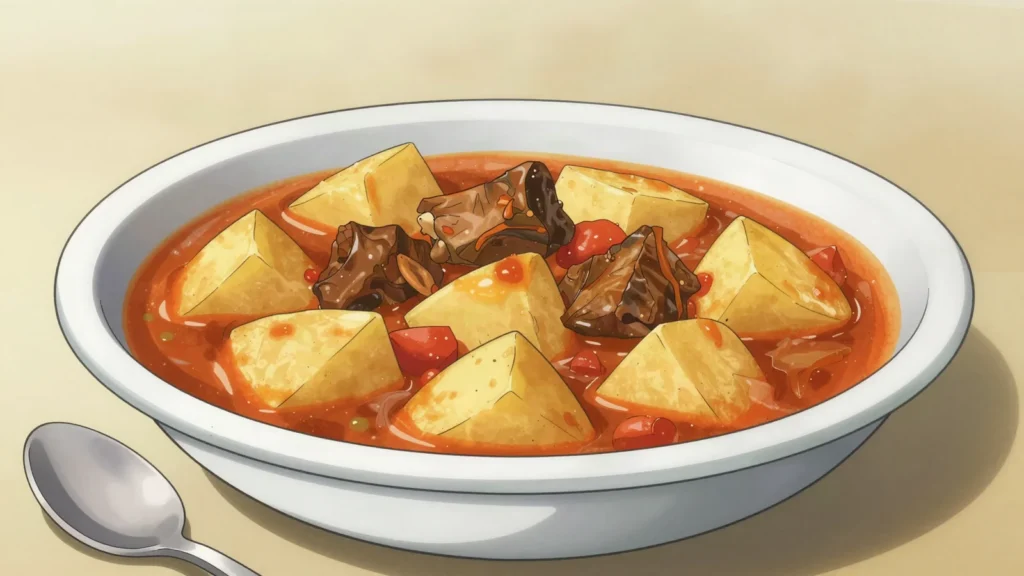
Ragoût d’igname is a soup & stew from Burkina Faso: yam simmered with tomato, onion and modest meat.
How long does Ragoût d’igname take to make?
Ragoût d’igname takes 25 minutes of preparation and 1 hour of cooking. The recipe makes serves 6. It is rated easy to make.
What can I substitute in Ragoût d’igname?
Yes, within limits. Goat, beef or lamb all serve; on the bone gives more flavour. Smoked fish replaces the meat entirely and is a standard version. Vegetable stock and more vegetables make a fully vegetarian stew. Red palm oil replaces vegetable oil for colour and a distinct flavour. Aubergine, okra or greens can all be added. Cassava or sweet potato replace yam, giving a different but workable stew.
What is the most important thing to get right in Ragoût d’igname?
Cut it small so it goes further. Heat the oil in a heavy pot. Brown the meat. Do not crowd the pot. Brown it properly, in batches if needed. Lift the meat out. Add the onions to the pot. Cook them for about ten minutes until soft. Add the garlic, ginger and chillies. Cook them for two minutes. Add the tomato purée and cook it two minutes. Add the chopped tomatoes.