
Ingredients
The chicken
- 1whole chicken
- about 1.5 kg
- trussed or spatchcocked
The marinade
- 6garlic cloves, crushed
- 3cm ginger, grated
- 1onion, grated
- 2stock cubes, crumbled
- 2 teaspoonsground black pepper
- 1 teaspoonground chilli
- 2 tablespoonsmustard
- juice of 2 lemons
- 4 tablespoonsoil
- salt
To baste
- the reserved marinade
- boiled
- or a little oil
To serve
- raw onion in vinegar
- chilli sauce
- bread or attieke
- wrapped in paper
Directions
- Check it rather than guessing. Check there rather than the breast. The juices should run entirely clear. Wash hands after handling raw chicken. Wash boards and knives as well. Do not let raw juices touch other food.
- Rinse the chicken and pat it dry. Dry skin crisps up far better. Cut down each side of the backbone. Remove it and open the bird flat. Press hard on the breastbone to crack it. Cut slashes into the thick thighs. Slashing helps them cook through.
- Cut down in towards the thigh bone. Mix the garlic, ginger and grated onion. Add the stock cubes and spices. Add the mustard, lemon and oil. Crumble them into the marinade. Taste before adding any extra salt. Rub the marinade all over the chicken.
- Work the marinade into the slashes. Four hours is a workable minimum. Set aside some marinade for basting. That portion never touches raw chicken. Keep the two clearly separate. Heat the oven to two hundred degrees. Set the chicken on a rack in a tin. Cooking it takes about an hour.
- Roast a whole bird for about an hour. A spatchcocked bird takes about forty minutes. Turn the bird twice as it roasts. Start it off breast side downward.
- Turn it breast up halfway through. That keeps the breast meat moist. Baste it every twenty minutes. Use the reserved or boiled marinade. Basting keeps the skin from drying. Bone reads hotter than the meat. Check the thickest part of the thigh.
- Pierce the thigh with a knife tip. The juices should run entirely clear. Let it rest for ten full minutes. Cover it loosely while it rests. Slice the raw onion very thinly. Toss it with vinegar and salt. Serving it is always done hot. Cut the whole chicken into pieces. Serve the onion relish alongside. Serve hot chilli sauce with it. It is wrapped in paper to take away.
Technique
- Chicken must be cooked right through, since undercooked chicken carries real risk. Check the thickest part of the thigh, which cooks last, rather than the breast — seventy-five degrees on a thermometer avoiding the bone, or entirely clear juices when pierced. Wash hands, boards and knives after handling it raw.
- Set aside some marinade for basting before it touches the raw chicken, or boil what is left before using it — marinade that has touched raw meat is not reused. Keep the two clearly separate.
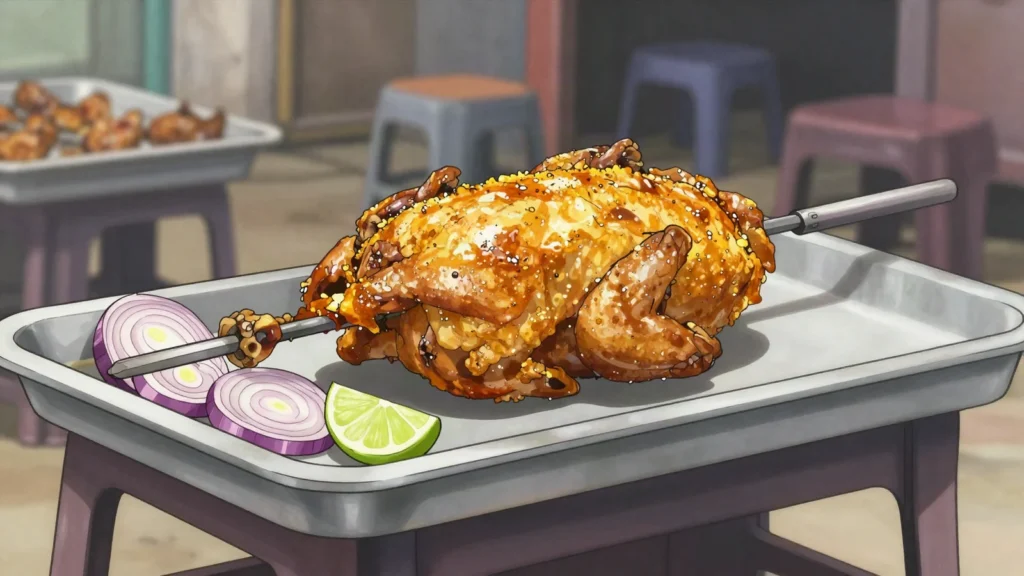
- The rotisserie turns the bird constantly so rendering fat keeps redistributing over it and the skin crisps evenly with no side drying out. In an oven, set it on a rack so it is out of the fat, start it breast side down and turn it breast up halfway, and baste every twenty minutes.
Substitutions
- Spatchcocking gives an even result and cooks in about forty minutes rather than an hour: cut down each side of the backbone, remove it, open the bird flat and press hard on the breastbone to crack it.
- Mustard is a common West African marinade base that helps the marinade cling to the skin and adds a sharp background; it is genuinely traditional here.
Variations
- Télévisé means televised: the glass oven front is like a screen and the birds turning inside are the picture, which is the joke and the selling point.
- Raise the heat for the last ten minutes to crisp the skin and darken the marinade crust, watching so it does not burn.
- Thinly sliced raw onion tossed with vinegar and salt is the standard accompaniment, cutting the rich chicken, and is genuinely part of the meal rather than a garnish.
History
Named for the glass oven that lets passers-by watch the birds turn, it became an Ouagadougou institution along the capital’s main avenues.
Frequently asked questions
What is Poulet télévisé?
Poulet télévisé is a street food from Burkina Faso: whole chickens turning on spits behind glass-fronted roadside ovens. Named for the glass oven that lets passers-by watch the birds turn, it became an Ouagadougou institution along the capital’s main avenues.
How long does Poulet télévisé take to make?
Poulet télévisé takes 30 minutes plus marinating of preparation and 1 hour 15 minutes of cooking. The recipe makes serves 4. It is rated medium to make.
What can I substitute in Poulet télévisé?
Yes, within limits. Spatchcocking gives an even result and cooks in about forty minutes rather than an hour: cut down each side of the backbone, remove it, open the bird flat and press hard on the breastbone to crack it. Mustard is a common West African marinade base that helps the marinade cling to the skin and adds a sharp background; it is genuinely traditional here.
What is the most important thing to get right in Poulet télévisé?
Check it rather than guessing. Check there rather than the breast. The juices should run entirely clear. Wash hands after handling raw chicken. Wash boards and knives as well. Do not let raw juices touch other food.