
Ingredients
The meat
- 700 gbeef
- shin, chuck or braising steak
- cut into 3 cm cubes
- on the bone if possible
The bananas
- 8green cooking bananas
- ndizi, unripe and hard
- or green plantains
- peeled and cut into thick chunks
The base
- 3 tablespoonsoil
- or coconut oil
- 2onions, finely chopped
- 4 clovesgarlic, crushed
- a thumb of ginger, grated
- 3tomatoes, chopped
- or 1 tin chopped tomatoes
- 1 tablespoontomato purée
- 1 teaspoonground cumin
- 1 teaspoonground coriander
- half a teaspoon turmeric
- 1 teaspooncurry powder
- optional
- 1green chilli, slit
- a curry leaf sprig, optional
The liquid
- about 700 ml water or stock
- 400 mlthin coconut milk
- 200 mlthick coconut milk
- for the finish
- salt and black pepper
To finish
- a handful of coriander leaf
- juice of half a lime
To serve
- on its own, as a one-pot meal
- or with rice
- kachumbari salad
- a chilli sauce
Directions
- Rub oil on your hands before you start. Oil your knife too. Cut off both ends. Score the skin lengthways in three or four places. Cut through the skin but not deep into the flesh. It takes real effort with a hard green banana.
- Soak the whole bananas in warm water for ten minutes first. Drop the pieces into water with a little lemon. That holds them until you cook them. Cut them into thick chunks. About three centimetres is right. Use a cut that suits long cooking. Tender cuts go dry and stringy in a long stew.
- Heat the oil in a heavy pot. Brown the beef in batches. Do not crowd the pot. Brown it properly in two or three batches. Pat the cubes dry before they go in. Set it aside with its juices. Add the onions to the pot.
- Cook them for about ten minutes until soft. Add the garlic and ginger. Cook them for two minutes. Add the ground spices and curry powder. Add the curry leaves if you have them. Cook briefly.
- Add the purée and cook it two minutes. Add the chopped tomatoes. Cook them down for about ten minutes. Do not move on before you see it. Return the beef and its juices. Add the water or stock. Add the green chilli. Bring it to a simmer. Season lightly with salt.
- Cover it and simmer for about an hour. The beef should become genuinely tender. Add them when the beef is nearly tender. Green banana needs about thirty minutes. Add it with the bananas. Bring it back to a bare simmer. Never let it boil hard. Keep it at a bare simmer throughout. Simmer them gently for about thirty minutes. Stir gently and not often.
- Shake the pot instead. It should be soft right through. Add it in the last five minutes. Simmer it very gently. Thick coconut cream splits most readily. Spoon the cream off the top. Use the thin liquid first and the cream at the end. The sauce should coat everything. Add water to loosen it. Season with salt and black pepper.
- Taste it carefully. It tastes flat if underseasoned. Add the lime juice at the end. Add the chopped coriander. Serve it hot in deep bowls. It keeps three days refrigerated. Add water when reheating it.
Technique
- Add the green bananas only when the beef is nearly tender. They need about thirty minutes — added at the start they disintegrate, added at the end they stay hard, so timing them against the beef is the whole trick.
- The bananas must be completely green and hard. Any yellowing means they have started to sweeten, and a sweet banana in a beef stew is wrong as well as prone to collapsing.
- Oil your hands and knife before peeling, or wear gloves. Green banana skin exudes a sap that stains hands and clothing brown and is genuinely hard to remove. Soaking the whole bananas in warm water for ten minutes loosens the skin considerably.
- Cut the bananas into thick three-centimetre chunks. They soften a great deal in a long stew and smaller pieces disappear entirely.
- Drop peeled pieces into acidulated or salted water. Green banana browns quickly once cut.
- Brown the beef in two or three batches, patting it dry first. Crowded or wet meat steams grey instead of browning, and that browning is real flavour.
- Use shin, chuck or braising steak rather than a tender cut. Connective tissue becomes gelatin over an hour and gives the sauce its body; tender cuts go dry and stringy.
- Wait for the oil to separate and rise from the tomato and onion base before the beef goes back in. That is the standard indicator it has cooked properly.
- Never let coconut milk boil hard, and add the thick cream only in the last five minutes. Cream splits most readily — do not shake the tin, and spoon it off the top to get both stages from one.
- Shake the pot rather than stirring once the bananas are in. Stirring breaks them apart.
- Season it properly. Green banana absorbs a great deal of salt and the dish tastes flat without enough, and the lime at the end cuts a coconut-rich sauce that otherwise sits heavy.
- Cooked green banana is dense and slightly waxy rather than fluffy like potato. That is correct.
- Green cooking bananas are grown to be cooked and are starchy rather than sweet — plantain is one kind among many, and East Africa grows a great many varieties. Green plantain is the practical substitute abroad.
Substitutions
- Green plantain replaces green cooking bananas and is easier to find abroad.
- Goat or lamb replaces beef and is equally traditional.
- Water replaces the thin coconut milk, with the thick cream still added at the end.
- Tinned chopped tomatoes replace fresh out of season.
- Curry powder is optional; cumin, coriander and turmeric carry the dish.
- A meatless version with beans in place of the beef follows the same method.
Variations
- Mchemsho is the northern Tanzanian one-pot of bananas, meat and vegetables.
- Matoke in Uganda steams and mashes green bananas without meat.
- Ndizi na nyama ya kuku uses chicken rather than beef.
- Mtori is the Chagga banana and beef soup, blended smooth.
- Maharage ya nazi uses the same coconut base with kidney beans.
- Machalari is another Kilimanjaro banana dish.
Frequently asked questions
What is Ndizi nyama?
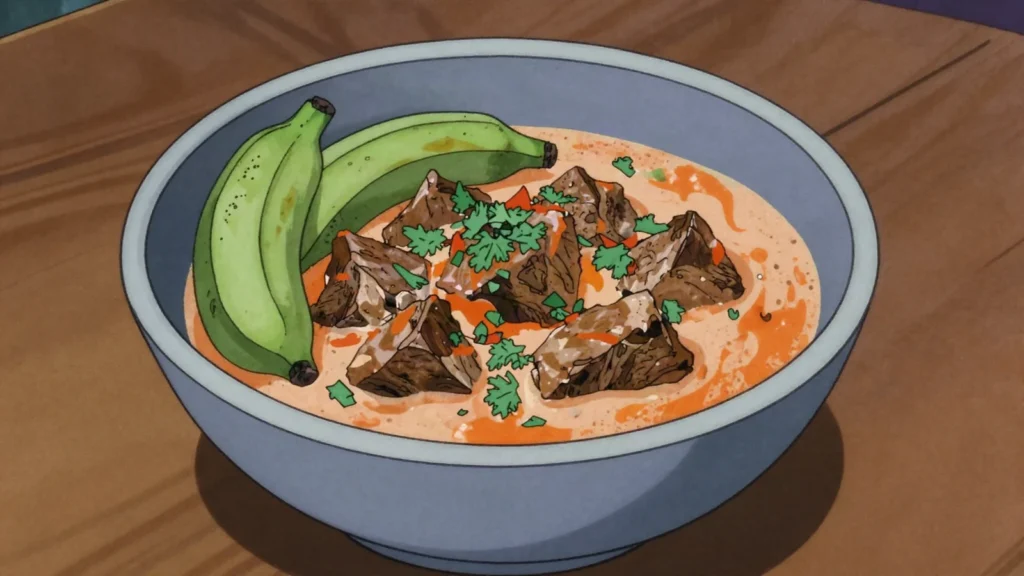
Ndizi nyama is a main from Tanzania: green bananas stewed with beef and coconut milk.
How long does Ndizi nyama take to make?
Ndizi nyama takes 25 minutes of preparation and 1 hour 30 minutes of cooking. The recipe makes serves 6. It is rated easy to make.
What can I substitute in Ndizi nyama?
Yes, within limits. Green plantain replaces green cooking bananas and is easier to find abroad. Goat or lamb replaces beef and is equally traditional. Water replaces the thin coconut milk, with the thick cream still added at the end. Tinned chopped tomatoes replace fresh out of season. Curry powder is optional; cumin, coriander and turmeric carry the dish. A meatless version with beans in place of the beef follows the same method.
What is the most important thing to get right in Ndizi nyama?
Soak the whole bananas in warm water for ten minutes first. Drop the pieces into water with a little lemon. That holds them until you cook them. Cut them into thick chunks. About three centimetres is right. Use a cut that suits long cooking. Tender cuts go dry and stringy in a long stew.