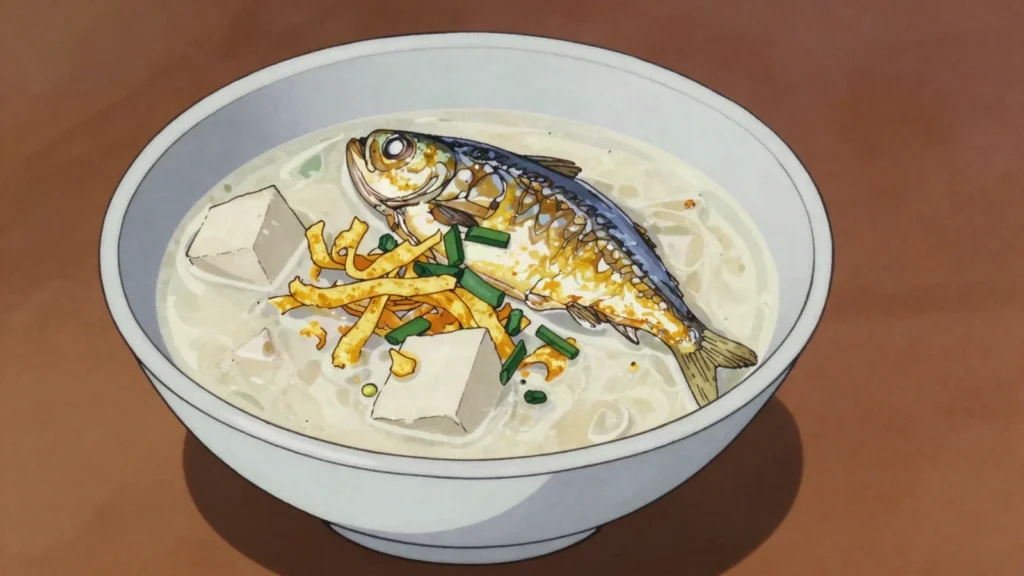

Pollock frozen and thawed on winter racks until it turns golden and cotton-soft, then simmered into soup. Alaska pollock is hung in mountain drying fields where it freezes at night and thaws by day, over and over, through a whole winter.
The whole method is a mountain winter cycling above and below freezing for months; a domestic freezer cannot reproduce it, and the producers themselves lose batches to a mild year.
What goes into it
- Alaska pollock, gutted and split
- a mountain winter
How it is made
The fish are hung on open wooden racks in high inland valleys in December. Each night they freeze solid and each day they partly thaw, and that cycle — repeated for two to three months — ruptures the muscle fibres so the flesh ends up fluffy rather than hard, and turns it yellow. A winter that is too warm gives grey soft fish; one that is too cold gives white brittle fish. Neither is hwangtae.
How long it takes: two to three months of freeze-thaw cycling through winter
How it is eaten
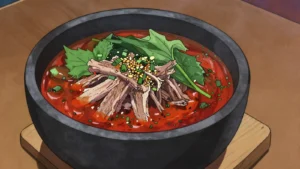
Torn into hwangtae-guk soup, or grilled with a gochujang glaze.
History
Alaska pollock hung in mountain drying fields freezes and thaws repeatedly through the winter, turning the flesh yellow and cotton-soft.
Frequently asked questions
What is Hwangtae?
Hwangtae is a charcuterie & cured from North Korea: pollock frozen and thawed on winter racks until golden and fluffy, then simmered. Alaska pollock hung in mountain drying fields freezes and thaws repeatedly through the winter, turning the flesh yellow and cotton-soft.
How is Hwangtae made?
The fish are hung on open wooden racks in high inland valleys in December. Each night they freeze solid and each day they partly thaw, and that cycle — repeated for two to three months — ruptures the muscle fibres so the flesh ends up fluffy rather than hard, and turns it yellow. A winter that is too warm gives grey soft fish; one that is too cold gives white brittle fish. Neither is hwangtae. It takes two to three months of freeze-thaw cycling through winter.
Can I make Hwangtae at home?
No, and the atlas gives no method for it. The whole method is a mountain winter cycling above and below freezing for months; a domestic freezer cannot reproduce it, and the producers themselves lose batches to a mild year.
What goes into Hwangtae?
Alaska pollock, gutted and split, a mountain winter.
How is Hwangtae eaten?
Torn into hwangtae-guk soup, or grilled with a gochujang glaze.