
Ingredients
The chicken
- 1.5 kgchicken pieces
- on the bone
- salt and black pepper
The sauce
- 4yellow aji chillies
- aji amarillo, deseeded
- or 3 tablespoons aji paste
- 2onions, chopped
- 6garlic cloves, crushed
- 1 teaspoonground cumin
- 1 teaspoondried oregano
- 4 tablespoonsoil
- about 800 ml chicken stock
The chuño
- 300 gchuño
- freeze-dried potatoes
- soaked overnight
- or 500 g fresh potatoes
The salad
- 2onions, sliced very thin
- 2tomatoes, sliced
- juice of 2 limes
- 1hot chilli, chopped
- salt
Directions
- Wash with soap and plenty of water. Chicken must be cooked right through. Check it rather than guessing. Cover the chuño with cold water. Cover it by several centimetres. Leave it overnight if you can. Drain and rinse the soaked chuño. Squeeze each piece to press water out. It also lets it take up the sauce.
- Peel off any of the loose dark skin. Boil the chuño in fresh water. Give it about thirty full minutes. Deseed the aji chillies carefully. Keep some seeds in for more heat. Blend the chillies with a little water. Blend them into a smooth paste.
- Add only enough water to turn them. A thick paste is what is wanted. Strain it if it stays fibrous. Season the chicken with salt and pepper. Heat the oil in a heavy deep pot. Brown all the chicken in batches. Do not crowd the pot at any point. Brown every side of every piece. Add the chopped onion to the pot.
- Cook it for about twelve minutes. It should soften and turn golden. Add the crushed garlic to the pot. Give it about one full minute. Add the chilli paste to the pot. Fry it for about five minutes. Do not rush that frying at all. Add the cumin and the oregano. Fry them briefly in the hot oil. Heat releases their aromatic oils. Give them about thirty seconds only.
- Stir them so they do not burn. Return the chicken to the pot. Pour in all of the chicken stock. It should nearly cover the chicken. Add more stock later if it dries. Bring the pot up to a bare simmer. Cover the pot and leave it alone. Keep it at a bare simmer only. It should barely bubble at the surface. Let it simmer for about forty minutes. Chicken on the bone takes that long.
- Add the cooked chuño to the pot. Add it for the last twenty minutes. It takes up the sauce in that time. Cook it for longer if there is. Making the salad is done meanwhile. Slice the onion as thin as you can. Very thin slices are genuinely wanted.
- Use a sharp knife or a mandoline. Take real care with a mandoline. Rinse the sliced onion in cold water. Drain and dry it thoroughly after. Toss the onion with lime and salt. Add the sliced tomato and chilli. It goes limp if dressed too early. Taste it and then adjust the salt.
- Season the whole dish right at the end. Add more aji paste for more heat. Add plenty of black pepper to it. Judging it takes a careful look. Cook it down further if it is thin. Add more stock if it is too thick. Serving it is always done hot. Spoon the chicken and chuño onto plates. Do not treat it as decoration. Make the salad fresh each time.
Technique
- Chuño is rock hard when dry and must be soaked overnight, with the water changed once or twice since it goes dark and bitter — changing it improves the flavour and softens it more evenly. Squeeze each piece out after draining to press the last bitterness away and let it take up the sauce, then boil it about thirty minutes. It stays spongy and chewy rather than going soft like a fresh potato, which is entirely normal.
- Fry the ají paste a full five minutes until it darkens and the oil separates at the edges, which is what shows it is cooked — raw chilli paste tastes harsh and sharp, and frying it out also deepens the colour considerably.
- Capsaicin transfers readily from the chillies to hands and then to eyes and skin, and is oil soluble rather than water soluble so water alone does not remove it — wear gloves, wash with soap and plenty of water, or rub oil on first.
Substitutions
- Fresh potatoes stand in where chuño cannot be found, giving a quite different result — the atlas records that plainly. Ají amarillo paste sold in jars stands in for fresh chillies.
- Rinsing the thinly sliced onion in cold water before dressing washes off the harshest compounds and mellows it considerably; drain and dry it thoroughly after.
Variations
- Chuño is freeze-dried potato made by an ancient Andean process that predates European contact: potatoes are frozen on cold nights, trodden to press the water out and sun-dried by day, repeated over several days until almost all the water has gone. It then keeps for years — a real achievement in food storage.
- The raw onion and tomato salad is genuinely part of the dish rather than a garnish, since its sharpness cuts the rich heavy stew; dress it only about twenty minutes before serving, since the salt draws water out and it goes limp if dressed early.
- Add the cooked chuño for only the last twenty minutes, long enough to take up the sauce — it is already cooked and longer makes it fall apart. Chicken must reach seventy-five degrees at the thickest part with clear juices and no pink at the bone.
History
A spicy chicken stew built on a base of ground yellow chili, called ají amarillo, and onion, served traditionally with chuño, freeze-dried potato, and rice, most strongly associated with La Paz and the wider Bolivian highlands. Its name combines Aymara and Spanish linguistic elements, sajta referring to the dish’s characteristic spicy stew style within Bolivian Andean cooking. The pairing of the stew with chuño specifically, rather than fresh potato, reflects the same high-altitude Andean potato-preservation tradition found in chairo and other Bolivian highland dishes, developed by Indigenous Andean peoples over many centuries to cope with the challenges of food storage at extreme elevation. It remains a common home-cooked meal across Bolivia’s highland cities and towns.
Frequently asked questions
What is Sajta de pollo?
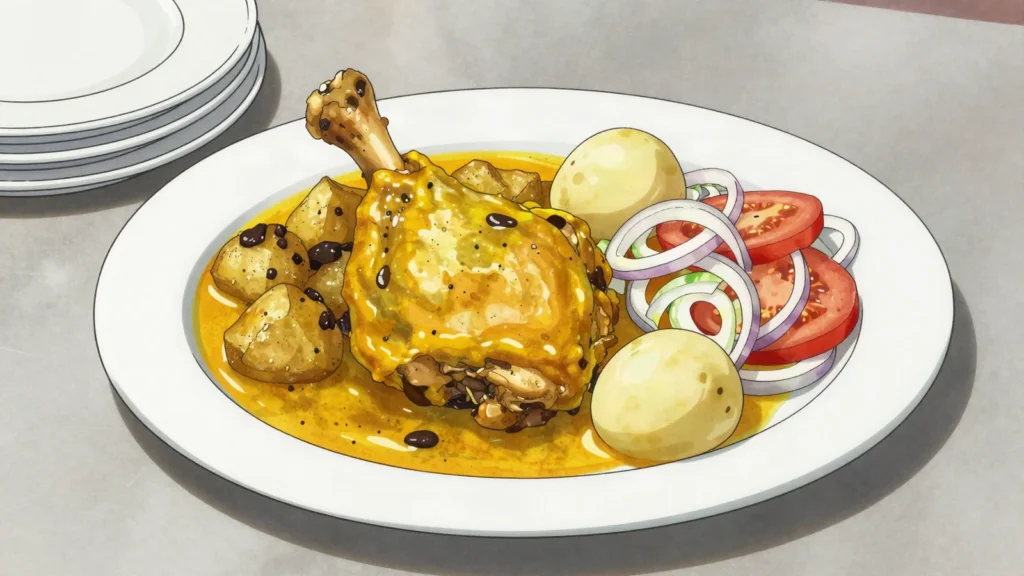
Sajta de pollo is a main from Bolivia: chicken in yellow aji sauce with chuño, potato and onion salad. A spicy chicken stew built on a base of ground yellow chili, called ají amarillo, and onion, served traditionally with chuño, freeze-dried potato, and rice, most strongly associated with La Paz and the wider Bolivian highlands. Its name combines Aymara and Spanish linguistic elements, sajta referring to the dish’s characteristic spicy stew style within Bolivian Andean cooking. The pairing of the stew with chuño specifically, rather than fresh potato, reflects the same high-altitude Andean potato-preservation tradition found in chairo and other Bolivian highland dishes, developed by Indigenous Andean peoples over many centuries to cope with the challenges of food storage at extreme elevation. It remains a common home-cooked meal across Bolivia’s highland cities and towns.
How long does Sajta de pollo take to make?
Sajta de pollo takes 40 minutes plus soaking of preparation and 1 hour 15 minutes of cooking. The recipe makes serves 6. It is rated medium to make.
What can I substitute in Sajta de pollo?
Yes, within limits. Fresh potatoes stand in where chuño cannot be found, giving a quite different result — the atlas records that plainly. Ají amarillo paste sold in jars stands in for fresh chillies. Rinsing the thinly sliced onion in cold water before dressing washes off the harshest compounds and mellows it considerably; drain and dry it thoroughly after.
What is the most important thing to get right in Sajta de pollo?
Wash with soap and plenty of water. Chicken must be cooked right through. Check it rather than guessing. Cover the chuño with cold water. Cover it by several centimetres. Leave it overnight if you can. Drain and rinse the soaked chuño. Squeeze each piece to press water out. It also lets it take up the sauce.